What happened
- Block, Jack Dorsey’s company, unveiled Dessa on October 23, 2026, a voice model from its research lab.
- It is a full-duplex model: it speaks and listens at the same time, like OpenAI’s GPT-Live. The company says it trained it from scratch only on human conversations in audio, with no text or pretrained models.
- According to Block, it runs locally on a consumer computer such as a MacBook with an M4 Max chip or better.
- There is no public access for now. There is a waitlist and a call for safety researchers to test it.
Why it matters
- Most voice assistants turn audio into text and then synthesize the reply. Block argues that step discards information such as tone and emotion.
- A model that runs on the device could lower costs and avoid sending audio to the cloud, which matters for the small businesses Block sells services to.
- A human-sounding voice also raises the risk of deception. That is why the company asks for safety testing before opening it.
The number
M4 Max. MacBook chip that Block names as the minimum for running Dessa locally.
Context
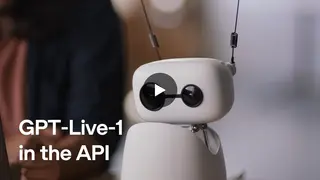
TechCrunch notes that voice models such as ElevenLabs v4 or Fish Audio Drama 3 use voice tags to steer emotion, while Block says emotion is built into Dessa. The article adds that it is not clear whether any kind of tag steers it. Block’s demos show recorded conversations with different voices and paces, and a chat with GPT-Live-1, a third-party model. Subtitles were added afterward, and the quality claims come from the company itself.
What’s next
- Block announced no release date or price.
- Results from safety researchers will show whether the model can deceive the person on the other end of the call.
Bottom line
Real-time voice already had a market price: GPT-Live-1 charges 0.05 dollars per minute and bills what it thinks separately. Dessa points to another path, that of small models that run locally, like Flint, a coding model that works on a notebook. And among service offers, Cloudflare launched Clairic and charges 0.10 dollars per million tokens, while Canva introduced Craft, its first image model.
Sources
- Block — Dessa, the conversation model trained only on speech (October 23, 2026; the page shows no date in its text, which was taken from the company posts cited by TechCrunch)
- TechCrunch — Block’s new voice model sounds eerily human (October 24, 2026)
- Cover image: Will Fisher from Richmond, VA, United States, CC BY-SA 2.0, via Wikimedia Commons
Edited by Rodrigo Cornejo. How we select and verify: who writes these notes.