What happened
- On October 22, 2026, OpenAI noted in its API changelog that the Decisions API is generally available with the gpt-6-luna model.
- Each request now supports up to 400 questions, up from 200 in the public beta. It adds shared-input caching at a discount, images in individual question instructions and structured data through input_json.
- On October 15, the company had already integrated Decisions into GPT-Live, its voice API, so an app can act while the user is speaking.
Why it matters
- A decisions API picks among options and returns a confidence level. Many teams handled that task with a full language model, slower and more expensive per answer.
- For anyone classifying tickets, emails or forms, the 400-question limit per call changes the cost per batch. It is worth measuring on your own data before migrating.
- According to TechCrunch, the product competes with TypeSafe’s Jev. On the two public indices that outlet cites, OpenAI’s model ranks eighth and fourteenth.
The number
400 questions. Maximum per request since general availability, twice the 200 of the beta.
Context
The API was announced at DevDay on September 29, according to TechCrunch. Nikunj Handa, product lead for OpenAI’s APIs, told the outlet that latency fell from one to three seconds to between 100 and 180 milliseconds, and that for now the service runs Luna without decision-specific training.
What’s next
- Handa told TechCrunch there may be decision-specific training later, with no date.
- No other deadlines announced.
Bottom line
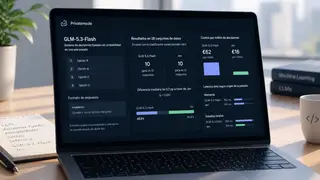
In September, a general model tied a specialised classifier at 62 euros per million across 28 datasets. And Cloudflare launched Clairic to extract data without generating text, another bet on narrow, cheap tasks.
Sources
- OpenAI API — Changelog (entries of October 15 and 22, 2026)
- TechCrunch — OpenAI makes its Jev competitor widely available as decision model competition heats up (October 22, 2026)
- Cover image: BalticServers.com, CC BY-SA 3.0, via Wikimedia Commons
Edited by Rodrigo Cornejo. How we select and verify: who writes these notes.