What happened
CesiumAstro announced the close of a $730 million Series D round that values it at more than $4.5 billion. It was led by Janus Henderson, with Insight Partners, Sands Capital, Sumitomo, Woven Capital (Toyota’s fund) and others. The company has announced more than $1.2 billion in 2026 and also received $100 million in debt from the Export-Import Bank of the United States (EXIM) and JPMorgan. The information comes from a statement by the company itself.
Why it matters
CesiumAstro introduced Synchronicity, a planned constellation of 737 AI-enabled satellites for commercial, sovereign and defense missions. It announces it after launching its first satellite, Element-1, and starting operations in orbit. It thus moves from making communications systems to developing and operating its own satellite infrastructure.
The number
The company will invest $500 million over five years to expand its headquarters in the Austin area, including the purchase of 270,000 square feet of manufacturing space.
Context
The expansion rests on three acquisitions, which the company says strengthen its integration from semiconductors to mission operations. The money will go to advanced technologies, US manufacturing capacity, next-generation spacecraft, Synchronicity deployment and international growth. Founder Shey Sabripour said they have been investing in engineering, intellectual property and manufacturing for nearly a decade. An investor quoted in the statement said the industry is at an inflection point. On related topics, Mamífero published Harbinger adds $240 million in Series D; Legora raises US$550 million at US$8.8 billion; Otter.ai gets US$ 320 million without giving up equity and Nscale raises $3.36 billion ahead of its IPO.
What’s next
The launch schedule for Synchronicity and the cost of deploying so many satellites remain to be seen. A 737-unit constellation demands money and continuous manufacturing.
Bottom line
The round confirms that capital keeps flowing to space companies with their own infrastructure.
Sources
- SpaceNews, CesiumAstro statement published by the outlet (accessed November 9, 2026).
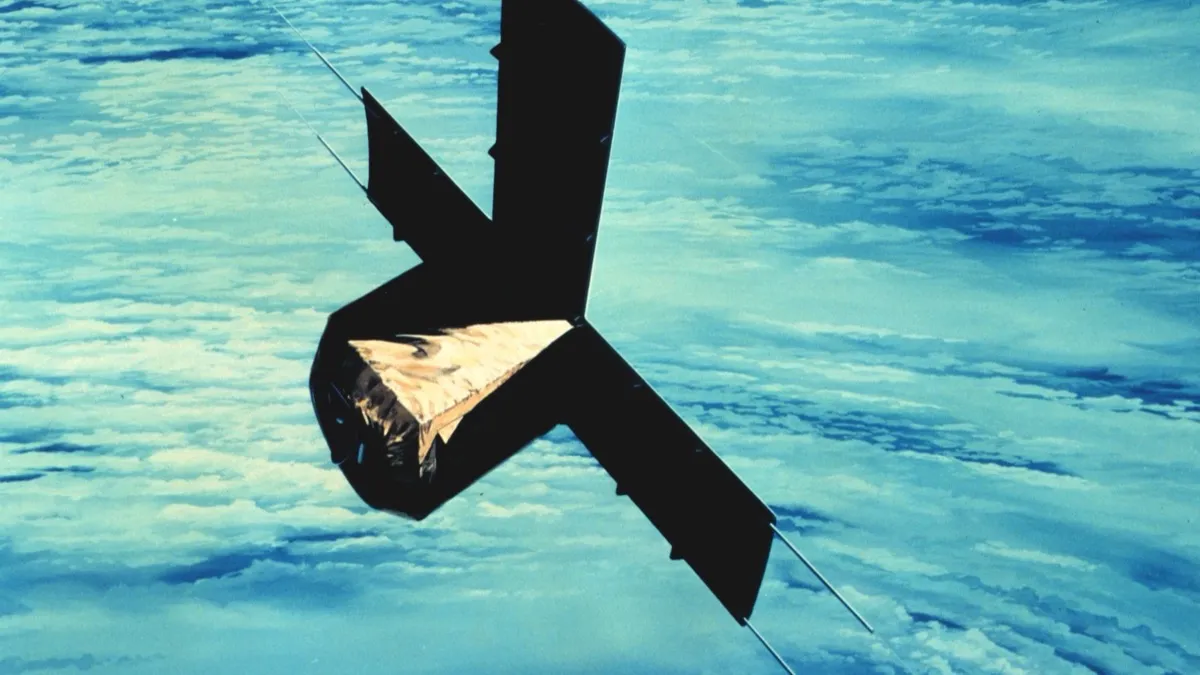
- Cover image: NOAA, Public domain, via Wikimedia Commons
Edited by Rodrigo Cornejo. How we select and verify: who writes these notes.