What happened
- On October 23, 2026, Nature Communications published a metabolomics study that searched the serum of people with Chagas disease for signs of who will progress to heart disease.
- The team, from US universities and Universidad Peruana Cayetano Heredia, profiled blood with liquid chromatography and mass spectrometry and validated the candidates with targeted analysis.
- It identified eight individual metabolites and 45 combined panels that predict progression. Ten of those panels met the sensitivity and specificity criteria set in the target product profile for treatment-response biomarkers.
Why it matters
- Only 20% to 30% of people with chronic infection move from the symptom-free stage to significant heart disease. Today there is no reliable way to know who they will be.
- Available antiparasitic treatments have toxicity and variable efficacy. A marker that singles out higher-risk patients would allow follow-up to be focused and new drugs to be tested on better defined groups.
- The metabolites were measured at baseline and predicted later outcomes, which is what a prognostic tool needs.
The number
10 of 45. Metabolite panels that met the sensitivity and specificity thresholds defined for Chagas biomarkers.
Context
Chagas disease is caused by the parasite Trypanosoma cruzi and affects about 10.5 million people worldwide, according to the paper. It is a leading cause of infectious cardiomyopathy in Latin America and the infection lasts for life if untreated. Another parasite, Toxoplasma, also had laboratory findings: without the DDP protein it cannot reproduce. The search for early signs of poor prognosis recurs in neurology, as with Alzheimer-like changes in patients with ALS.
What’s next
- The authors propose these markers as a basis for clinically usable prognostic tools in chronic Chagas disease.
- They still need validation in larger cohorts from other countries in the region before reaching the clinic.
Bottom line
A blood test that anticipates heart damage would change the follow-up of millions of people with a silent infection. Splitting a disease by its biology also appears in mental health, where Sydney found a circadian subtype of depression, and in virology, with how Andes hantavirus enters the cell.
Sources
- Nature Communications — Small molecule biomarkers predictive of Chagas disease progression (October 23, 2026)
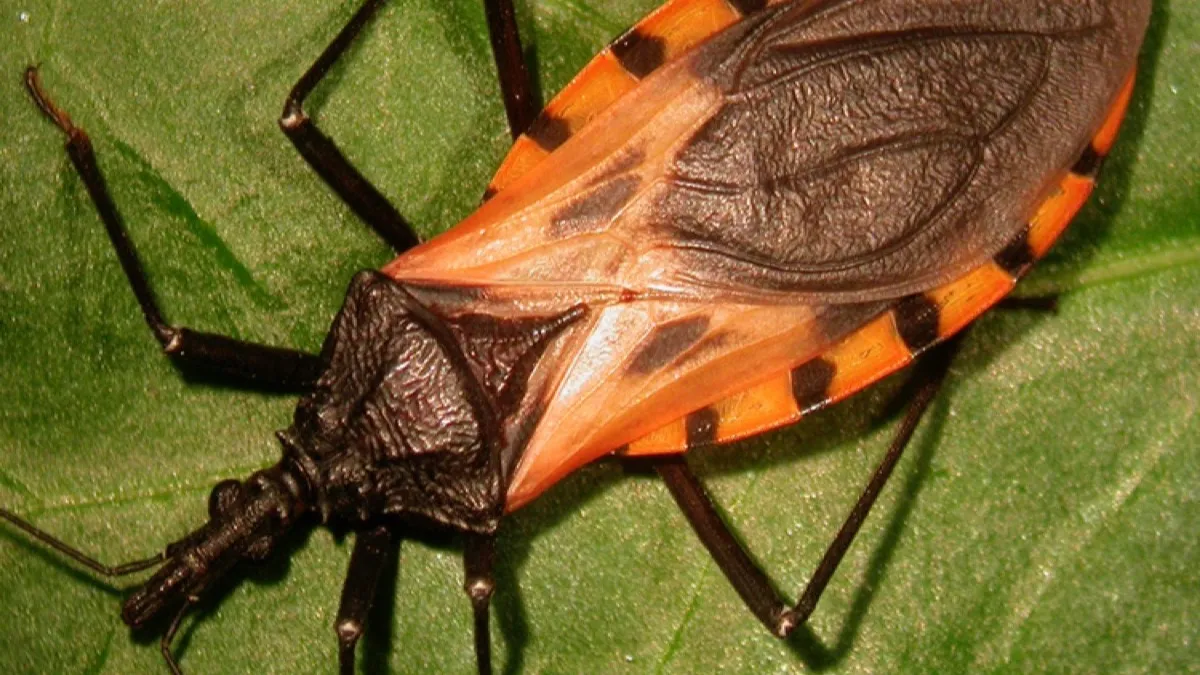
- Cover image: Felipe Guhl, CC BY 2.5, via Wikimedia Commons
Edited by Rodrigo Cornejo. How we select and verify: who writes these notes.