What happened
- A team led by SLAC National Accelerator Laboratory of the U.S. Department of Energy presented in Science experimental evidence of altermagnetism.
- For nearly 90 years physicists divided magnetic materials into two categories, ferromagnets and antiferromagnets; altermagnetism is a phase combining characteristics of both.
- Lead author Daniel Jost, associate scientist at SLAC, said the results give robust experimental confirmation that this third phase is real.
- The team worked with manganese telluride (MnTe), a material long classified as an antiferromagnet.
- ScienceDaily circulated the work on 4 November 2026.
Why it matters
In recent years phenomena that did not fit the ferromagnetism-antiferromagnetism split were observed, and researchers piled up evidence for a third type. Clear experimental confirmation turns the hypothesis into a recognized category. Per the release, it could lead to advances in computing and electronics.
The number
Almost 90 years. The time during which physics recognized only two types of magnetic materials, ferromagnets and antiferromagnets.
Context
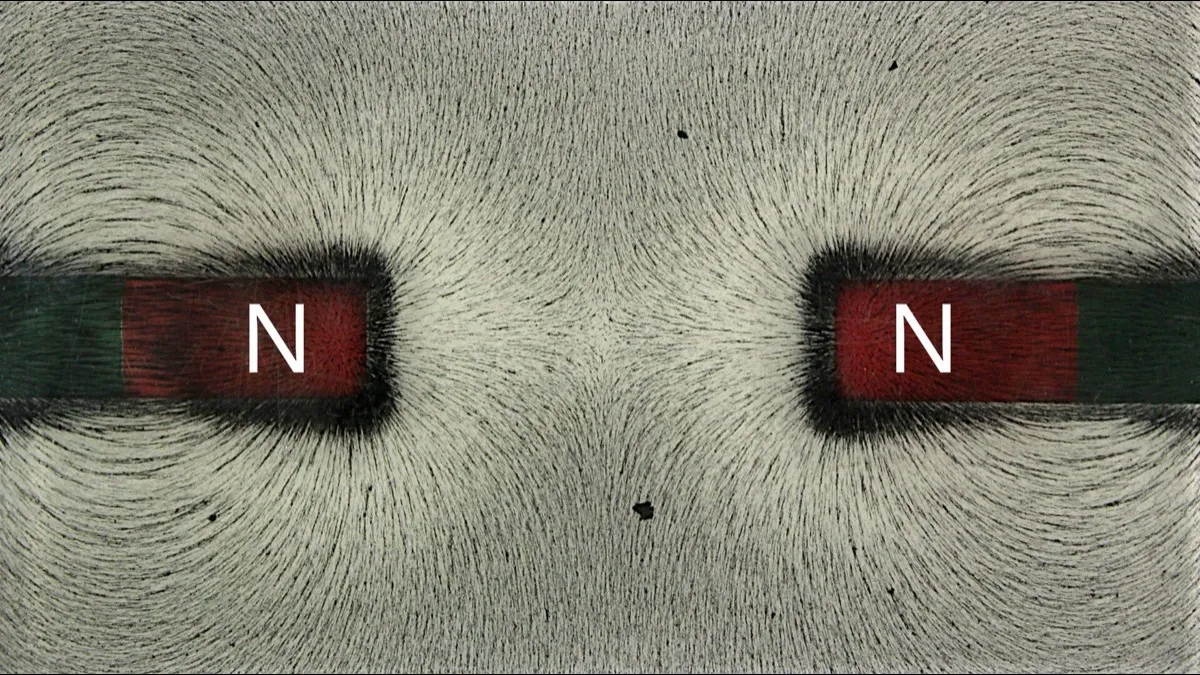
In a ferromagnet electron spins point the same way and the material produces an external field; in an antiferromagnet they point opposite ways and cancel. Altermagnetism sits between: spins cancel as in an antiferromagnet, but with an energy structure that distinguishes directions, as in a ferromagnet. The text read gives neither the experimental technique nor quantitative data. Related coverage: A magnet with no net magnetization injects spin current into a circuit, In metallic glasses, local order and density fluctuations are born together as crystals form, Vibrations of the crystal are mapped layer by layer in a superconductor below its unit cell, An electron crosses a silicon-germanium T-junction with 100% fidelity.
Spin is a quantum property of electrons that acts like a tiny compass. In ferromagnets nearly all point the same way, which is why the material attracts iron. In antiferromagnets they alternate and cancel outward. An altermagnet keeps that cancellation, but each direction in the crystal behaves differently for electrons, and that difference is what interests those seeking denser, faster magnetic memories. The SLAC result supplies the measurement that was missing to call the category proven.
What’s next
- Other labs will replicate the measurement in MnTe and candidate materials.
- Spintronic devices based on altermagnets will be explored.
- Theorists will pin down which other materials fall in this category.
Bottom line
A change in how materials are classified does not happen often. Two categories for nearly a century; now, three.
Sources
- ScienceDaily, “SLAC scientists find conclusive proof of a mysterious third type of magnetism”, 4 November 2026, on a Science study. Dated before the batch window because it is a niche result; the paper was not read.
- Cover image: MikeRun, Vera Wurmsdobler, CC BY-SA 4.0, via Wikimedia Commons
Edited by Rodrigo Cornejo. How we select and verify: who writes these notes.