What happened
- Jiaxuan Zhang, of the University of Oxford’s Department of Physics, published on October 13, 2026 in Physical Review A the paper “Summing to uncertainty: On the necessity of additivity in deriving the Born rule.”
- The Born rule gives the probability of each outcome of a quantum measurement. The paper examines two postulates used to derive it, additivity and noncontextuality, and shows they are not equivalent.
- It concludes that additivity is necessary in five major derivations: Gleason’s theorem, Busch’s extension, the Deutsch-Wallace theorem, Zurek’s envariance and the Finkelstein-Hartle theorem.
- Those derivations either assume it explicitly or use it without saying so, and weakening it creates problems.
Why it matters
- It is often said that the Born rule can be deduced from the rest of the theory. This work indicates that each major deduction brought in an idea of probability first, so the rule does not come from nothing.
- For those who teach or apply quantum physics at Chilean and regional universities, it is a notice that the question “where does probability come from” remains open and is not closed by a theorem.
- The paper does not prove that a probability-free derivation is impossible. It suggests that postulates with intrinsically probabilistic properties are probably needed.
The number
5 of 5: Born rule derivations analyzed that depend on additivity, open or implicit.
Context
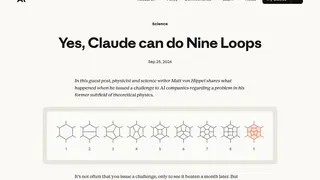
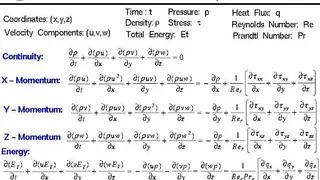
The Born rule is the bridge between the wave function and what is measured in the laboratory. Attempts to derive it from other principles have gone on for decades, such as those of Gleason’s theorem or the many-worlds interpretation. The work arrives in a week with other results in fundamental physics, such as the 9-loop particle physics calculation Claude made, and with the doubt over how a result is understood, which OpenAI’s Navier-Stokes proof took to another field.
What’s next
- Replies from the authors of the derivations analyzed, which the paper does not yet include.
- No announced timeline for a derivation without the additivity assumption.
- The paper was received in May, revised in July and accepted in August 2026.
Bottom line
A proof that needs what it wants to prove is not useless, but it changes what it proves. Here it moves from “probability is deduced” to “probability is declared,” a difference that can be debated without a laboratory.
Sources
- Physical Review A — Summing to uncertainty: On the necessity of additivity in deriving the Born rule (DOI 10.1103/mqy7-s2db) — October 13, 2026
- Phys.org — Quantum probability can’t be derived without assuming it first — October 20, 2026
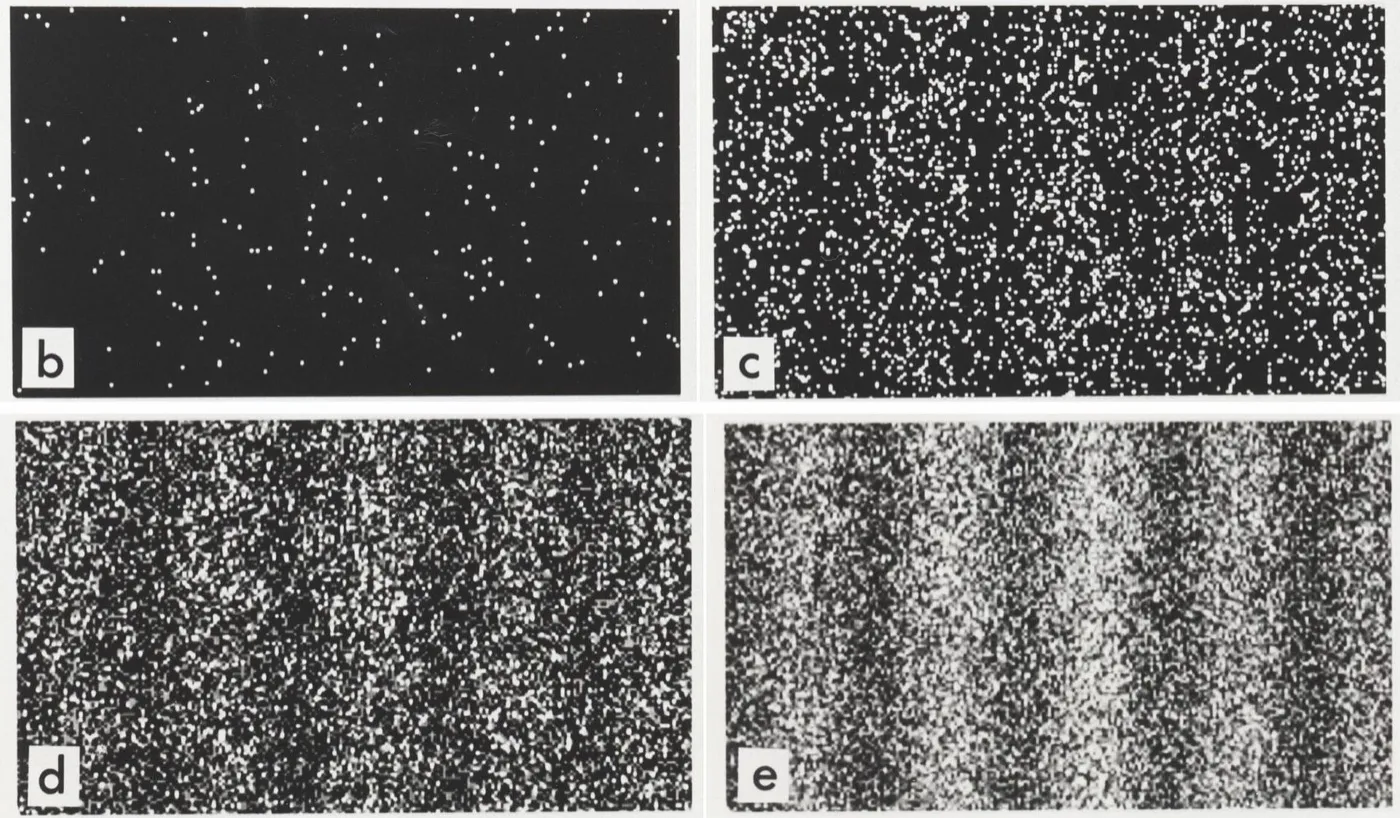
- Image: Dr. Tonomura and Belsazar, CC BY-SA 3.0, via Wikimedia Commons
Edited by Rodrigo Cornejo. How we select and verify: who writes these notes.