What happened
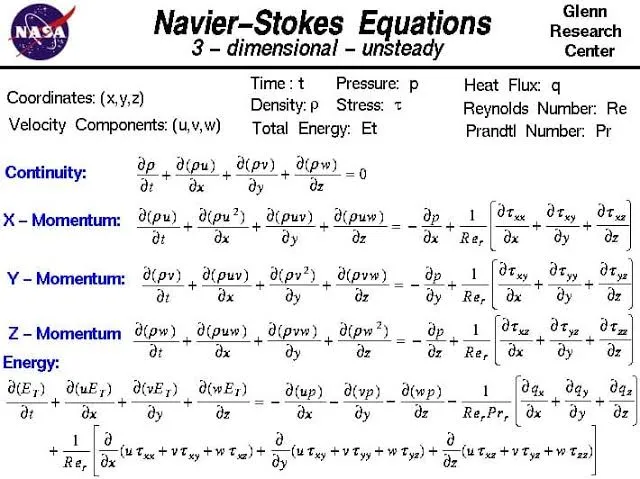
- On September 22, 2026, NPR published a review of the manuscript with which OpenAI claimed, on September 8, to have solved the Navier-Stokes problem.
- James Maynard of the University of Oxford says it’s “very difficult to extract human understanding” from the solution. Javier Gómez-Serrano of Brown says “the paper isn’t written for humans” and that it needs a serious rewrite before it’s of use to the field.
- Tristan Buckmaster of New York University calls the 166-page manuscript “a terribly written text.” Martin Hairer of EPFL confirms the mathematical community expected this to be the next problem to fall.
- Technical correctness isn’t in dispute: the proof was verified through formalization in Lean. What’s missing is the explanation of why it works.
Why it matters
- A correct result that nobody can read can’t be audited, extended or taught. For any organization considering incorporating machine-produced results, this is the hidden cost: validation shifts to another machine.
- The field that adopts AI outputs fastest without demanding readability is the first to lose the ability to review them. That goes for mathematics, and it goes for the report a company sends to its board.
- Verification by formalization works for a proof. There’s no equivalent for a market analysis, a diagnosis or a public policy recommendation, which is where most people use these tools.
The number
The manuscript is 166 pages long. None of the four mathematicians consulted found in it an idea transferable to other problems.
Context
Our September 9 note already recorded that the problem with the announcement was authorship: Buckmaster and Levent Alpöge, of Anthropic, were closing in on a solution when OpenAI deployed 10,000 agents for 88 hours. Buckmaster says he was offered authorship if he dropped Alpöge; OpenAI denies using his work. In parallel, the company graded its own homework by declaring it had met its automated intern goal.
What’s next
- No timelines announced for a rewritten version of the manuscript.
- The $1 million prize associated with the problem hasn’t been awarded.
Bottom line
The discipline’s stated goal was never to clear the list of open problems, but to understand why the equations behave the way they do. The list has one item fewer, and the question remains the same.
Sources
- NPR — AI solved one of math’s hardest problems. Humanity learned nothing (so far)
- Scientific American — OpenAI claims blockbuster math breakthrough amid swirl of controversy
Edited by Rodrigo Cornejo. How we select and verify each fact is in who writes.