What happened
- On October 23, 2026, Nature Communications published an analysis by 12 authors from the Deep Space Exploration Laboratory in Hefei, Shandong University and the University of Science and Technology of China.
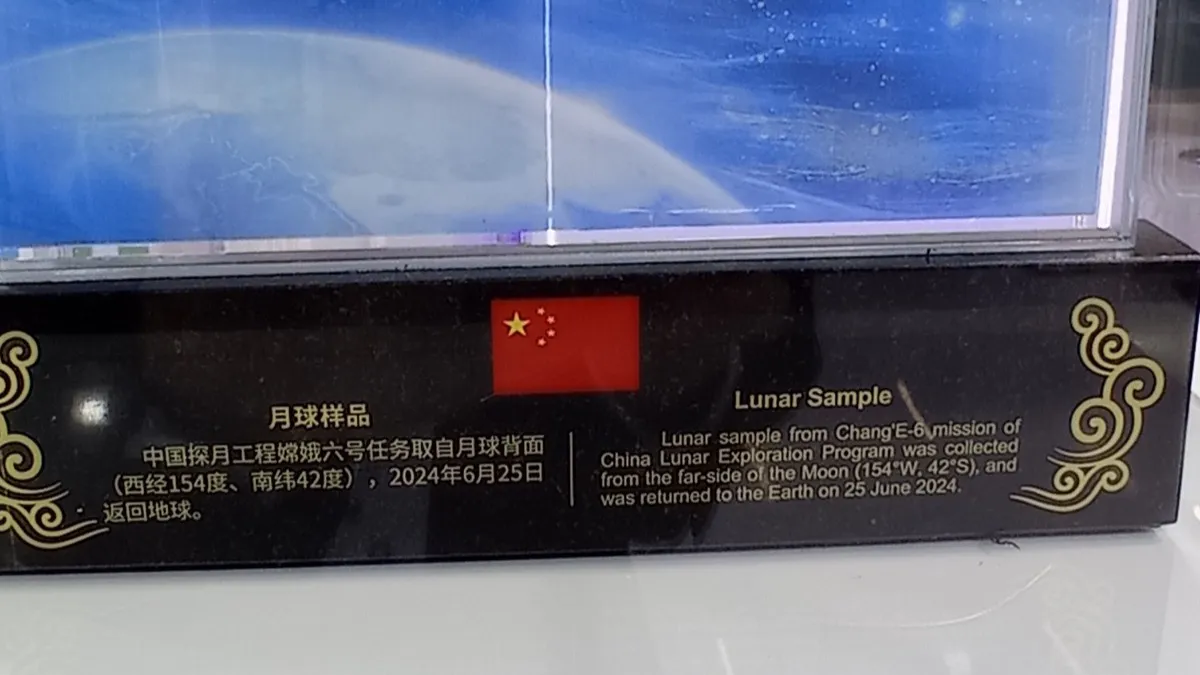
- They measured cosmogenic samarium, hafnium and chromium isotopes in soil fragments brought back by the Chang’e-6 mission from the South Pole-Aitken basin on the Moon’s far side.
- The soil has an average cosmic-ray exposure age of about 500 million years. Most low-titanium basalt fragments were exposed as long as the soil, but two were excavated more recently.
- Three KREEP-bearing fragments, in two compositional groups, have exposure ages that do not overlap, pointing to different excavation histories.
Why it matters
- KREEP is material rich in potassium (K), rare earth elements (REE) and phosphorus (P). According to the authors, it is more widespread on the far side than thought, which changes the map of where to look for it.
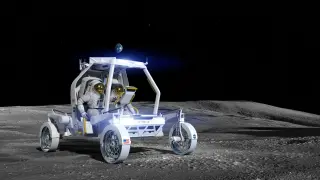
- For missions heading to the lunar south pole, such as the rovers for NASA’s base, knowing where each material comes from guides which areas to sample.
- By comparing with remote-sensing data, the authors propose two source regions: the magnesium-rich pyroxene annulus and a cryptomare, an ancient lava sea buried under other material.
The number
500 million years. Average cosmic-ray exposure age of the soil returned by Chang’e-6.
Context
Impacts and space weathering resurface the Moon, but their effects on the far side are poorly constrained, the authors note. The Chang’e-6 samples make it possible to study how material was redistributed within the South Pole-Aitken basin.
What’s next
- No deadlines announced.
- The authors do not mention further analyses under way.
Bottom line
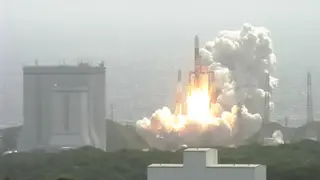
NASA updated the rovers for its lunar base, with delivery set for 2028, and Japan launched the MMX probe to Mars to bring back samples from Phobos: returning material is still the way to read the history of other bodies.
Sources
- Nature Communications — Cosmogenic isotopic evidence from Chang’e-6 clasts for excavation history and ejecta provenance in the South Pole-Aitken basin (DOI 10.1038/s41467-026-78270-w; October 23, 2026)
- Cover image: BugWarp, CC BY-SA 4.0, via Wikimedia Commons
Edited by Rodrigo Cornejo. How we select and verify: who writes these notes.