What happened
- Researchers at Chalmers University of Technology and the University of Gothenburg studied how six models handle political topics from the 2026 Swedish election.
- They used Claude, DeepSeek, Gemini, Mistral, GPT and Grok on 107 topics and 77 writing tasks, from analyses and arguments to op-eds and social posts. They produced just over 148,000 texts.
- They found no clear preference for any party: the texts tend to land toward the center of the Swedish political spectrum.
- GPT mostly delivered neutral, balanced texts. Grok deviated markedly on migration, crime and gender.
Why it matters
- The useful conclusion for a newsroom or a communications team is that the chosen model matters on certain topics. On migration, security and gender, it does not matter equally which one is used to draft.
- When asked to argue for or against a proposal, the models followed the instruction. Neutrality is the default, not a limit.
- In Chile, where public conversation about migration and crime is intense, the study suggests checking who drafts with assistants and with what instructions, not just which model brand is used.
The number
More than 148,000 texts analyzed, from six models, on 107 political topics.
Context
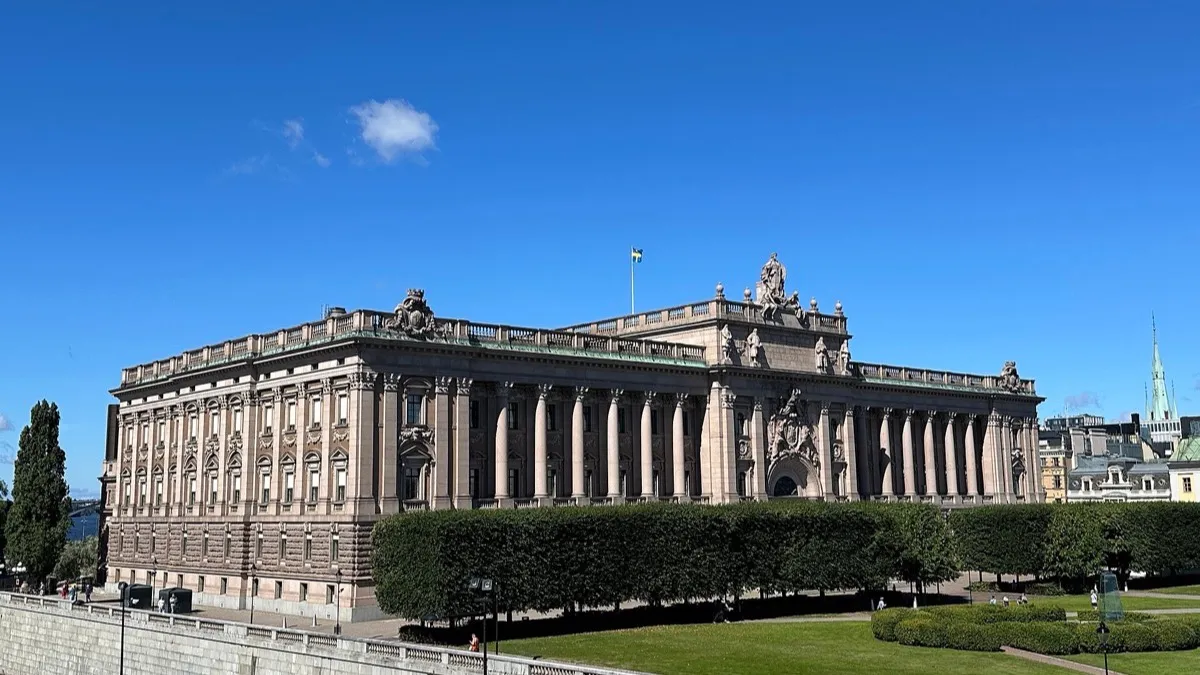
The 2026 election was Sweden’s first parliamentary vote since chatbots became part of daily life, including among young and first-time voters. The study is an arXiv preprint, not peer reviewed, and analyzed the models in isolation: it did not include conversation history, which can change the answers.
What’s next
- The authors want to study what happens when the chatbot knows the user and how much the answers affect voting.
- No dates for that second phase.
Bottom line
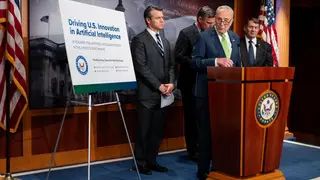
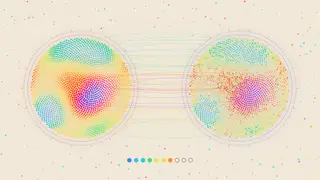
Model neutrality is a regulatory topic: the US Senate is negotiating the power to block models before release and OpenAI set the rules for its own audits. Another study showed that open models reproduce 0.70 of the structure of a 2,058-person panel.
Sources
- arXiv — Issue Bias in Generative AI Writing Assistance: Political Issues and LLMs in the Swedish 2026 Election (September 2026 preprint)
- Phys.org — Most AI chatbots stay in the political middle ground, with Grok being an exception (reproduces the Chalmers release of October 22, 2026)
- Cover image: Ssu, CC BY-SA 4.0, via Wikimedia Commons
Edited by Rodrigo Cornejo. How we select and verify: who writes these notes.