What happened
An Etruscan vessel about 2,600 years old, shaped like a young rooster with human feet, has an abecedarium engraved on it: the 26 letters of the Etruscan alphabet, in order. It stands just over 10 centimeters tall and belongs to the collection of the Metropolitan Museum of Art in New York. It is made of bucchero, the black ceramic characteristic of the Etruscans.
Why it matters
The Etruscan language was never fully deciphered, so any inscription helps. A complete abecedarium shows the letters as they were taught. According to the museum, the vessel may have been a portable inkwell for someone learning to write: the rooster’s head served as a stopper and was attached to the body with a cord through loops.
The number
The Etruscan alphabet has 26 letters and was adopted from a regional version of the Greek alphabet in the early eighth century B.C.
Context
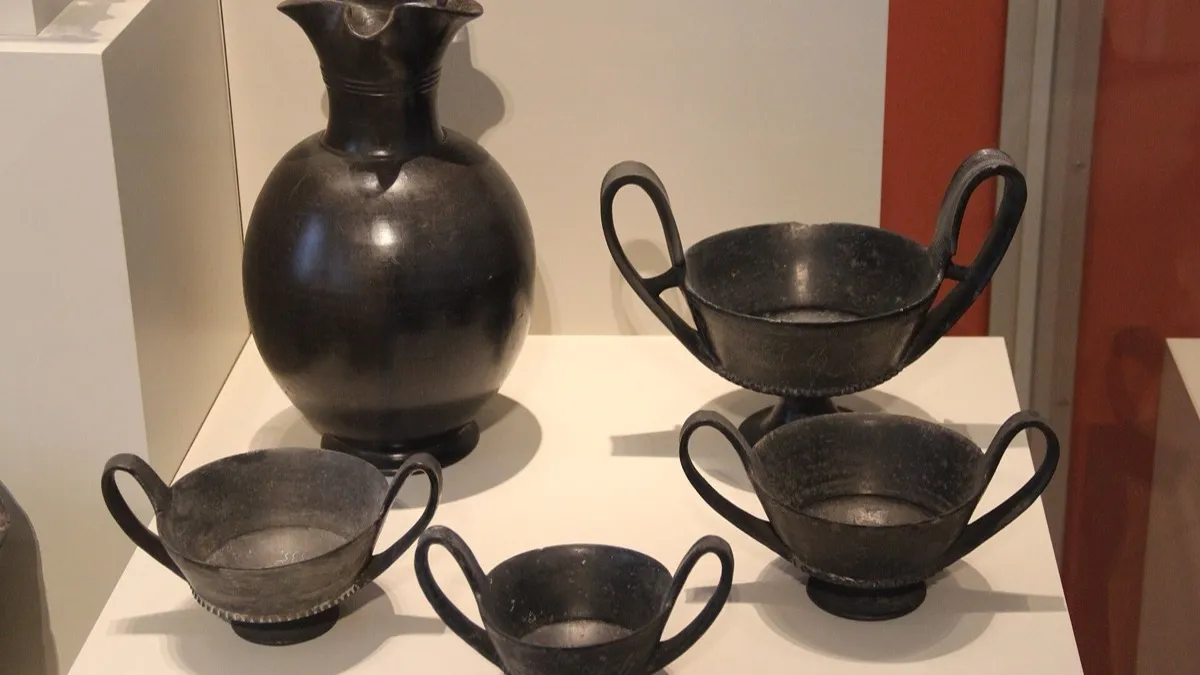
Bucchero was produced between the seventh and fourth centuries B.C. in the pre-Roman society of the Etruscans. Its black color comes from firing with little oxygen in the kiln, which made the clay absorb carbon. It is not known where the vessel was found, though it may have come from a tomb in one of the cemeteries around Viterbo, an ancient Etruscan town about 80 kilometers northwest of Rome. An alphabet written on an everyday object indicates that writing was part of instruction and was practiced with utensils made for that purpose. On related topics, Mamífero published Researchers propose a machine psychology to study AI; Google takes AI Mode ads to ten new countries; New wave of cyberattacks hits South Korean finance firms and Warming halted a new ice age.
What’s next
Pieces with abecedaria remain useful for studying Etruscan writing. Each find of this kind gives one more reference on how letters were written and pronounced.
Bottom line
A 10-centimeter object shows how reading was taught two and a half millennia ago.
Sources
- Live Science, article on the Metropolitan Museum of Art piece (accessed November 9, 2026).
- Cover image: Gary Todd from Xinzheng, China, CC0, via Wikimedia Commons
Edited by Rodrigo Cornejo. How we select and verify: who writes these notes.