What happened
- On October 22, 2026, Science published “Late Holocene reexpansion of the Laurentide Ice Sheet,” with Nicolás E. Young and Joerg Schaefer of Columbia University’s Lamont-Doherty Earth Observatory.
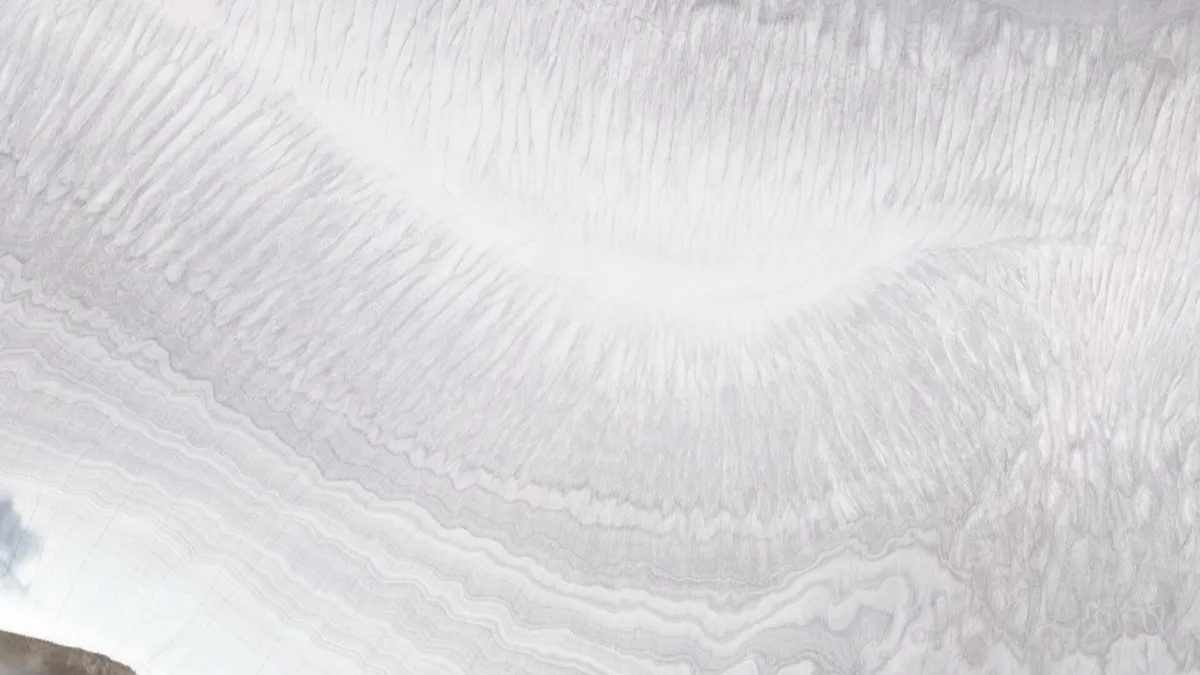
- The study focuses on the Barnes Ice Cap, on Baffin Island (Nunavut, Canada), the last remnant of the Laurentide ice sheet, about the size of Delaware.
- Using carbon-14 on plants preserved under the ice, the team estimated that the cap hit its minimum about 3,000 years ago and began growing again about 2,000 years ago.
- According to Columbia’s release, that regrowth marked the start of the next glacial period. By the 1960s, summer melt already exceeded winter accumulation.
Why it matters
- The result challenges models that placed the next glaciation thousands or tens of thousands of years away. If regrowth began 2,000 years ago, the climate system was heading that way before human activity interrupted it.
- For Chile, the angle is method: stable ice frozen to bedrock preserves plants that work as a clock. The technique could apply to Andean glaciers that are retreating today and on which central Chile’s water depends.
- The uncomfortable conclusion for any “natural cycles” argument is that the cycle existed and it was warming that stopped it.
The number
3.2 kilometers. Thickness the Laurentide sheet reached in places, when it covered much of Canada and the northern US until 20,000 years ago.
Context
The Laurentide sheet stretched from above the Arctic Circle to Illinois between 95,000 and 20,000 years ago. The previous glacial period ended about 11,700 years ago. Models cited in the release project that the Barnes ice cap will melt completely within the next few centuries.
What’s next
- The authors estimate the Laurentide would have taken about 30,000 years to regain its continental size.
- Other teams still need to look for the same regrowth signal in other Arctic ice caps.
Bottom line
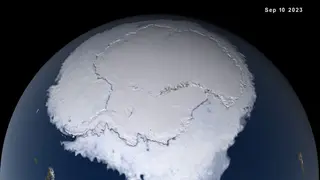
Polar figures change sign with season and place: Antarctic sea ice reached 17.59 million km² in 2026, the third-lowest figure. And in the energy transition, Rondo and Rio Tinto are designing a 360 MWh heat battery for a refinery.
Sources
- Columbia Climate School — Climate Change Stopped the Next Ice Age (October 22, 2026)
- Science — Late Holocene reexpansion of the Laurentide Ice Sheet (DOI 10.1126/science.aed3379; publication date confirmed in Crossref: October 22, 2026)
- Phys.org — Global warming may have halted an emerging ice age, study suggests (reproduces the Columbia release)
- Cover image: Jesse Allen and Robert Simmon, Public domain, via Wikimedia Commons
Edited by Rodrigo Cornejo. How we select and verify: who writes these notes.