What happened
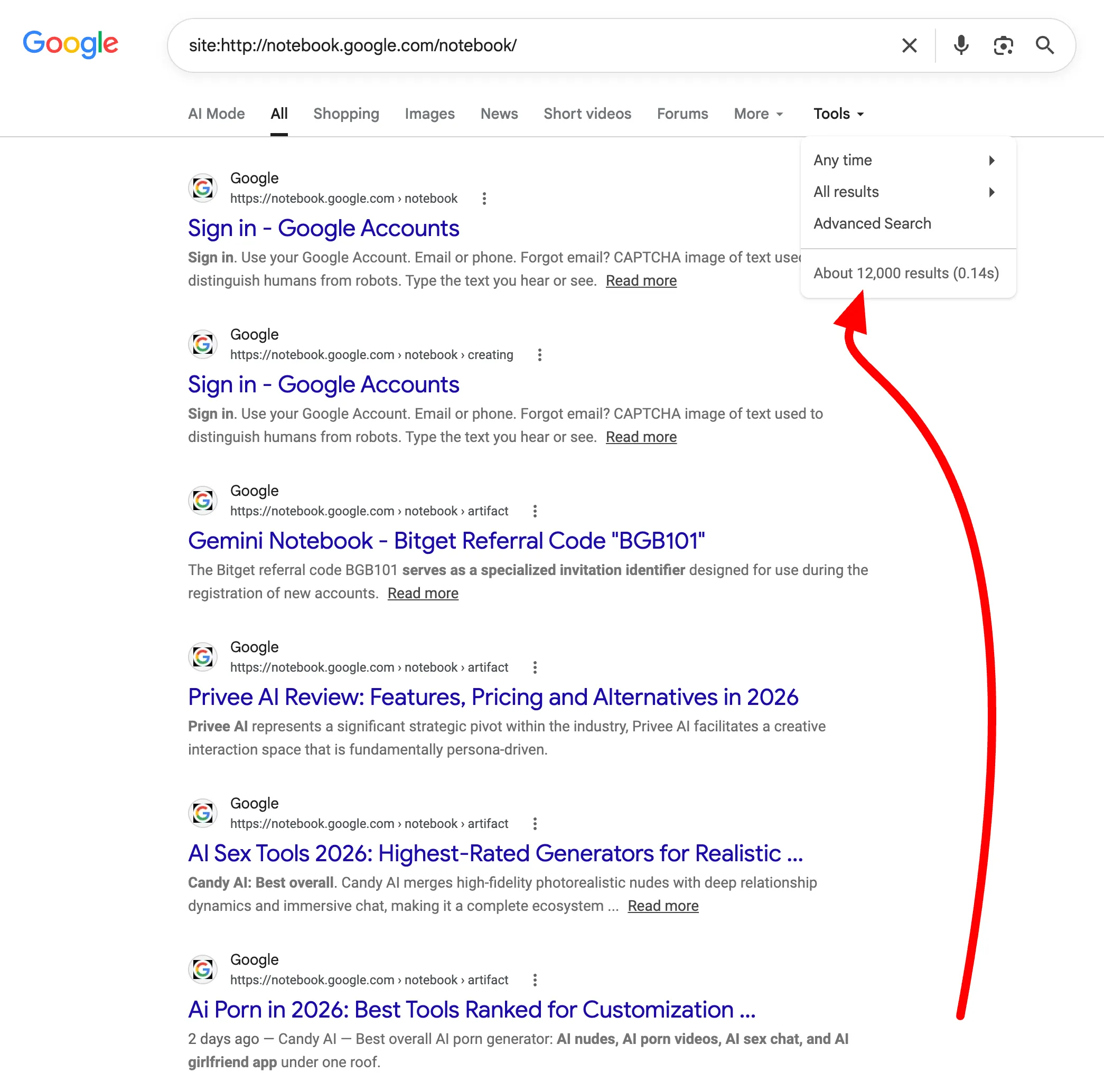
- Search analysts Gagan Ghotra and Glenn Gabe documented between September 21 and 22, 2026, that the public pages of Gemini Notebook (formerly NotebookLM) are being used to publish indexable spam.
- Search Engine Roundtable picked up the finding on September 22 and put the number of such pages already indexed by Google at about 12,000.
- The content includes categories the search engine’s own policies restrict: sex products, pornography, peptides, discount codes and apps.
- At the time of publication, Google hadn’t removed those pages from the index.
Why it matters
- The technique is the usual one (exploiting the authority of someone else’s domain, what the trade calls parasite SEO), but the host domain is
google.com. No SEO team can compete with that built-in advantage. - For anyone running a site in the region, this sets the day’s priorities: check which of your own queries are showing up next to those pages before adjusting anything on the site.
- Google launches tools with indexable public pages, and the control process comes later. It’s the third product in a year with the same pattern, and those who live off organic traffic pay for it while the window lasts.
The number
12,000 spam pages hosted on public Gemini notebooks and indexed by Google, according to Search Engine Roundtable’s count.
Context
Organic traffic was already narrowing: Ahrefs measured that AI Overviews take 58% of the clicks from the first result, and Google expanded those overviews while organic results dropped another rung. The space that’s left now competes with pages generated in-house.
What’s next
- Google hasn’t announced a timeline for cleaning up the index or for changing the indexability of public notebooks.
- Nor has any change been announced to Gemini Notebook’s content policies.
Bottom line
In March the problem was sites publishing machine-made text. Now the text is hosted by the search engine, indexed by the search engine, and competes with those who follow its rules.
Sources
- Search Engine Roundtable — Google Notebook Pages Spamming Google Search
- Search Engine Roundtable — Daily Search Forum Recap: September 22, 2026
Edited by Rodrigo Cornejo. How we select and verify each fact is in who writes.