What happened
Archaeologists excavating in northeastern France found a small fifth-century cemetery with the graves of two Germanic chieftains and two warhorses. It is near Colmar, a few kilometers from the Rhine, the border between France and Germany. According to a statement from the French National Institute for Preventive Archaeological Research (Inrap) dated November 6, the site was used between roughly the years 450 and 500.
Why it matters
The period is key for Western Europe because of the collapse of the Roman Empire. The site earlier held a Gallo-Roman village, from the first to third centuries, with houses, hearths, wells and craft areas. The cemetery adds information about the transition period after Rome’s fall, a topic debated for centuries.
The number
Archaeologists counted 11 adult graves, three children’s graves and two horse burials.
Context
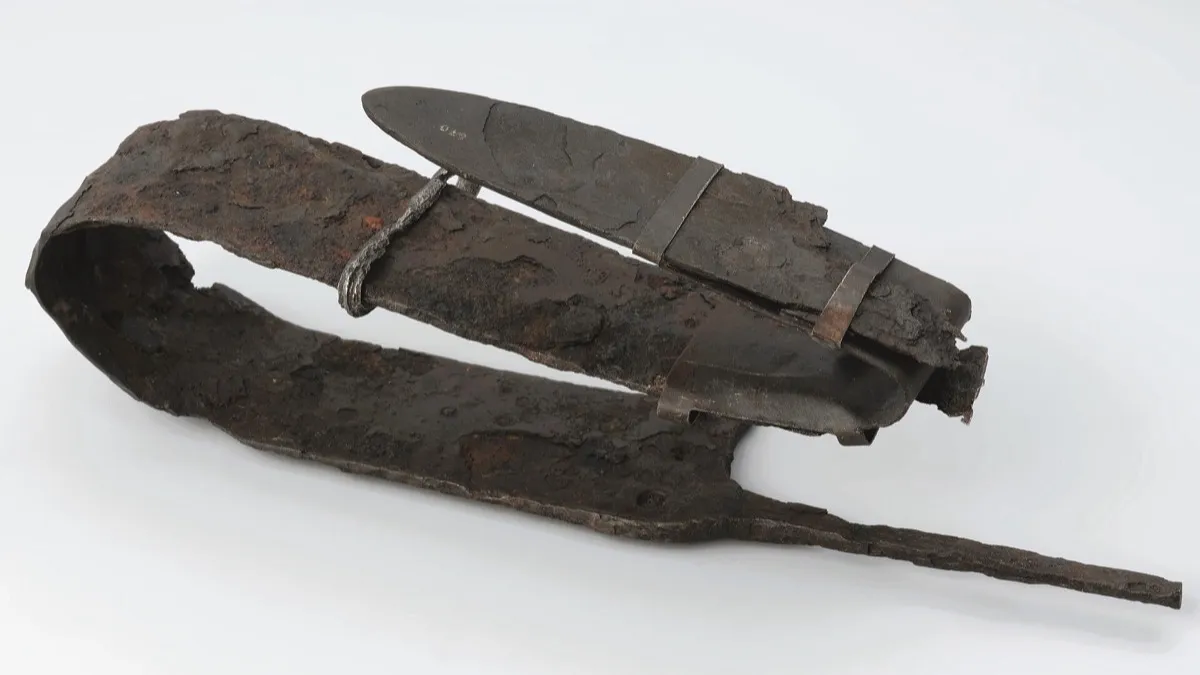
Several graves had gold and garnet fittings on weapons and clothing. In two female graves there were silver bird-shaped brooches, glass bead necklaces and a bone comb, suggesting high-status women. Two male graves stood out for their high-quality grave goods: a sword with part of its wooden scabbard, a shield and a javelin, among other objects. That is why they are attributed to Germanic chieftains. Texts mention that Goths and Vandals occupied Rome several times in the fifth century, one of the factors discussed to explain the Empire’s fall. On related topics, Mamífero published Rare autoantibodies found in people with schizophrenia; Shamonda, the first human case of the livestock virus; Researchers find the circuit that decides between answering and staying silent and ChatGPT, Claude, Gemini and Grok go down together.
What’s next
Specialists will study the objects and human remains to pin down the identity of those buried and their relationship with neighboring communities. The excavation is preventive archaeology, and its results will emerge as the materials are analyzed.
Bottom line
A small grave can say more about an age of change than many written documents.
Sources
- Live Science, article based on the Inrap statement of November 6 (accessed November 9, 2026).
- Cover image: unkknown, Single-edged sword, CC0, via Wikimedia Commons
Edited by Rodrigo Cornejo. How we select and verify: who writes these notes.