What happened
- Rishav Roshan, of the University of Southampton, and Sudipta Show, of IIT Kanpur, published in Physical Review Letters (September 8, 2026) a paper on the heaviest right-handed neutrino of the minimal seesaw model. Phys.org spread it on October 19.
- They propose that, if that neutrino lives long, it can briefly dominate the energy density of the early universe and shift the temperature at which charged-lepton interactions reach equilibrium.
- That change alters how lepton flavor is treated in thermal leptogenesis, one of the mechanisms used to explain why there is more matter than antimatter.
- The authors suggest checking it with neutrino oscillation measurements and gravitational waves. It is theoretical work.
Why it matters
- The asymmetry between matter and antimatter is the reason galaxies, planets and people exist. Proposing that a discarded neutrino explains it reopens a piece many models left aside.
- The path to testing goes through the polarization of the cosmic microwave background, where primordial gravitational waves are sought. Part of that work is done with telescopes in the Atacama Desert.
- Without an experiment, it remains a hypothesis. The result conditions which model parameters are plausible, and that selection will be discussed with oscillation data.
The number
September 8, 2026: publication date of the paper in Physical Review Letters; the coverage is from October.
Context
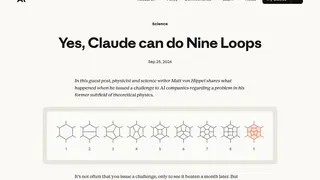
Phys.org presented it as the “forgotten particle” that could answer why we exist. The seesaw mechanism explains why neutrinos have such small masses through very heavy right-handed neutrinos, and until now the one with the greatest mass was assumed not to affect cosmic history. The work, like Claude’s 9-loop particle physics calculation, shows that theoretical physics advances with ideas tested in simulation before the laboratory. Another episode of space physics with effects measured on Earth is the 2025 solar storm, which exceeded radiation thresholds for flights.
What’s next
- Neutrino oscillation measurements that can constrain the model.
- Future detections of primordial gravitational waves, with no announced date.
- No announced timeline for a direct experimental test.
Bottom line
That the coverage is from October and the publication from September is a reminder that basic-science results take weeks to reach the public, and that specialized press decides the moment of the news.
Sources
- Physical Review Letters — Delayed Charged Lepton Yukawa Equilibration in Minimal Seesaw (DOI 10.1103/nfkx-q6z7) — September 8, 2026
- Phys.org — Forgotten particle could answer mystery of why we exist, say physicists — October 19, 2026
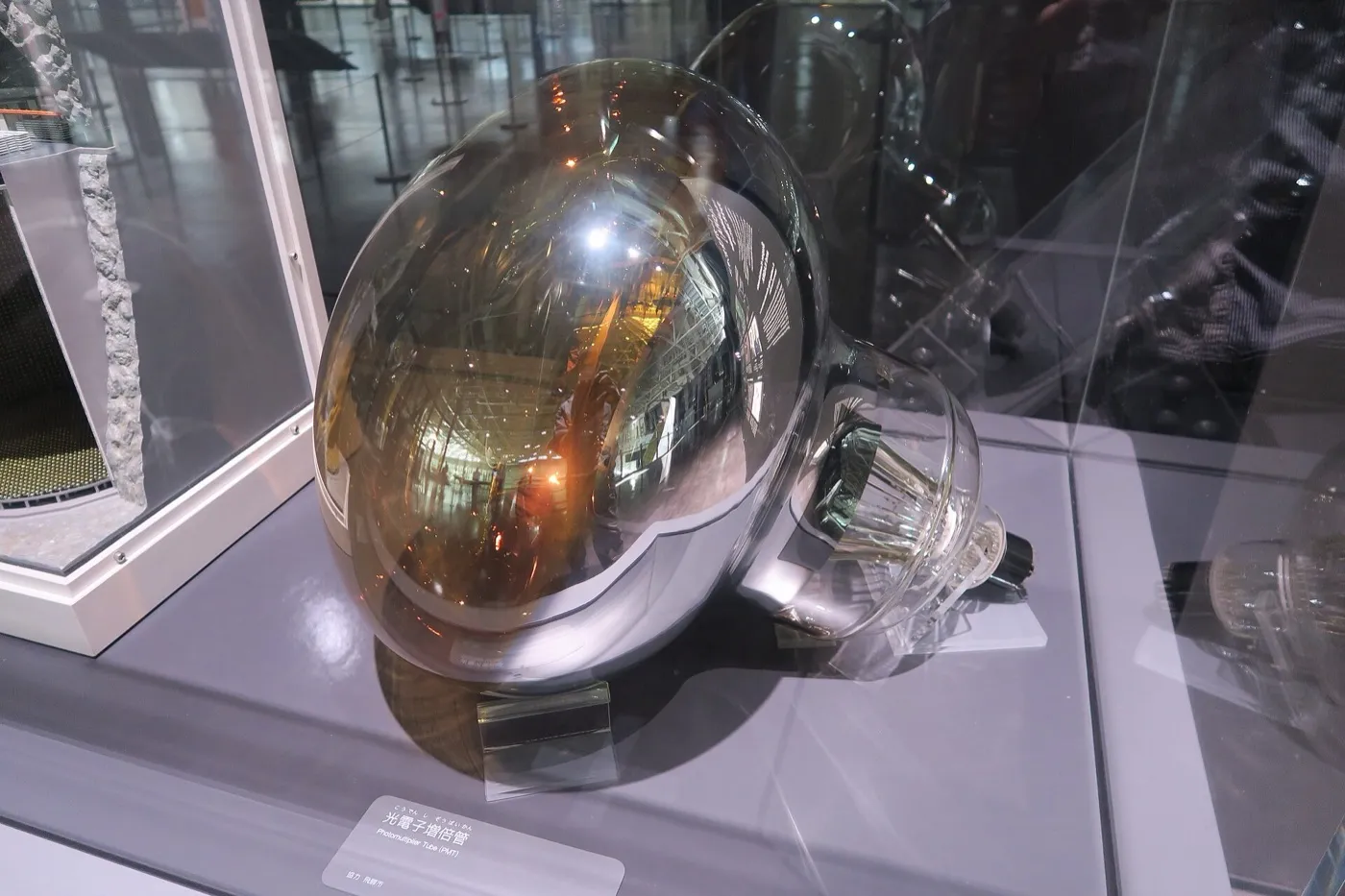
- Image: Motokoka, CC BY-SA 4.0, via Wikimedia Commons
Edited by Rodrigo Cornejo. How we select and verify: who writes these notes.