What happened
Extracellular vesicles presenting CD47 may limit the ability of macrophages to eliminate dead cells and contribute to the persistence of pulmonary fibrosis. A study published online by PNAS on November 10, 2026 relates this signal to changes in metabolism and resolution of lesions.
Coverage is based on the abstract deposited by the journal in Crossref, with a verified date. The work includes experimental results in models and observations on idiopathic pulmonary fibrosis. It does not present a therapy whose clinical efficacy and safety have been established in this publication.
Why it matters
The removal of dead cells, called efferocytosis, helps maintain tissue balance and resolve inflammation. If that process is limited, it can change the environment in which cells and signals associated with fibrosis persist.
The study links this cleaning capacity to vesicles that carry a signal usually summarized as not being eaten. The relationship is interesting because it connects communication between cells, metabolism and repair. The verbal simplification of CD47 should not hide the complexity of the mechanism: modifying a signal that regulates cellular recognition can have consequences that must be measured. The published data are used to study that chain, not to recommend a drug based on the abstract.
The number
CD47 and AMPK intervene in different stages. The first appears in vesicles that limit efferocytosis; Activating the second favors resolution in the models examined. The abstract does not report a percentage of clinical improvement in people.
Context
The authors find that reestablishing efferocytosis contributes to the resolution of fibrosis and that its inhibition can favor development and persistence of the lesion. In aged mice, a reduced clearance capacity is associated with persistent fibrosis.
Activation of AMPK reduces signs of inflammation associated with aging and availability of CD47, according to the work. It also changes the state of macrophages that interact with apoptotic fibroblasts.
On related topics, Mamífero has also published cell-cell-free DNA and cancer detection, an intervention with CAR-T cells, Miro1 and insulin resistance and autoantibodies in cerebrospinal fluid.
What’s next
The research describes lower TGF-β1 signal and greater secretion of the HGF growth factor in this resolution context. Those changes help connect the elimination of cells with signals that can modify the tissue.
Future studies should examine the extent to which the relationship is maintained and what interventions can modify it without affecting necessary functions. An improvement in a model does not define dose, benefit or safety in people. The contribution lies in bringing together processes that are often studied separately: elimination capacity, metabolic state and repair signals. This integration guides additional experiments, with their conditions and objectives yet to be established.
Bottom line
The cleaning of dead cells appears as a functional piece of the resolution of fibrosis. Vesicles with CD47 can interfere with it and AMPK modifies the response in models. The research offers a mechanism for further study, with clinical evaluation still pending.
Sources
- PNAS, DOI 10.1073/pnas.2609811123; abstract deposited by the journal and online date confirmed in Crossref, November 10, 2026. Note based on the abstract, not the full text. Crossref confirms the publication date, without time.
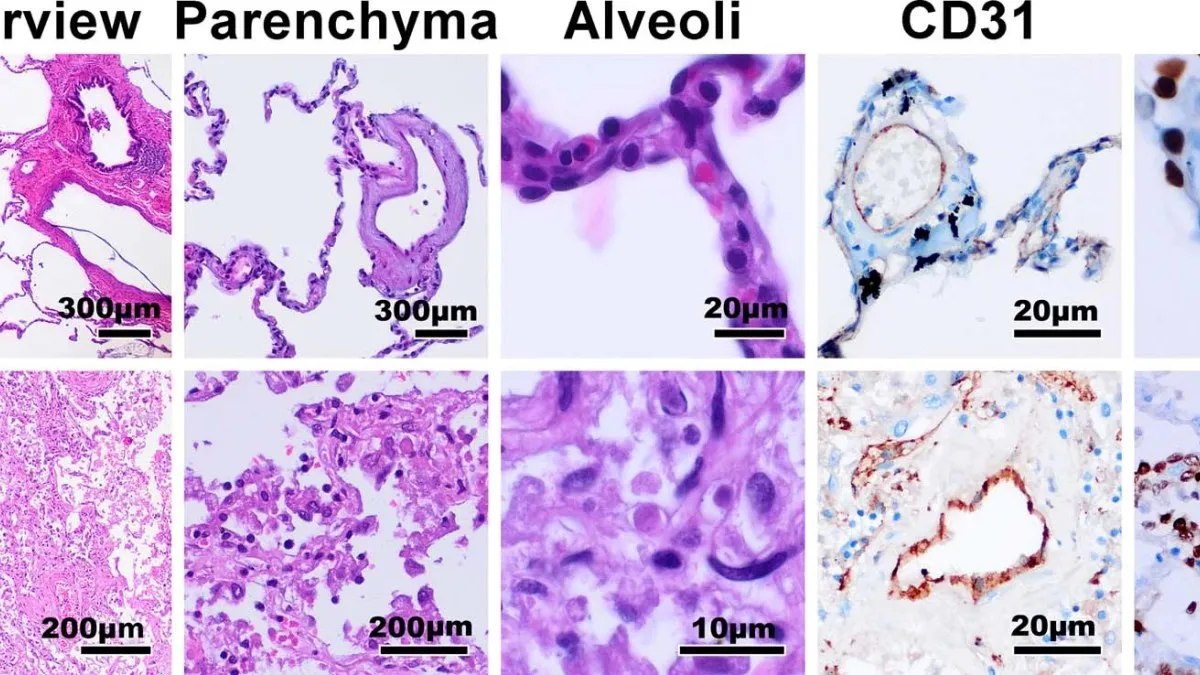
- Cover image: C. L. Walsh et al., CC BY 4.0, via Wikimedia Commons. Cropped and resized to 1200 × 675 pixels. Reference photograph; it does not document the announced event.
Edited by Rodrigo Cornejo. How we select and verify: who writes these notes.