What happened
- Nvidia published on 5 November 2026, on the Hugging Face blog, four new open-weight versions of its Cosmos 3 family of world models.
- Cosmos3-Nano-Transfer-Auto generates multi-view driving data with varied weather, lighting and time of day. Cosmos3-Nano-Sim-Auto streams synchronized camera and lidar observations for driving simulation.
- Cosmos3-Nano-Sim-Transfer turns a simulator’s controls and a text prompt into photorealistic video. Cosmos3-Nano-Sim-Bimanual predicts video from the actions of a robot or a camera.
- All four derive from Cosmos 3 Nano through post-training and have 16 billion trainable parameters.
Why it matters
- A world model is a way to test what would happen if a car or a robot acted in a certain way, without putting it on the street or risking equipment.
- In driving, appearance and geometry must agree. Generating camera and lidar together connects what is seen with three-dimensional measurement.
- Because they are open, these weights let labs and companies adapt the model to their own sensors instead of starting from scratch.
The number
11 camera views. That is the number of synchronized views, fisheye lenses included, that Cosmos3-Nano-Transfer-Auto can generate, with optional joint lidar and maps that control scene structure and traffic motion.
Context
Cosmos3-Nano-Transfer-Auto works without time pressure: it is meant for generating data offline and varying environmental conditions to widen training and evaluation cases. It is also the base for adapting Cosmos to one’s own camera and lidar setup. After that adjustment, it can go through causal training and few-step distillation to simulate in streaming, which is the path used to create Cosmos3-Nano-Sim-Auto.
The license is OpenMDW1.1, which permits commercial and non-commercial use under its terms. Nvidia itself warns that the pending work is to measure where these models truly help train and evaluate control policies, understand their limits and improve them where they fall short.
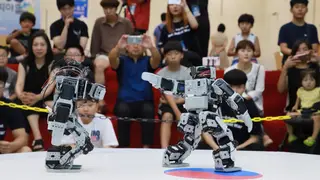
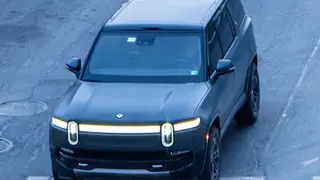
At Mamífero we have followed this line. We reported that Korea opened a data factory with 12 humanoids and that Mundo turns a few photos of a room into an explorable world. Also that Rivian bought Third Dimension to recreate real driving scenes and that Nvidia released Nemotron 3.5 Transcribe as an open model.
What’s next
- Nvidia offers post-training recipes and a technical report so others can adapt the models and compare methods.
- The relevant test will come from those who use them: whether the simulations improve the performance of real cars and robots or not.
- Controlling scenes and traffic signals will make it possible to study how a driving policy responds when they change.
Bottom line
Nvidia is not delivering a car or a robot here, but a place to rehearse them. Whether that place resembles the world closely enough is the question the company itself leaves open.
Sources
- Nvidia, “New NVIDIA Cosmos 3 Open Models for Interactive World Simulation”, Hugging Face blog, 5 November 2026, link.
- Cover image: 9yz, CC BY 4.0, via Wikimedia Commons
Edited by Rodrigo Cornejo. How we select and verify: who writes these notes.