What happened
- The makers of Phonon, a small text-to-speech model that runs on the device itself, published on 5 November 2026 on the Hugging Face blog a review of its launch, which took place two weeks earlier.
- It comes in two sizes, about 65 MB and 75 MB. Together they speak English, French, German, Spanish and Portuguese, with more than 100 built-in voices.
- It runs on phones, laptops, single-board computers and browser tabs. It needs no server or network, so the text does not leave the device.
- Phonon 31m, English only, uses an Apache 2.0 license and allows commercial use. Phonon 40m covers all five languages under a non-commercial license; for commercial uses, pricing depends on the number of users.
Why it matters
- Most voice AI lives in the cloud and every sentence makes a round trip to a server. Running on the device avoids that trip and protects what is typed.
- Spanish appears at the top for a model of this size, which is useful for applications in Latin America with uneven connectivity.
- The makers acknowledge the old dilemma: a small model used to sound bad, and one that sounded good would not fit.
The number
200,000 downloads. That is what Phonon passed in its first two weeks on Hugging Face. According to its makers, on intelligibility it ranks first in German and Spanish, and in the top three in every language evaluated, next to models up to 100 times larger.
Context
The comparison comes from the Open TTS Leaderboard, a recent Hugging Face table that evaluates open models in 23 languages on intelligibility, speed and naturalness, from a pool of more than 9,000 voice models on that platform. Note that the review was written by the model’s own authors and that the table was not checked separately.
Phonon belongs to the Pocket TTS lineage and uses a technique called flow matching to generate audio, unlike other systems. According to the team, training was numerically unstable at first. They also built ptts, an inference engine of their own with more than 10 execution options on CPU, GPU and NPU.
At Mamífero we have followed voice models. We reported that Nvidia released Nemotron 3.5 Transcribe and that Block presented Dessa, a voice model trained only on audio. Also that Recursive released Flint to run code on a laptop and that A5 proposes a desktop assistant that remembers context.
What’s next
- Developers are already taking it to other environments, such as browsers and Node.js applications.
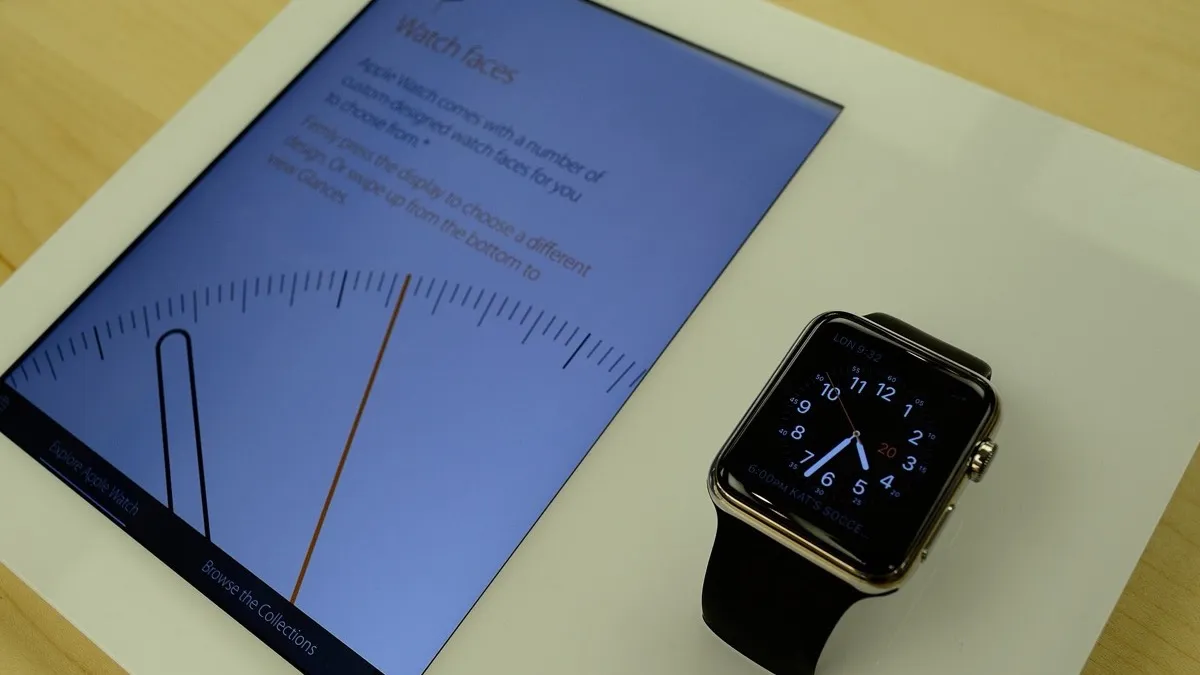
- Its demos include an Apple Watch with no Wi-Fi guiding the preparation of a coffee.
- Independent evaluation of quality in Spanish will be the next test.
Bottom line
What is interesting is not one more synthetic voice, but where it runs. If it fits on a watch and can be understood in Spanish, it stops depending on a connection to speak.
Sources
- Phonon team, “A Closer Look at Phonon TTS”, Hugging Face blog, 5 November 2026, link. The table positions are reported by the authors.
- Cover image: Raysonho @ Open Grid Scheduler / Grid Engine, CC0, via Wikimedia Commons
Edited by Rodrigo Cornejo. How we select and verify: who writes these notes.