What happened
- A team of 11 researchers from Rutgers University published on 3 November 2026 in PNAS a study of CD8 T cells that enter senescence, a state of cellular ageing.
- They analysed human CD8 effector memory T cells with high activity of the enzyme SA-βGal, a classic marker of senescence.
- Using single-cell RNA sequencing, they found that these cells, with their own genetic signatures, appear at every stage of T cell differentiation and increase with age.
- They expressed several senescence markers and were less able to proliferate, produce cytokines and eliminate senescent human cells.
Why it matters
- Senescent cells serve useful functions, but they must be cleared in time by the immune system to keep tissues healthy and prevent disease.
- With age those cells build up throughout the body. The study supports one explanation: the very T cells that should clear them also age and stop working.
- The authors also show that T cell senescence is distinct from exhaustion, another known state of dysfunction, and dominates over it.
The number
4. That is the number of groups in which the signatures of these cells were enriched: older people, patients with age-related disorders, cancer patients and smokers.
Context
The same group had previously shown that CD8 T cells, which can attack senescent cells, develop senescent features as people age. This work characterises that state and its effect in detail.
The part with the biggest clinical consequences is immunotherapy. According to the abstract, T cell senescence limits the response of CD8 cells and acts as a barrier to treatments that aim to reactivate the immune system against tumours. Many current immunotherapies are designed to reverse exhaustion; if senescence dominates over it, those therapies could do less in patients with many senescent T cells.
At Mamífero we follow cancer immunology. We reported that an antibody that activates two groups of T cells achieved responses in cold tumours, that a KRAS vaccine for pancreatic cancer missed its primary goal and that modified transfer RNAs repair the p53 gene and shrink tumours. On vaccines, vaccination did not change smell or taste after COVID.
What’s next
- Measuring the share of senescent T cells could help anticipate who responds to immunotherapy.
- Senescent T cells emerge as a possible target for therapies that remove or rejuvenate them.
- The link to clinical response remains to be confirmed in patient trials.
Bottom line
The immune system ages too, and it does so in the cells tasked with clearing what ages. That double problem may explain part of why some immunotherapies work less well in certain patients.
Sources
- Turano, P., Akbulut, E., Aquino, N. et al., “Senescent CD8 T effector memory cells are functionally impaired, enriched in aging and disease, and a barrier to immunotherapy”, PNAS, 3 November 2026, DOI 10.1073/pnas.2617906123. This note is based on the paper’s abstract.
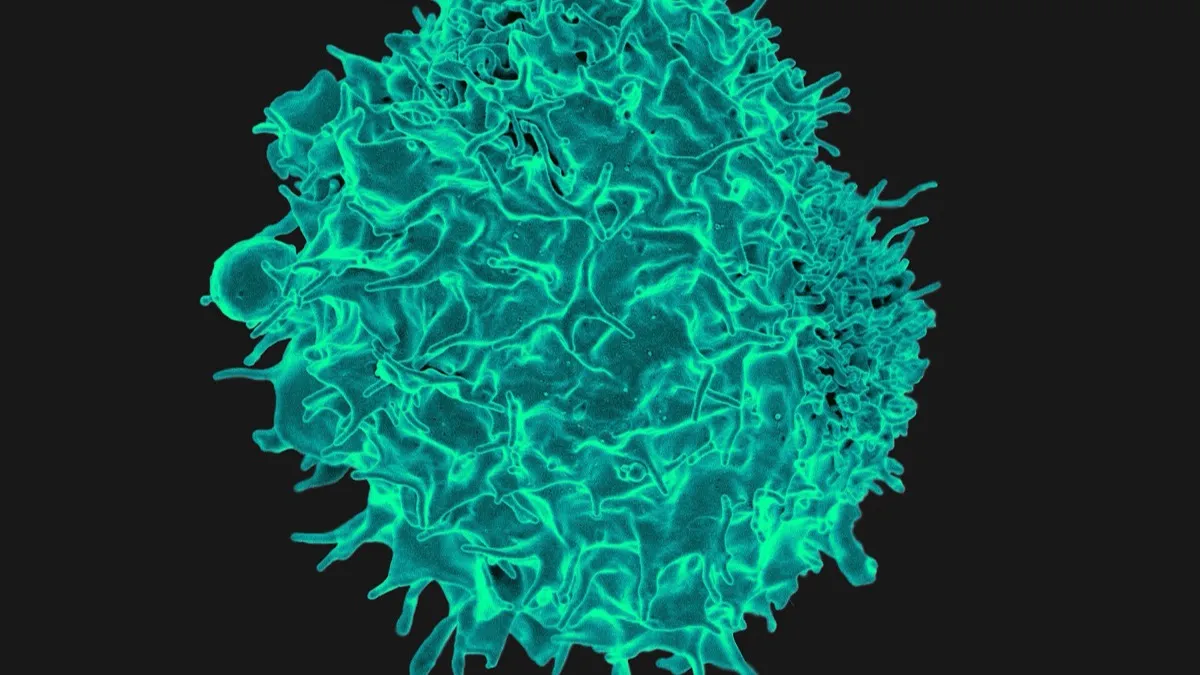
- Cover image: NIAID, CC BY 2.0, via Wikimedia Commons
Edited by Rodrigo Cornejo. How we select and verify: who writes these notes.