What happened
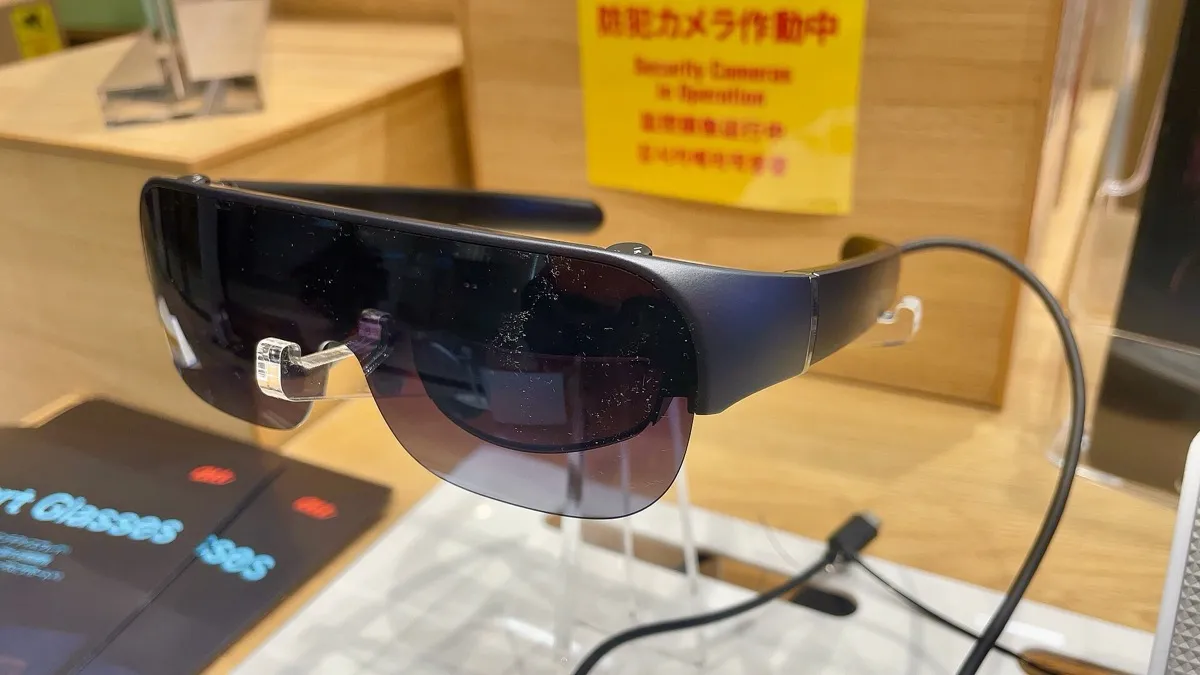
- TechCrunch published on November 8, 2026 Lucas Ropek’s impressions after trying Snap’s Specs, its augmented reality (AR) glasses, which the company calls “a new kind of computer.”
- Ropek had seen a prototype at CES in Las Vegas earlier this year: heavy, about 8 ounces, uncomfortable and warm on the face.
- In late October he tried them again in San Francisco, when Snap had already unveiled Specs at an event with CEO Evan Spiegel and opened pre-orders.
- They now weigh 132 grams, nearly half. During an hour-long demo they did not heat up.
Why it matters
Weight and heat were the most visible obstacles for glasses with a display. A pre-order version dropping to 132 grams and staying cool moves the category closer to a product people can wear for hours.
But the reporter concludes the body improved and the “soul” is still a work in progress. At $2,200 a pair, the question of what they are for remains open.
The number
$2,200. That is the price of each pair of Specs. They come in two sizes, 47 and 52 millimeters, to fit different heads, with spring hinges that make them more flexible and comfortable.
Context
According to Ropek, Snap staff could not specify whether the glasses are for games and fun or for productivity. The device tries to be many things at once and, in the process, feels “rudderless.” The journalist says he tried to think of everyday uses and in several areas he is not sold.
He nonetheless highlights the work of integrating experiences into one device, and in particular the spatial synching that lets two users see the same thing at the same time. With further development, he says, it could lead to interesting uses. He concludes the product can keep changing as the company iterates.
At Mamífero we have followed devices that move AI and the interface onto clothing and the body. Mundo turns photos of a room into a simulable world, Microsoft is pulling Copilot from LG and Samsung TVs, Phonon generates speech offline in 75 MB and Chongqing built a battery-free thimble that transmits finger strokes.
What’s next
- Pre-orders are already open, according to TechCrunch; the article gives no delivery date.
- Snap will have to show what the glasses are for beyond the demo.
- Spatial synching between two users is the function the reporter sees with the most potential.
Bottom line
Specs solved part of the physical problems of AR glasses, but not the question of use. Until there is a clear reason to put them on every day, the $2,200 price will remain the barrier.
Sources
- TechCrunch (Lucas Ropek), “If Snap’s Specs are still ridiculously expensive, they’re also a lot more comfortable than they used to be”, November 8, 2026, link.
- Cover image: Kyu3a, CC BY-SA 4.0, via Wikimedia Commons
Edited by Rodrigo Cornejo. How we select and verify: who writes these notes.