What happened
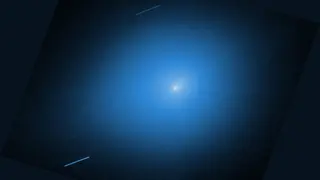
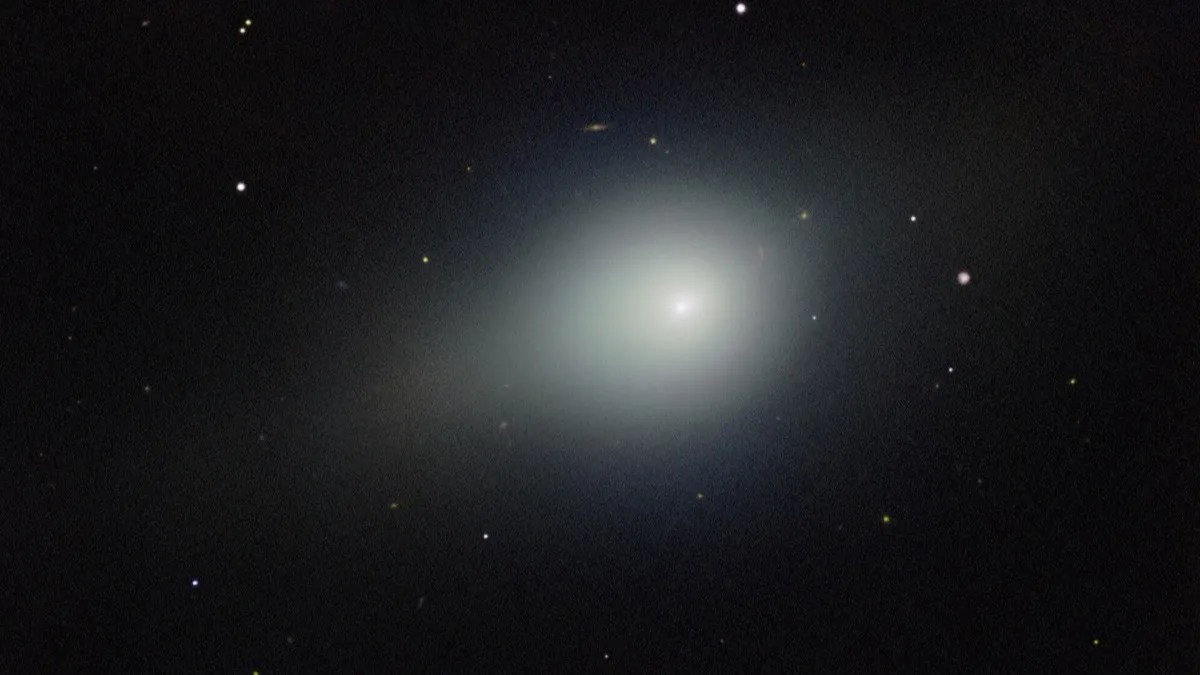
- On October 23, 2026, Nature Astronomy published a study by 18 authors, led by Nathan X. Roth, with near-infrared spectra of the coma of interstellar object 3I/ATLAS taken with the James Webb Space Telescope.
- They measured a deuterium-to-hydrogen (D/H) ratio in methane of 3.18% ± 0.30%.
- That value exceeds any other measured for methane in the Solar System and is 13 ± 2 times that of comet 67P/Churyumov-Gerasimenko, measured by the Rosetta spacecraft, the only other comet with deuterated methane detected.
- As in 67P, methane in 3I/ATLAS is more deuterated than water.
Why it matters
- Interstellar objects carry ices formed around another star. Their chemistry is a direct sample of how planetary systems form outside our own.
- According to the authors, the result is consistent with its ices forming in a cold, low-metallicity environment with a high cosmic-ray irradiation rate.
- The D/H ratio works as a fingerprint of origin. Comparing values between bodies shows whether they share a chemical history.
The number
3.18%. D/H ratio of methane in 3I/ATLAS, above any value measured for methane in the Solar System.
Context
3I/ATLAS is the third interstellar object identified, as its name indicates. Its methane value resembles those measured in methanol and formaldehyde in pre-stellar and protostellar environments, the authors say.
What’s next
- The D/H ratio of methane has not yet been measured in sources outside the Solar System, so the result stands as a reference for future comparisons.
- No deadlines announced.
Bottom line
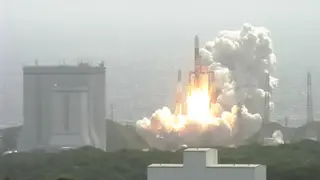
Another estimate this month calculated that the Sun may have stripped 1.7 to 5.2 metres of surface from 3I/ATLAS. And Japan launched the MMX probe to Mars to bring back samples from its moon Phobos.
Sources
- Nature Astronomy — An enriched methane D/H ratio in the interstellar object 3I/ATLAS (DOI 10.1038/s41550-026-03002-5; October 23, 2026)
- Cover image: International Gemini Observatory/NOIRLab/NSF/AURA/B. Bolin Image Processing: J. Miller & M. Rodriguez (International Gemini Observatory/NSF NOIRLab), T.A. Rector (University of Alaska Anchorage/NSF NOIRLab), M. Zamani (NSF NOIRLab), CC BY 4.0, via Wikimedia Commons
Edited by Rodrigo Cornejo. How we select and verify: who writes these notes.