What happened
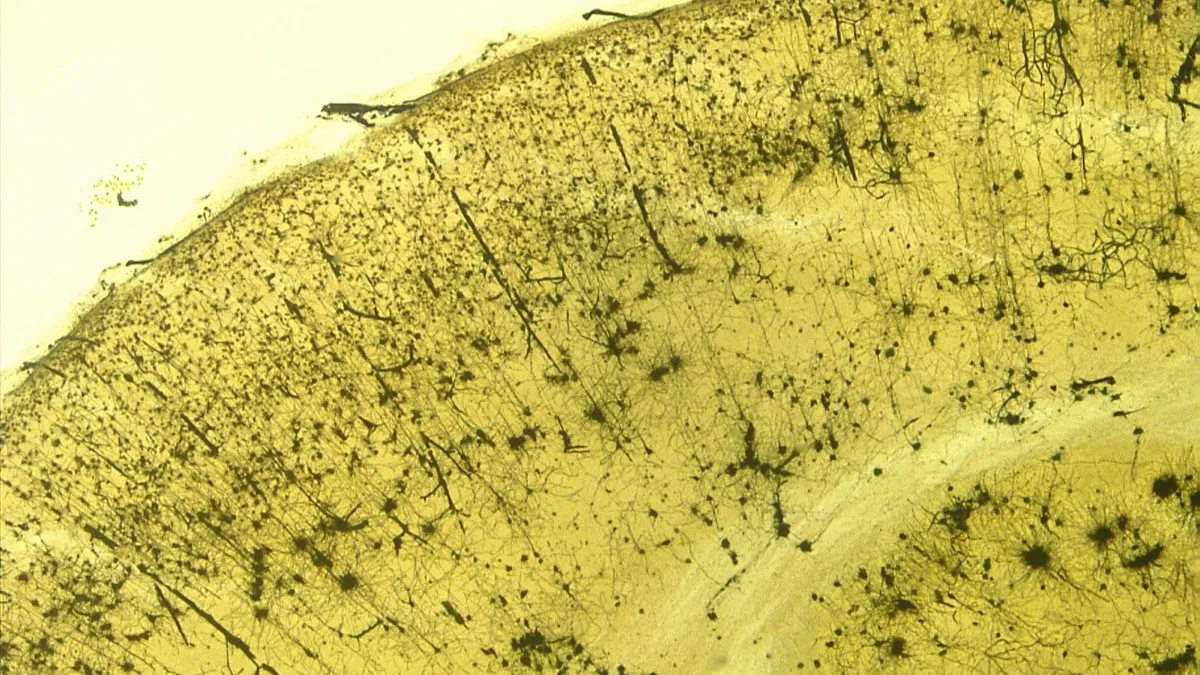
- A team from Boston Children’s Hospital, Harvard Medical School and MIT published in Nature on October 28, 2026 a genome analysis of 2,357 individual neurons from donated human brains, from the fetal stage to after birth.
- They used two single-cell whole-genome sequencing techniques: one based on the Tn5 transposase, with 1,526 neurons from 16 people, and another using primary template amplification, with 831 neurons from 12 people.
- On average, 25.9% of prenatal cortical neurons had heavily altered genomes, with copy number variants affecting several chromosomes. The range across individuals was 12.7% to 46%.
- That share dropped about 4.5-fold after birth, with both techniques.
Why it matters
- Neurons do not divide and live a whole lifetime, so their function depends on precise control of each gene’s dosage. Copy number variants are associated with neurodevelopmental and neuropsychiatric disorders.
- The finding shows that the developing brain tolerates many neurons with faulty genomes and then removes them, mainly around birth.
- The timing of that removal roughly matches the periods of programmed cell death already known in brain development.
- Neurons with smaller alterations declined more slowly, over the years after birth.
The number
25.9%. That is the average share of prenatal cortical neurons with heavily altered genomes, according to the study.
Context
Copy number variants are stretches of DNA that appear duplicated or missing. When they occur in the egg or sperm, every cell of a person inherits them. The ones in this study are somatic: they arise during development and affect only some cells.
The authors found an additional signal in the neurons that survive. The variants they keep are depleted in dosage-sensitive genes and in genes linked to neurodevelopmental disorders. That suggests the removal is not random: the brain more often discards neurons whose errors hit important genes.
The work relies on tissue from brains donated after death, which allows comparing life stages but not following the same neurons over time. The combined statistical comparison of both techniques gave a P value of 3.5 × 10⁻⁶.
What’s next
- The mechanism that detects and removes these neurons is not described in the paper’s abstract.
- An open question is whether failures in that removal relate to conditions such as autism or epilepsy, something the study does not test.
Bottom line
Brain genetics keeps revealing new layers: having more cells with two X chromosomes softens Turner syndrome in the brain and an ancient retrovirus switched off in chimpanzees a gene humans use in the brain. In disease, Alzheimer-type changes in 14% of ALS patients are linked to shorter survival and Sydney found a circadian subtype of depression.
Sources
- Nature — Perinatal elimination of genetically aberrant human cortical neurons (Shao et al., October 28, 2026)
- Cover image: Ns takes photos, CC BY 4.0, via Wikimedia Commons
Edited by Rodrigo Cornejo. How we select and verify: who writes these notes.