What happened
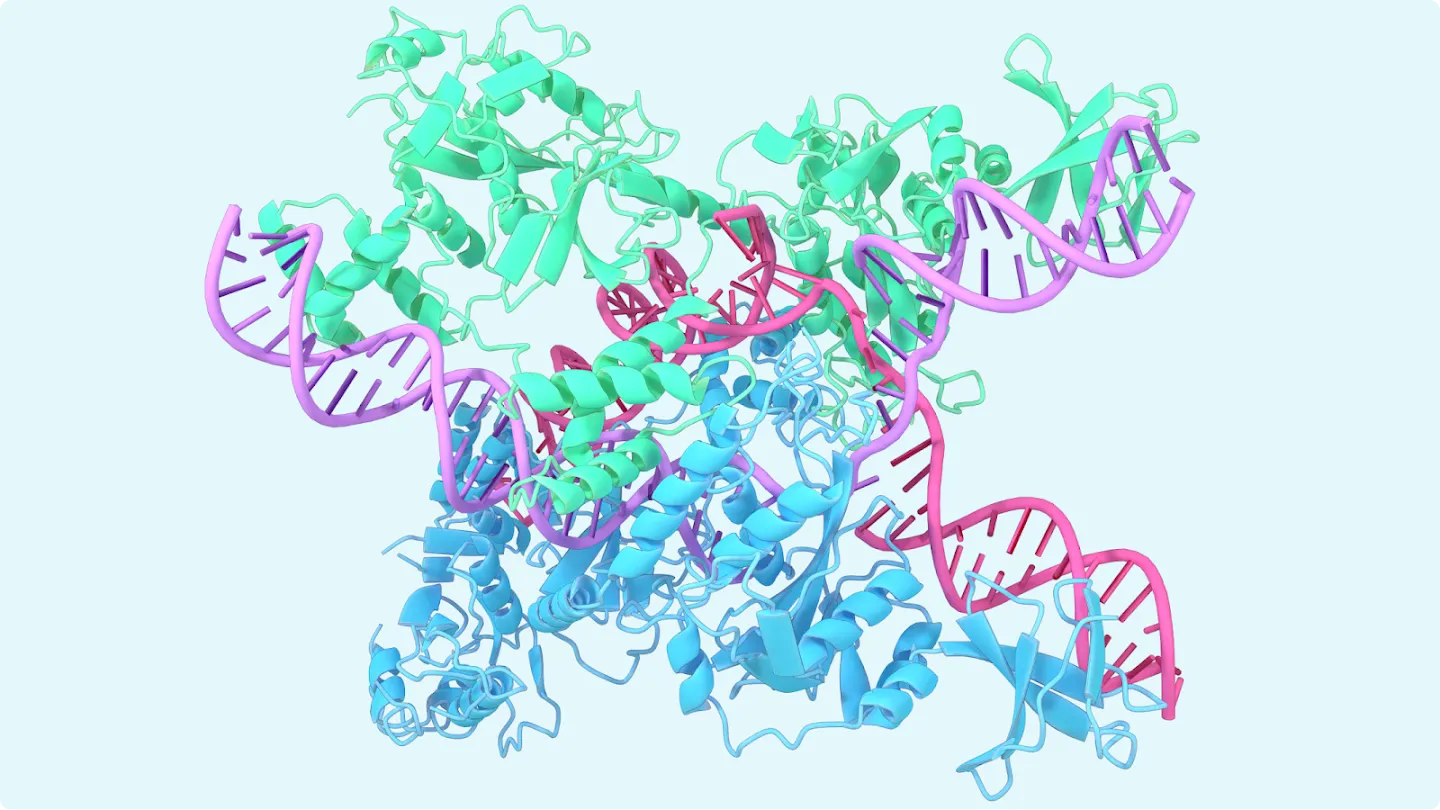
- On September 24, Nvidia announced on its corporate blog the addition to the public AlphaFold database of predicted three-dimensional structures for protein complexes from more than 2,800 viruses.
- According to the same text, about 30% of the protein interactions being added had not been described in the scientific literature.
- The computation was done with AlphaFold2 optimized on Nvidia’s BioNeMo inference environment. The company also released the complete GPU-accelerated workflow so other groups can predict structures from sequences.
- Participants include Google DeepMind, EMBL’s European Bioinformatics Institute, the Coalition for Epidemic Preparedness Innovations, Seoul National University, Sungkyunkwan University, the Swiss Institute of Bioinformatics and the University of Glasgow.
- The predictions are accessible, with confidence labels, from the pandemic-preparedness portal of the AlphaFold database.
Why it matters
- For research groups in Chile and the region, the cost of entry to viral protein structure is no longer compute but judgment: the file is already calculated and downloadable. What’s scarce now is someone who knows how to read a confidence label and discard a weak prediction.
- Releasing the workflow, not just the result, is the part coverage tends to leave out. It means a university with GPU access can run its own set of local viruses — arboviruses, hantaviruses — without asking anyone for the computation.
- There’s a consequence the announcement doesn’t spell out: a database of 260 million predictions without experimental validation is also a repository of hypotheses. Publishing on a predicted structure and treating it as observed is a mistake that is now one click away.
The number
260 million predictions of proteins and protein complexes are in the AlphaFold database today, according to Nvidia.
Context
The move comes shortly after Nvidia closed its purchase of Hugging Face, which gave it the most widely used distribution channel for open models. The BioNeMo workflow is published along the same logic of openness.
What’s next
- No timelines announced for new batches of viruses or for experimental validation of the new interactions.
- The pandemic-preparedness portal has been open since the announcement, with no closing date or terms of use stated in the text.
Bottom line
It’s the second significant release of scientific infrastructure in a week, after Alphabet published its robotics core under an open license. In both cases the code is free and the compute that makes it useful isn’t.
Sources
Edited by Rodrigo Cornejo. How we select and verify: who writes these notes.