What happened
- Thirteen researchers, with Lash, Strebinger, Segel and Vo among the authors, published on 4 November 2026 in Nature Communications a system of protein nanoparticles assembled outside cells.
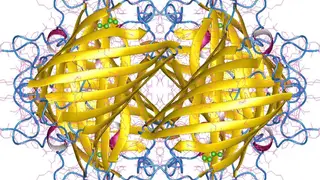
- They reconstituted the capsid derived from the Drosophila melanogaster Arc1 retroelement from purified recombinant protein and RNA transcribed in a test tube.
- They engineered that capsid’s RNA-binding domain so it encapsulates both messenger RNA payloads and Cas9 ribonucleoproteins, the gene editing tool.
- They showed the capsids bind mammalian cells through a direct interaction with the surface receptor SORCS2.
Why it matters
- Getting large molecules inside cells remains one of the bottlenecks of biomedicine.
- Until now, protein capsids had to assemble inside cells or rely on fusogens to enter, which limited production at scale.
- A defined, cell-free system makes it easier to control composition and, in principle, to manufacture more.
The number
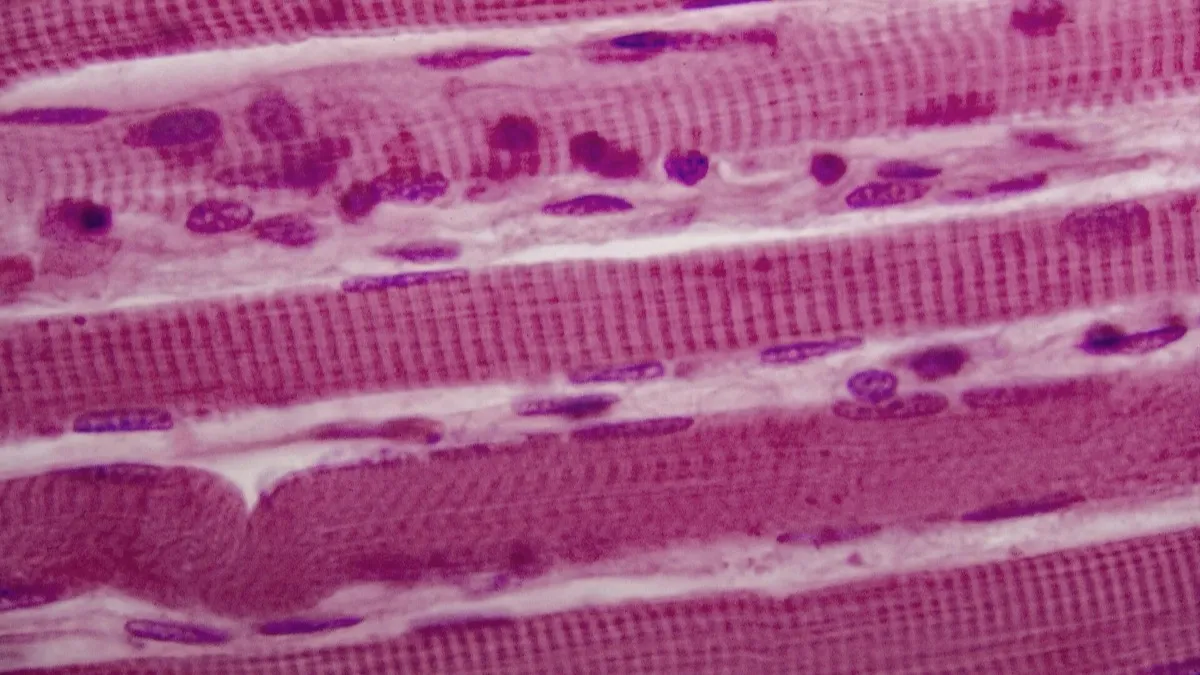
Up to 18%. That is the exon skipping achieved after injecting capsids carrying Cas9 editors into the muscle of mdx mice, a model of Duchenne muscular dystrophy, with restored dystrophin expression in muscle fibres.
Context
Exon skipping is a therapeutic strategy that aims to make the cell omit a faulty part of the gene and produce a shorter but functional version of the protein. In Duchenne dystrophy, the missing protein is dystrophin, needed for the muscle fibre to withstand contraction.
The entry route identified, the SORCS2 receptor, is what allows the capsid to work as a targeted vehicle. The work was done in mice and by intramuscular injection, so it is far from a treatment: distribution, dosing, immune response and safety remain to be assessed.
At Mamífero we follow gene therapies and drug delivery. We reported that modified transfer RNAs repair the p53 gene and that a soft microneedle patch measures glucose and pH at once. Also that more cell-free DNA in blood improves early cancer detection and that Pinal designs proteins from a sentence.
What’s next
- The logical next step is to test other payloads and other routes of administration.
- Dependence on a specific receptor conditions which tissues the system can reach.
- Any clinical application will require safety studies this work does not address.
Bottom line
Gene editing has had good scissors for years and a transport problem. This capsid, assembled in a test tube from a fly protein, takes aim at the second one.
Sources
- Lash, Strebinger, Segel, Vo et al., “In vitro-reconstituted Drosophila Arc capsids deliver gene editors to dystrophic muscle”, Nature Communications, 4 November 2026, DOI 10.1038/s41467-026-79058-8. This note is based on the paper’s abstract.
- Cover image: Rollroboter, CC BY-SA 3.0, via Wikimedia Commons
Edited by Rodrigo Cornejo. How we select and verify: who writes these notes.