What happened
- Researchers from the National University of Singapore and Huazhong University of Science and Technology in Wuhan published on 28 October 2026 in PNAS a soft microneedle patch that measures several markers in the skin’s interstitial fluid.
- The team gave the electrodes a “nano-hill” topography that spreads mechanical strain. That way the electrodes do not crack when they pierce the skin or when the body moves.
- The design cut signal variability 14-fold compared with conventional designs.
- In a living subject, the system recorded glucose, local tissue pH and temperature in real time and in sync.
Why it matters
- Microneedle sensors allow continuous, minimally invasive monitoring of metabolic diseases such as diabetes. Their problem is that they fit poorly to the skin or their electrodes crack, making the signal unstable.
- The patch reached clinical-grade accuracy in continuous glucose monitoring, with a mean absolute relative difference of 10.8% against the reference.
- Measuring several parameters at once helps interpret glucose: tissue pH and temperature can skew a sensor’s reading.
The number
14-fold. That is how much signal variability fell compared with conventional microneedle designs, according to the authors.
Context
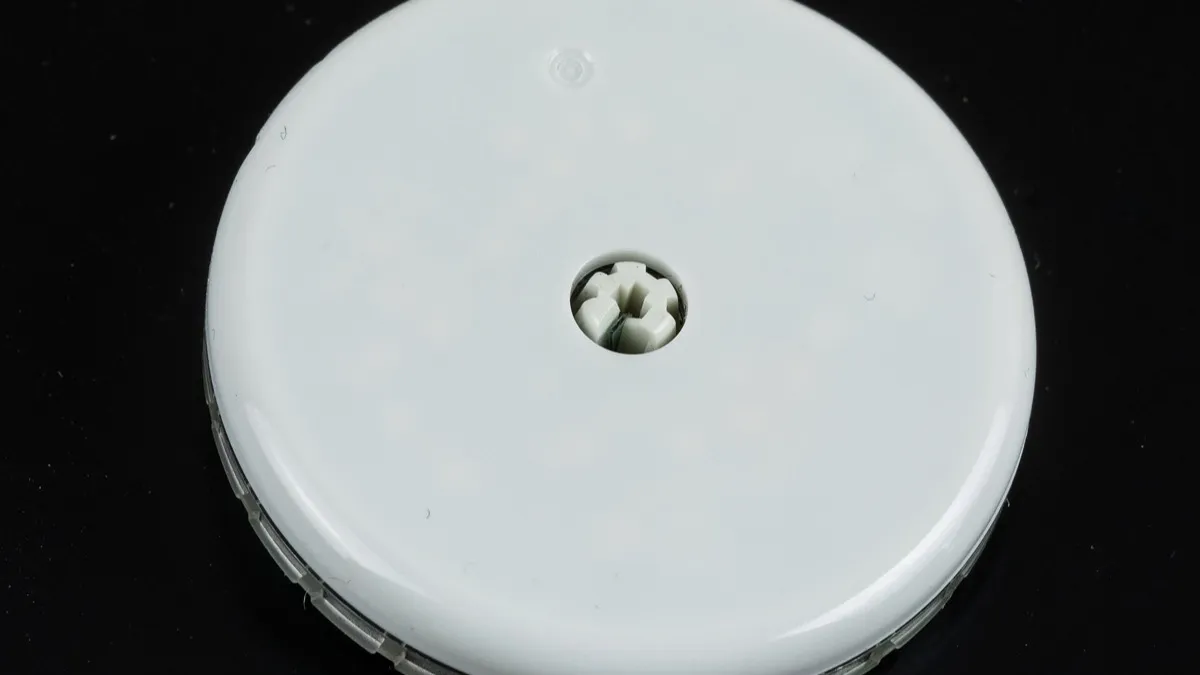
The system pairs a reusable electronic module with a disposable microneedle array. The sensor footprint is 1.8 square centimetres, comparable to the continuous glucose monitors already on sale.
Wearable devices that measure the body are moving towards soft materials that adapt to the skin. Mamífero reported how a sleeve with pixel fibres shows video and can be washed and how a sub-gram microdrone flies untethered. In medicine, metabolite analysis can anticipate risk, as with the combinations that predict which Chagas cases will damage the heart, and large cohorts reveal effects of common drugs, such as omeprazole linked to more Parkinson’s.
What’s next
- The paper describes a test in one living subject. A clinical trial with many patients is needed to validate accuracy in daily use.
- The disposable part has to get cheaper to compete with commercial glucose sensors.
- If stability is confirmed, the platform could add other interstitial fluid markers, such as lactate or electrolytes.
Bottom line
The work’s contribution is mechanical before it is chemical: electrodes that do not crack when the body moves. With that stability, the patch measures three variables at once with clinical accuracy for glucose. The next test is leaving the lab.
Sources
- Qiao, Z., Chen, S., Liu, S. et al., “A strain-insensitive multiplexed soft microneedle patch for robust interstitial fluid biomarker monitoring”, PNAS, 28 October 2026, DOI 10.1073/pnas.2611528123. Date and abstract confirmed on Crossref.
- Cover image: Raimond Spekking, CC BY-SA 4.0, via Wikimedia Commons
Edited by Rodrigo Cornejo. How we select and verify: who writes these notes.