What happened
- Researchers from Guangzhou National Laboratory, Guangzhou Medical University and Boston Children’s Hospital published on 28 October 2026 in Nature the identification of a bacterial toxin that drives necrotising enterocolitis and the related brain damage in premature babies.
- In the gut microbiota of infants with severe or fatal enterocolitis they found Clostridium perfringens strains carrying the Delta toxin. Infected infants fared worse: systemic inflammation, severe neurological damage and clotting disorders.
- In mice, infection with these strains, or exposure to the toxin alone, reproduced intestinal necrosis and acute brain injury.
- Using a genome-wide CRISPR screen, they identified the protein CD9 as the receptor through which the toxin acts.
Why it matters
- Necrotising enterocolitis is the gravest gastrointestinal emergency in premature babies. It causes deaths and leaves neurodevelopmental after-effects, and until now it was unclear which microbial factor triggered it or why it harms the brain.
- The Delta toxin preferentially attacks macrophages, immune cells. It switches on an inflammatory pathway that kills them and releases a cascade that weakens the blood-brain barrier.
- Mice lacking CD9 throughout the body or in their myeloid cells were protected from death, brain barrier damage and multi-organ injury. That points to CD9 as a possible treatment target.
The number
CD9. That is the cell-surface protein the Delta toxin uses as its receptor, according to the CRISPR screen.
Context
A role for the microbiota in enterocolitis had been suspected for years, but without a specific culprit. The work links one toxin to both the intestinal disease and the brain damage, one of the after-effects that most worries neonatologists.
Mamífero follows infectious agents behind serious illness: an enterovirus D68 clade tracks cases of acute flaccid myelitis, a French patient was the first known human case of Shamonda virus and without the DDP protein the Toxoplasma parasite cannot reproduce. On diagnostics, the Andes hantavirus outbreak on a cruise ship exposed gaps in European laboratories.
What’s next
- The next step is to look for the Delta toxin in larger cohorts of premature babies and assess whether early detection can anticipate severe cases.
- Blocking the binding between the toxin and CD9 is a possible treatment strategy, but it has only been tested in mice.
- The authors saw that removing CD9 only from the gut lining gave partial protection, which confirms the central role of macrophages.
Bottom line
Neonatal units have treated necrotising enterocolitis for decades without knowing its cause well. This work identifies a toxin, a receptor and a chain of damage that reaches the brain. Turning that map into a diagnostic test or a treatment for babies is still to come.
Sources
- Zhang, S., Gong, X., Tian, S. et al., “Clostridium perfringens Delta toxin targets CD9 to drive NEC and brain injury”, Nature, 28 October 2026, DOI 10.1038/s41586-026-11211-1
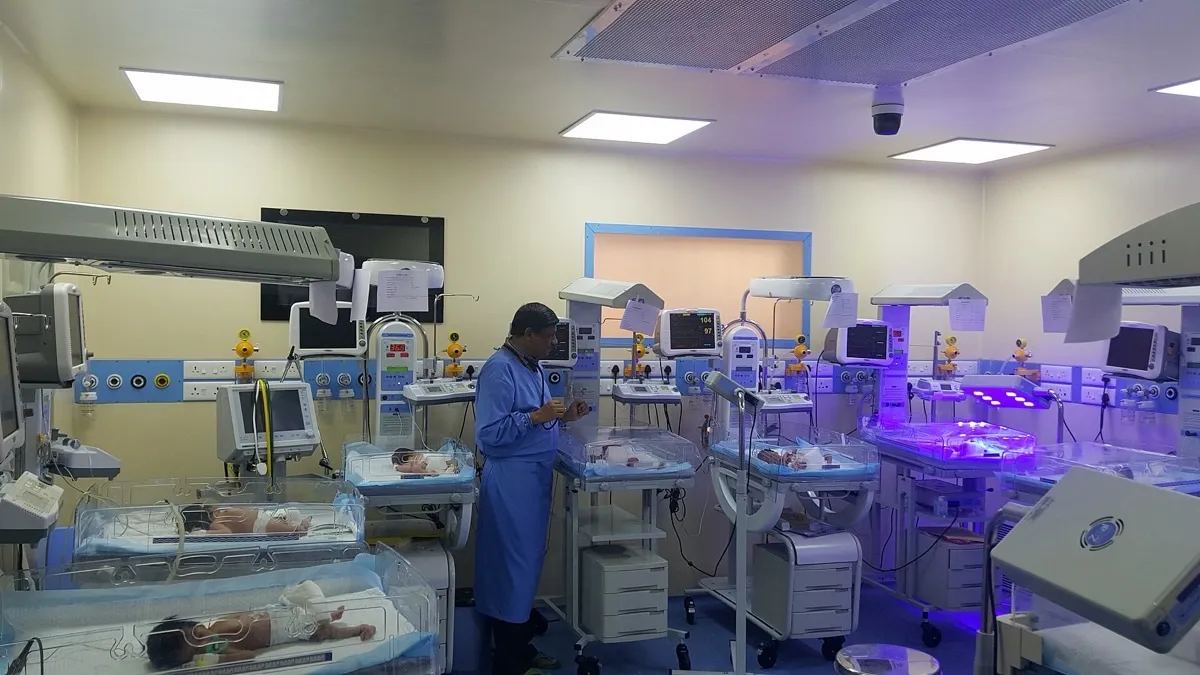
- Cover image: Kaveri appala, CC BY-SA 4.0, via Wikimedia Commons
Edited by Rodrigo Cornejo. How we select and verify: who writes these notes.