What happened
A study of 10,683 metagenomes provides a national basis for the diversity of methane-oxidizing microorganisms in Denmark. Published on November 10, 2026 in Nature Communications, the work identifies 102 new methanotrophic species and compares their distribution between natural, agricultural and urban habitats.
The analysis uses genome-resolved classification. Its contribution is to recognize organisms and metabolic capacities in different environments, including groups that are difficult to culture. It is not a measurement of how much methane disappears from each soil nor a complete inventory of emissions avoided by the country.
Why it matters
Methanotrophic microorganisms consume methane as part of their metabolism. Knowing where they are and what diversity they present helps to formulate questions about the role of different environments in that process.
The study addresses an information gap: cultures, reconstructed genomes of incomplete quality, and marker studies do not always capture the same diversity. Assembling a large set of metagenomes allows contrasting distribution and metabolic potential, but potential must be distinguished from effective activity. The fact that a sequence contains genes related to a function does not demonstrate that that function is performed with the same intensity under any environmental condition.
The number
102 new species identified through genomics. The result expands the available catalog. It does not mean that all of them have been isolated in culture, that they are equally abundant, or that their contribution to the methane balance has already been quantified.
Context
The authors find that poorly characterized methanotrophs dominate in natural ecosystems and observe contrasts with disturbed environments. This distribution relates diversity to habitat types without reducing them to a single national measure.
The design allows species and places to be identified for later research. It also shows why a baseline must maintain its sampling conditions: differences in available data can influence which groups are detected and which remain underrepresented.
On related topics, Mamífero has also published carbon transport by marine snow, soil respiration and nitrogen deposition, Aerosols and radiation budget in East Asia and resilience measurements in changing systems.
What’s next
The next step will be to link those capabilities with functional measurements and environmental conditions. The baseline can help choose candidate organisms and habitats, but it is not enough to promise an intervention that verifiably reduces emissions.
It will also be necessary to check whether Danish patterns are conserved in other climates and land uses. The national scope is a strength to build a coherent reference and, at the same time, a limit to extrapolate it. The article offers resources to study this transition between diversity and function. The measurement of methane fluxes should provide evidence that a genomic classification, no matter how detailed, cannot produce on its own.
Bottom line
The work expands the known diversity of methane-consuming microbes and places that diversity in specific habitats. Its result is a basis for subsequent experiments and measurements. It is convenient to keep three things separate: find genes, identify organisms and demonstrate an effect on emissions.
Sources
- Nature Communications, DOI 10.1038/s41467-026-79316-9; verified publication date in the journal, November 10, 2026. Summary and text of the article consulted. The magazine does not indicate publication time.
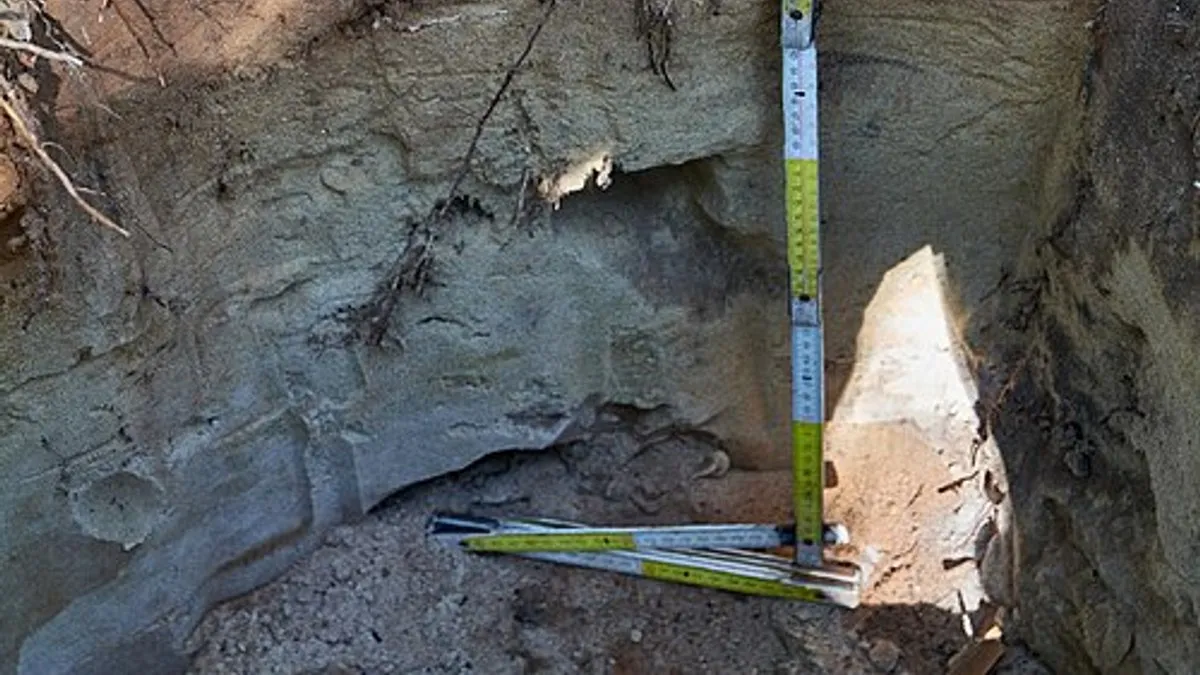
- Cover image: Leonhard Lenz, CC0, via Wikimedia Commons. Cropped and resized to 1200 × 675 pixels. Reference photograph; it does not document the announced event.
Edited by Rodrigo Cornejo. How we select and verify: who writes these notes.