What happened
- Four researchers from Princeton University and NOAA’s Geophysical Fluid Dynamics Laboratory (GFDL) published on 3 November 2026 in PNAS an evaluation of the new CMIP7 climate forcing dataset.
- Forcings are the data a climate model receives on gases, aerosols and other factors that alter the energy balance. The new dataset extends the record of past data to 2021.
- They compared simulations of the GFDL AM4 atmospheric model using the updated forcings with those using the intermediate SSP2-4.5 scenario, which had been used for recent years.
- With the new data, the global radiation trend at the top of the atmosphere did not move closer to what satellites measure.
Why it matters
- Up-to-date forcings are needed to compare simulations with observations of the recent climate.
- The study shows that updating the data does not resolve the global gap between model and satellites, but it does change the regional split of energy between atmosphere and surface.
- For regional climate, local changes in aerosols weigh heavily, which justifies updating these data regularly, the authors say.
The number
2001 to 2021. That is the period in which accelerated reductions of sulphate and black carbon aerosols over East Asia lowered atmospheric absorption of sunlight, in line with observations.
Context
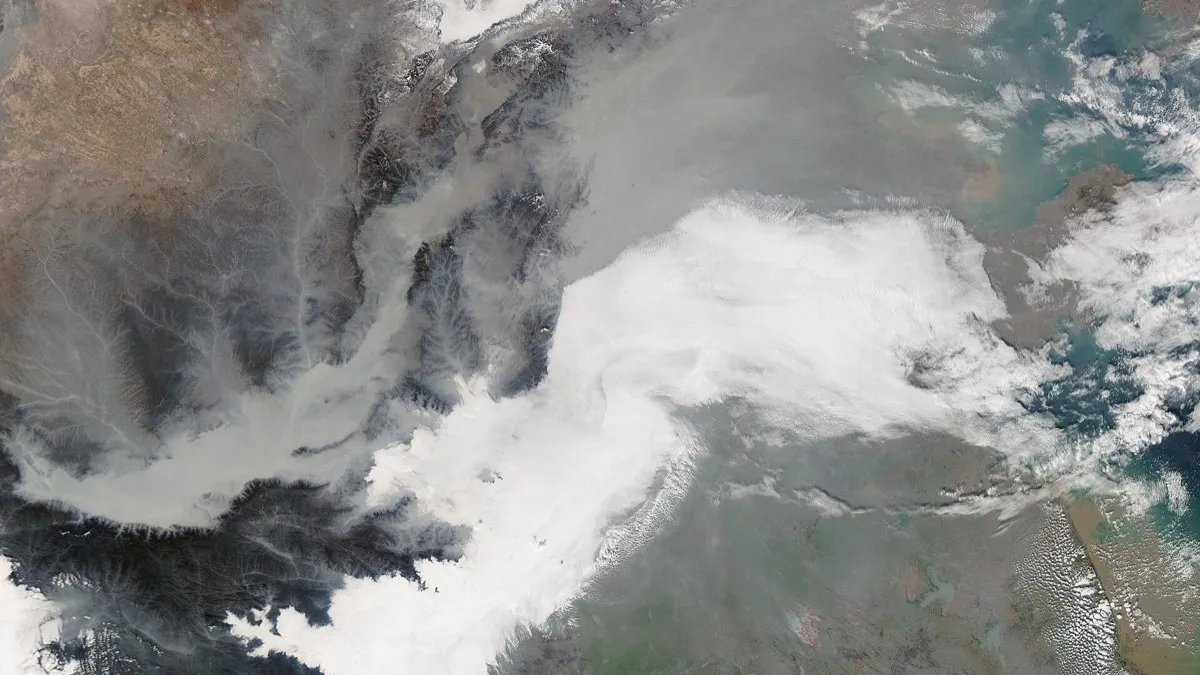
The regional results go in two directions. Over East Asia, the reduction of sulphate and black carbon aerosols produced in the model a significant drop in atmospheric solar absorption that matches what was observed. At high latitudes, by contrast, a large increase in organic aerosols in the new data created a local rise in atmospheric absorption that does not match observations.
In other words, the new dataset improves the model in one region and moves it away from observations in another. The authors conclude that the influence of these local changes on simulated climate is large and that forcing datasets should be updated routinely.
At Mamífero we follow climate and atmospheric physics. We reported that Antarctic sea ice reached 17.59 million km² in 2026 and that more algae in the Arctic will drag more persistent pollutants to the seabed. Also that the 2025 solar storm exceeded radiation thresholds for flights and that a machine learning method improved subseasonal forecasting.
What’s next
- Other models taking part in CMIP7 will show whether the same regional biases recur.
- Estimates of organic aerosols at high latitudes emerge as a point to review in the data.
- The global gap with satellites remains unexplained by forcings and needs other lines of analysis.
Bottom line
Updating input data does not fix everything in a climate model, but it changes a lot at regional scale. In East Asia, the cleaner air of the past two decades already shows in how much sunlight the atmosphere absorbs.
Sources
- Fan, C., Paynter, D., Kramer, R. et al., “Forcing dataset updates impact regional but not global Earth radiation budget trends in the GFDL AM4 climate model”, PNAS, 3 November 2026, DOI 10.1073/pnas.2611210123. This note is based on the paper’s abstract.
- Cover image: Jeff Schmaltz, MODIS Land Rapid Response Team, NASA GSFC, public domain, via Wikimedia Commons
Edited by Rodrigo Cornejo. How we select and verify: who writes these notes.