What happened
- The University of California San Diego released a study by its Scripps Institution of Oceanography and the University of Lincoln on “marine snow,” which ScienceDaily reproduced on November 8, 2026.
- The work, published October 8 in Science, found that the viscosity of these particles influences how fast bacteria break them down and how far they sink.
- The stickiest particles can carry more than six times as much carbon to the deep ocean as particles with a thinner consistency.
- The authors are Bryce G. Inman, Stuart Humphries and Farooq Azam. The study is over a month old, but it is niche work that explains a gap in the carbon cycle.
Why it matters
Marine snow is clumps of waste, dead organisms, mucus, feces, silt and plankton remains that sink from the surface and carry carbon down. According to the researchers, it removes more than 10 gigatons of carbon a year from surface waters, but only about two reach depths where the carbon can stay stored for hundreds or thousands of years.
Why so much is lost on the way was a puzzle. Viscosity now appears as a factor that helps explain that difference.
The number
More than six times. That is how much more carbon the stickiest particles can transport compared with the least viscous ones, according to the study. Bacteria feed on marine snow during its descent and gradually take it apart, so the slower that breakdown, the more carbon reaches the depths.
Context
The project began in 2021, when Bryce Inman, then a postdoctoral researcher at Scripps, set out to explore what he calls “the muscoscape,” the landscape of mucus. Until then it was impossible to observe individual bacteria interacting with the physical structure of mucus. After four years and several failed attempts, the team developed a working technique in 2025 that combines 3D confocal microscopy with specially designed fluorescent molecules.
The researchers stress that these bacteria-and-mucus interactions are not exclusive to the ocean: they also sustain coral reefs, kelp forests, plant roots and the digestive systems of humans and other animals.
The ScienceDaily text reproduces the university’s press release. For this note that version and the title and date of the Science paper were used.
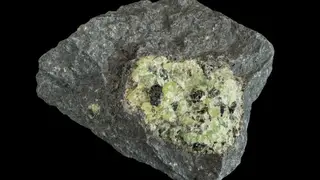
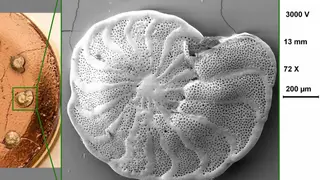
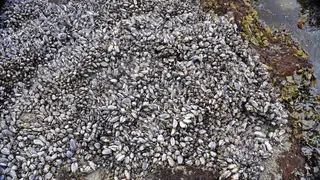
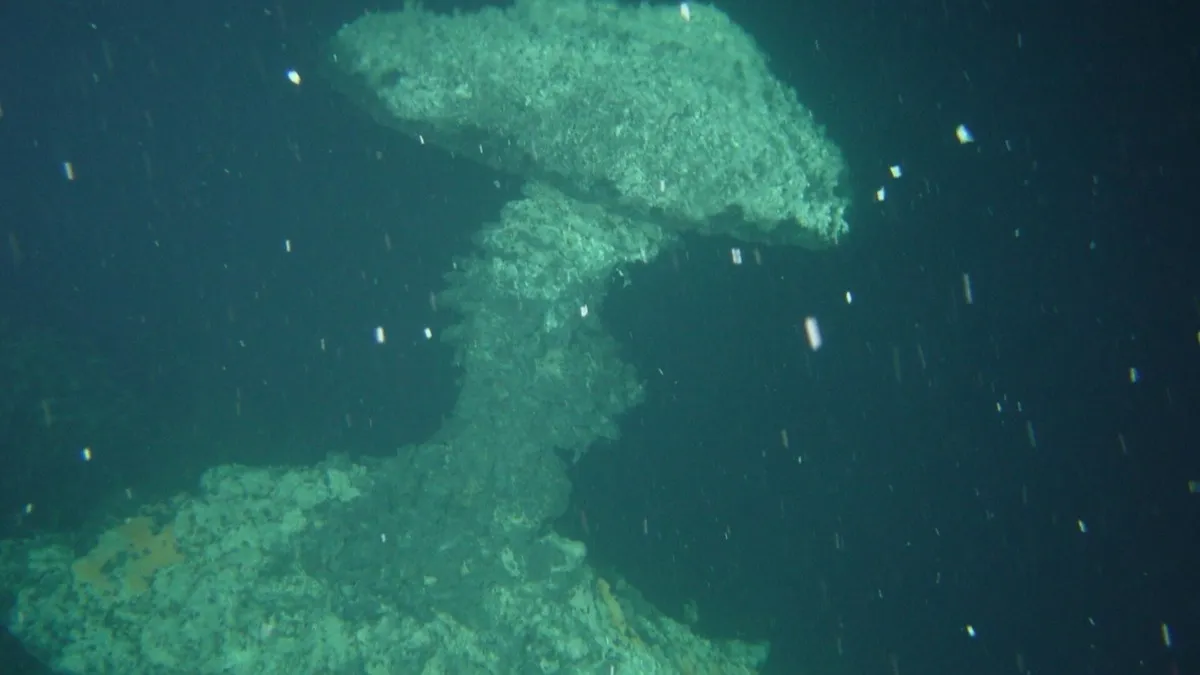
At Mamífero we have followed carbon-cycle studies. Ground olivine stores more carbon in soil only if microbes have food, the Southern Ocean may have released CO₂ and explain half the Eocene rise, a single number is proposed to measure the permanence risk of removed carbon and mussels keep vanadium and iron in separate systems for their adhesive.
What’s next
- Carbon-cycle models could incorporate particle viscosity as a variable.
- The fluorescent-molecule technique can be applied to other environments with mucus and bacteria.
- It remains to be learned how much viscosity varies between oceans and seasons.
Bottom line
The explanation of why only a fraction of the carbon reaches the bottom now has a measurable variable: how gelatinous the particles are. The finding offers one more parameter for climate models.
Sources
- ScienceDaily, “Hidden climate superpower: Why some ocean ‘snow’ carries six times more carbon”, November 8, 2026, link. Reproduces the University of California San Diego press release.
- Inman, B. G., Humphries, S., Azam, F., “Marine snow viscosity regulates microbial degradation and the ocean carbon sink”, Science, October 8, 2026, DOI 10.1126/science.adx4170.
- Cover image: null, CC BY 4.0, via Wikimedia Commons
Edited by Rodrigo Cornejo. How we select and verify: who writes these notes.