What happened
A record from the Chinese loess plateau identifies episodes of cold and dryness during the onset of glacial periods. The study, published on November 10, 2026 in Communications Earth & Environment, reconstructs land temperature and monsoon precipitation for approximately 250,000 years.
The authors use molecular fossils to study both variables in the same file. The result allows us to recognize extremes that do not appear clearly in some frequently used terrestrial indicators. The research examines past climate and regional response mechanisms, not a forecast for an upcoming season.
Why it matters
Many natural archives combine signals from temperature, humidity, and other processes. If these signals cannot be separated, it is difficult to know whether a period was dry, cold, or both.
By reconstructing temperature and rainfall together, the work offers a comparison that helps identify non-linear responses. A gradual variation in background conditions can be associated with a more abrupt regional change when crossing a threshold. This interpretation is supported by records and simulations, but does not establish a universal threshold applicable to any place or a value that alone allows predicting current climate extremes.
The number
About 900 years resolution. This is the approximate scale of the reconstruction. Although it allows the study of variations within glacial cycles, it should not be confused with annual records or used to affirm the exact duration of an individual storm or drought.
Context
Molecular indicators used include brGDGT and complementary aridity signals. The record shows cold and dry extremes at the beginning of glaciations and pronounced droughts during their endings.
The authors compare these results with indicators such as isotopic oxygen of speleothems. The lack of a clear expression of the same extreme in another file does not mean that one is necessarily wrong: they may respond to different components of the climate system.
On related topics, Mamífero has also published carbon transport by marine snow, soil respiration and nitrogen deposition, Aerosols and radiation budget in East Asia and resilience measurements in changing systems.
What’s next
Transient simulations reproduce the timing of cooling extremes and support a relationship with the boreal summer insolation decline. The support of the model strengthens the interpretation of thresholds, without turning it into a direct observation of each past process.
New records that separate temperature and precipitation will allow us to verify whether the pattern is maintained in other areas. It will also be important to examine uncertainties of chronology and molecular indicators. The methodological advance is to bring together two dimensions of climate that are often mixed together, so that the proposed mechanisms can be compared with more specific evidence than a single integrated signal.
Bottom line
Chinese loess preserves a history of joint extremes that some records do not clearly distinguish. The study helps explain how gradual orbital variations could produce regional threshold responses. Their contribution is a reconstruction of the past with separate variables and explicit temporal limitations.
Sources
- Communications Earth & Environment, DOI 10.1038/s43247-026-04060-3; verified publication date in the journal, November 10, 2026. Summary and text of the article consulted. The magazine does not indicate publication time.
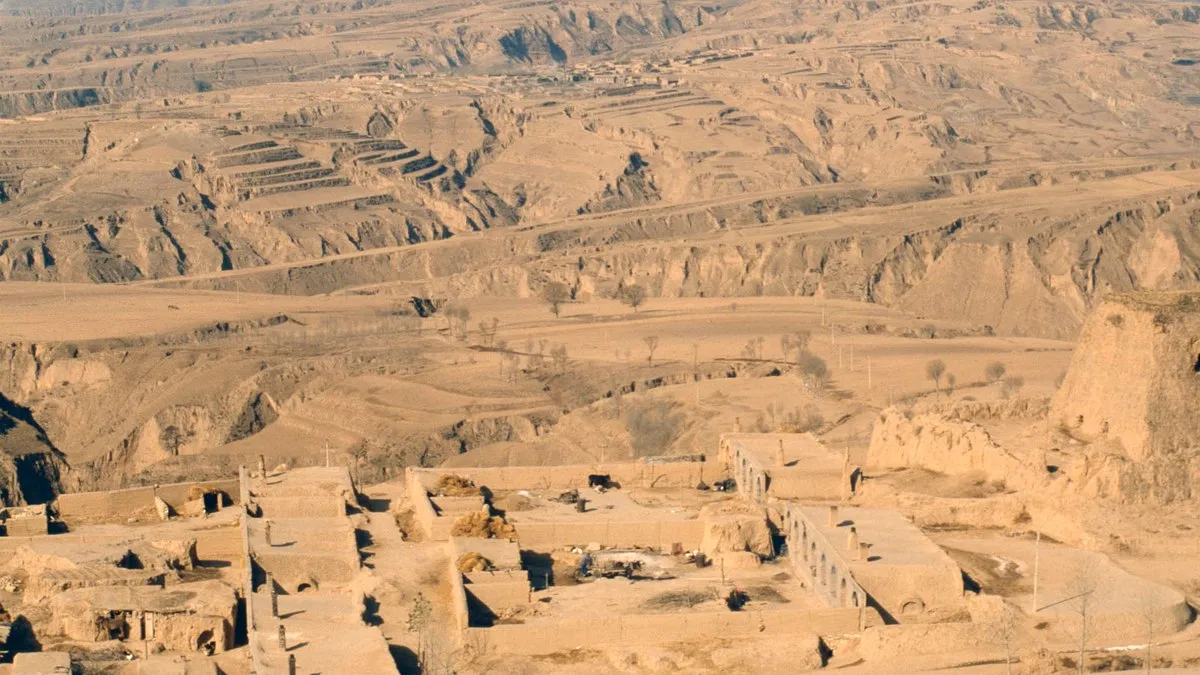
- Cover image: Till Niermann (User:Till.niermann), CC BY-SA 3.0, via Wikimedia Commons. Cropped and resized to 1200 × 675 pixels. Reference photograph; it does not document the announced event.
Edited by Rodrigo Cornejo. How we select and verify: who writes these notes.