What happened
A genomic analysis of marine, freshwater and soil environments reveals protist diversity underrepresented in reference catalogues. The study, published on November 10, 2026 in Nature Communications, brings together more than 30,000 assembled metagenomes, single cell genomes and long sequence sets.
Protists group together eukaryotes other than plants, animals and fungi. Many of their lineages have not been cultivated. The work seeks to recognize part of this diversity through environmental sequences, without depending solely on organisms that already have names or are maintained in the laboratory.
Why it matters
Reference databases influence what can be identified when analyzing a sample. If a group is underrepresented, its sequences may be left without proper assignment even if it has a presence in an ecosystem.
The study also addresses limitations of the amplified markers: the choice of primers, the PCR procedure and the recovered length may favor some sequences over others. Gathering data with complementary methods broadens the search, although it does not eliminate all bias. The result is a resource to guide sampling and characterization. Finding a divergent lineage through sequencing is not yet equivalent to describing what it looks like, cultivating it, or measuring all of its ecological functions.
The number
Thirteen deeply divergent candidate lineages. The authors identify them with little or no representation in databases. The term candidate keeps visible that its position and characterization need additional work, beyond recognizing a different genetic signal.
Context
The analysis recovered 157,956 long sequences of the 18S ribosomal RNA gene. The groupings change depending on the identity threshold used, so their numbers should not be read as a direct species count.
After excluding non-protist groups and isolated sequences, 81% of the 9,543 operational units at the 85% threshold contained only environmental sequences, with no described representative. The definition of that set is essential to interpret the percentage.
On related topics, Mamífero has also published DNA and metagenome analysis, archaeal cultures and cellular origin, protein and energy research and the role of Miro1 in metabolism.
What’s next
The authors propose using the resource to direct new samples and genomic, ecological and experimental studies. Some lineages are linked to partial genomes obtained through single-cell analysis, offering another avenue to investigate them.
The comparison shows gaps in groups such as Amoebozoa, Discoba and Rhizaria. Expanding your representation will allow you to review assignments and relationships. The predicted associations with bacteria and other eukaryotes also require functional verification: coexisting in the data does not demonstrate a specific interaction. The progress lies in making visible where references are missing and in having sequences to formulate more targeted tests.
Bottom line
The diversity of protists that appears in environmental samples exceeds what is described in the catalogs used as reference. The study provides sequences and candidates to close part of that gap. Their genetic groupings are starting points to study organisms, relationships and functions that are still poorly characterized.
Sources
- Nature Communications, DOI 10.1038/s41467-026-78712-5; verified publication date in the journal, November 10, 2026. Summary and text of the article consulted. The magazine does not indicate publication time.
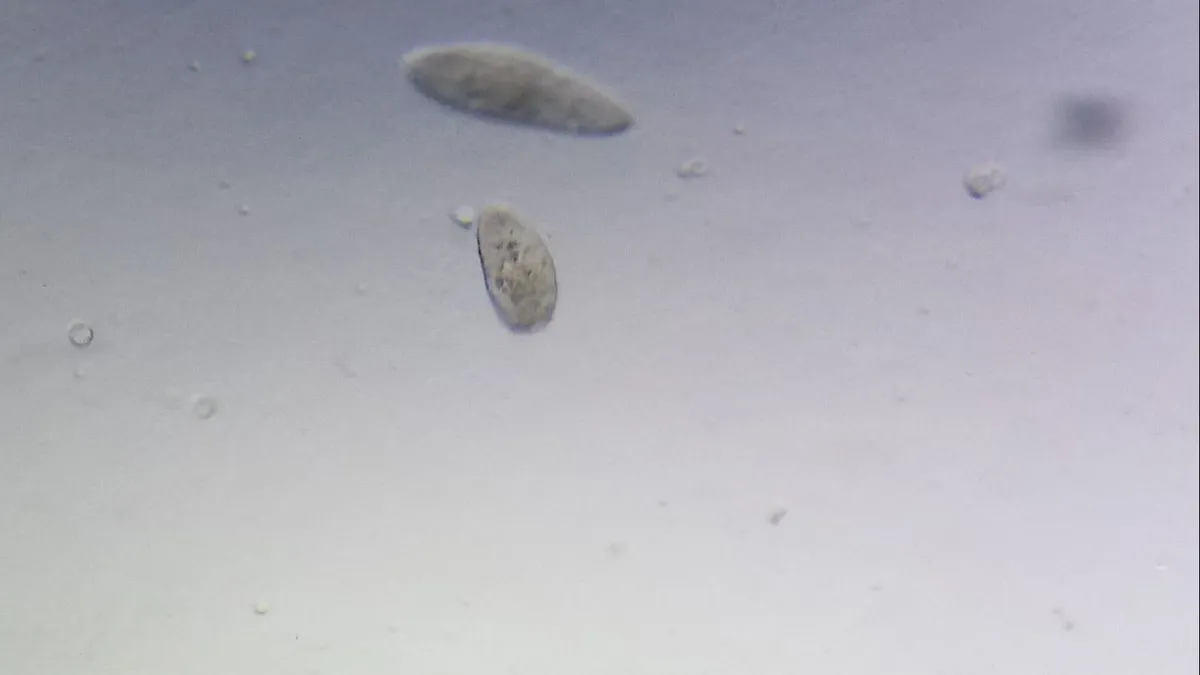
- Cover image: Fritzmann2002, CC BY-SA 4.0, via Wikimedia Commons. Cropped and resized to 1200 × 675 pixels. Reference photograph; it does not document the announced event.
Edited by Rodrigo Cornejo. How we select and verify: who writes these notes.