What happened
- A team from the X-star institute of JAMSTEC, Japan’s marine science body, with the company JEOL and the AIST institute, reported in Nature on October 28, 2026 the isolation of two archaea strains, HC1 and SC1, from the Heimdallarchaeia lineage.
- That lineage is, according to genetic analyses, the one that branches closest to eukaryotes, the group of organisms with a nucleus that includes plants, fungi and animals.
- Both strains grow in culture alongside methane-producing microbes: one in a co-culture and the other in a three-species culture. They are strict anaerobes, feed on peptides, live at moderate temperatures and depend on their partners to grow.
- They produce protrusions and vesicles, but have no persistent internal membrane structures.
Why it matters
- The leading hypothesis holds that eukaryotes arose from an archaeon of the phylum Promethearchaeota, formerly called Asgard, that partnered with a bacterium. The first cultured members of that phylum were distant relatives of eukaryotes; HC1 and SC1 are much closer.
- The lack of internal membranes in these archaea indicates that our cells’ compartment system was not already built in the archaeal ancestor.
- All cultured Promethearchaeota strains show behavior focused on building the cell and its membranes rather than on division, unlike typical prokaryotes.
- The oxygen finding challenges a widespread idea: that the archaeal ancestor of eukaryotes already breathed oxygen.
The number
2 strains. HC1 and SC1 are the first Heimdallarchaeia isolates the study reports, obtained through culture with methane-producing partners.
Context
The HC1 strain has genes associated with life with oxygen, such as cytochrome c oxidase, an enzyme of aerobic respiration. Yet its cultures do not grow with oxygen or with low oxygen. They do grow with low oxygen when aerobic bacteria are present to consume it.
The authors interpret that the enzyme serves to remove toxic oxygen, not to breathe. Comparative genomics backs that reading: other studied Heimdallarchaeia that carry the enzyme probably do not breathe oxygen either.
According to the paper, anaerobic life, a cell structure without persistent internal membranes and membrane protrusions are widely conserved across the group. Those features sketch an ancestor that lived without oxygen, in symbiosis and in settings like the sediments where these archaea are found.
What’s next
- With live cultures, other labs will be able to study in detail the eukaryote-like proteins these archaea carry.
- The relationship with their methane-producing partners serves as a model of the symbioses that would have given rise to the complex cell.
Bottom line
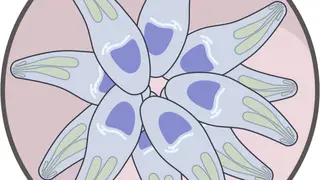
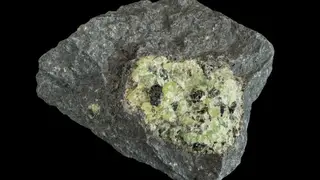
Microbial life in sediments shows up in other studies: sediments on a Baltic coast lose their capacity to hold sulfide year after year and Clarion-Clipperton marine reserves barely exchange larvae. In cell biology, without the DDP protein, Toxoplasma cannot reproduce, and in soils, ground olivine stores more carbon only if microbes have food.
Sources
- Nature — Eukaryotes’ closest relatives are internally simple syntrophic peptidotrophic archaea (Imachi et al., October 28, 2026)
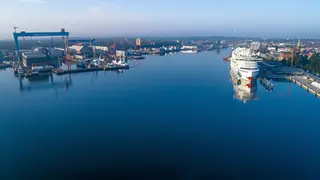
- Cover image: Microbialmatt, CC BY-SA 4.0, via Wikimedia Commons
Edited by Rodrigo Cornejo. How we select and verify: who writes these notes.