What happened
A europium compound shows a greatly enhanced elastic response near the point where its magnetic order changes. The study, published online by PNAS on November 10, 2026, combines a theoretical prediction with measurements on crystals under temperature and pressure control.
This note is based on the abstract deposited by the journal in Crossref, with a verified date. The authors analyze how electronic fluctuations couple with the atomic lattice of the material. The conclusion questions whether this coupling can always be treated as a small correction in the conditions studied.
Why it matters
The electronic properties and mechanical structure of a solid do not necessarily change independently. Near certain critical points, an interaction that appears secondary far from the threshold can modify how the ensemble responds.
The work proposes a class of elastic tricriticality and looks for its signals in a specific material. Measurement matters because it allows a prediction about compressibility to be contrasted with observed length changes. It does not announce a material ready to manufacture sensors or an automatic improvement of devices. Its contribution is to specify what type of physics describes the transition when elasticity stops being a weak companion.
The number
A germanium fraction close to 0.1. In this composition of EuPd₂(Si₁₋ₓGeₓ)₂, the authors confirm a tricritical point through complementary tests. The value defines the material and the conditions studied; It is not a universal proportion for magnetic compounds.
Context
The magnetic order changes in relation to valence fluctuations, which involve the electronic state of europium. The study also examines how this behavior depends on composition and pressure.
Measurements include relative changes in length while monitoring temperature and helium pressure. From the elastic response, the authors identify signals of increased compressibility compatible with the proposed framework. They do not claim to have measured literally infinite compressibility in a real sample.
On related topics, Mamífero has also published conductive carbon nanoribbons, electrical noise and electron pairs, single photon emission in silicon and formation and behavior of metallic glasses.
What’s next
The theory describes a compressibility divergence universally related to the correlation length near the tricritical point. Experimental observation of an intensified response is the way to test that prediction within the limitations of the setup.
Other materials and measurements will allow us to examine how general the mechanism is. It will also be important to distinguish transitional changes from compositional effects and mechanical conditions. The publication provides an example to study these dependencies. Translating the finding to an application would require knowing stability, repeatability and operating ranges, questions that are not resolved by identifying critical behavior.
Bottom line
The europium crystal connects electronic fluctuations with an elasticity that changes strongly near a threshold. The evidence supports a framework where both responses modify each other. The breakthrough is a physical explanation tested in a specific compound and conditions.
Sources
- PNAS, DOI 10.1073/pnas.2614506123; abstract deposited by the journal and online date confirmed in Crossref, November 10, 2026. Note based on the abstract, not the full text. Crossref confirms the publication date, without time.
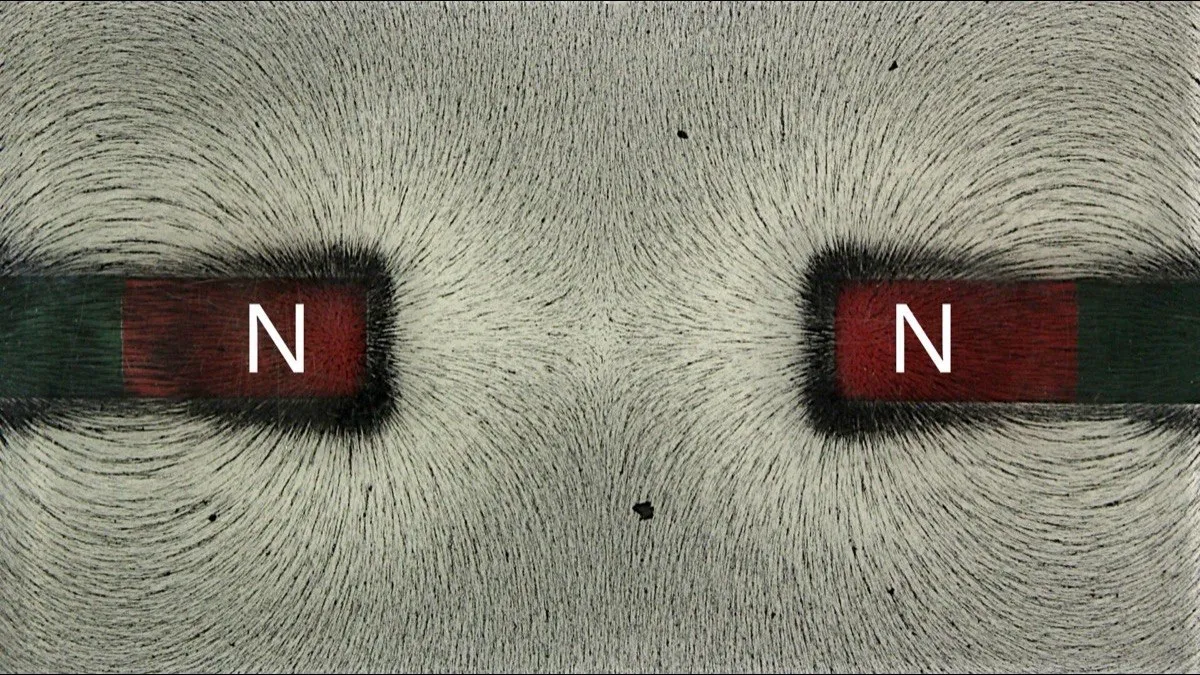
- Cover image: MikeRun, Vera Wurmsdobler, CC BY-SA 4.0, via Wikimedia Commons. Cropped and resized to 1200 × 675 pixels. Reference photograph; it does not document the announced event.
Edited by Rodrigo Cornejo. How we select and verify: who writes these notes.