What happened
- A team led by Milan Allan of Ludwig Maximilian University of Munich and Ingmar Swart of Utrecht University published in Science a study that listens to the faint crackle of current flowing into a cuprate.
- Cuprates are copper-based materials that since the late 1980s superconduct at temperatures reachable with liquid nitrogen.
- The mystery centers on the pseudogap: above the temperature at which the material superconducts, some of its electrons seem to vanish from measurements.
- Electrical noise indicates whether electrons are paired, something other probes do not distinguish clearly.
- Ars Technica reported the work on 8 November 2026.
Why it matters
Nearly four decades on, physicists still disagree on why cuprates superconduct at relatively high temperatures. Two main explanations compete for the pseudogap: in one electrons get stuck in an ordered structure, in the other they are already paired before superconducting. A measurement that tells them apart would steer theory, which matters because a room-temperature superconductor would change power transmission, medical imaging and computing.
The number
Almost 40 years. The time since the late-1980s discovery that cuprates superconduct with cheap cooling, without agreement on why.
Context
A superconductor carries electricity without resistance, but most only work a few degrees above absolute zero. The noise method exploits that current is not perfectly smooth: it is made of discrete carriers and its fluctuation depends on the charge they carry. If electrons travel in pairs, the fluctuation changes. The text read does not detail the quantitative result, so this note describes the method, not the final conclusion. Related coverage: Vibrations of the crystal are mapped layer by layer in a superconductor below its unit cell, An electron crosses a silicon-germanium T-junction with 100% fidelity, In metallic glasses, local order and density fluctuations are born together as crystals form, A compact X-ray laser driven by plasma acceleration is simulated end to end.
What’s next
- Other labs must repeat the measurement in cuprates of different composition.
- Theorists will have to fit pseudogap models to what the noise shows.
- If the method generalizes, it could be applied to other unconventional superconductors.
Bottom line
Sometimes the answer is not in the signal but in what accompanies it. Here, the noise is the measurement.
Sources
- Ars Technica, “Physicists listened to electrical noise to crack a superconductor mystery”, 8 November 2026, on a Science study by Allan and Swart’s team. Based on the news article; the paper was not read.
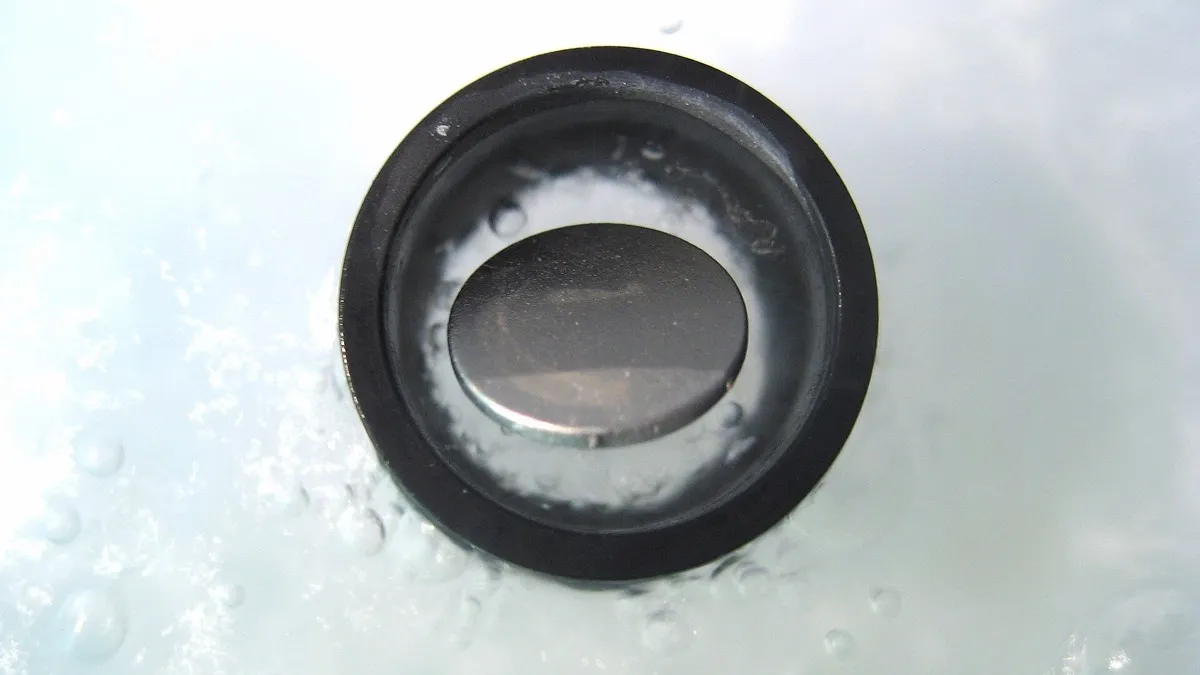
- Cover image: Julien Bobroff (user:Jubobroff), Frederic Bouquet (user:Fbouquet), LPS, Orsay, F, CC BY-SA 3.0, via Wikimedia Commons
Edited by Rodrigo Cornejo. How we select and verify: who writes these notes.