What happened
- On September 24, Google detailed the status of Project Suncatcher, its plan to put machine learning infrastructure in space, in a post on its own research blog.
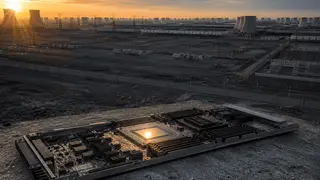
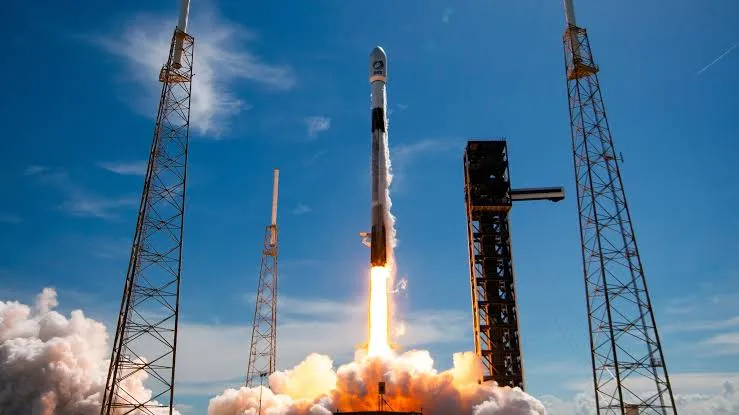
- A prototype satellite carrying tensor processing units (TPUs, Google’s own AI chips) is flying on SpaceX’s Transporter-18 rideshare mission. The initial mission was developed together with Planet.
- The flight’s stated goal is to measure hardware survival: launch vibration, radiation, thermal cycling and cooling via heat pipes and radiators in a vacuum.
- For 2027 the company is announcing a second mission with two satellites, intended to test high-bandwidth laser interconnects between units.
Why it matters
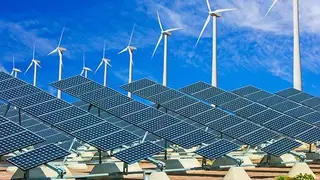
- The reason for the project isn’t space ambition; it’s the power grid. Google is admitting that the ceiling on compute on the ground is called energy, and that solving it down here runs on a slower timetable than sending it up.
- That has direct consequences for the region. Chile is already receiving data center investment with the promise of jobs and local capacity; if global operators start looking at orbit as an alternative source of supply, the argument of territory as an advantage loses weight.
- The radiation figure is the useful part of the announcement for anyone buying compute: Google says its TPUs withstood doses equivalent to more than five years of a mission. That’s a durability figure, not a service promise.
The number
Up to 8 times more solar energy available in low Earth orbit than at an equivalent installation on the surface.
Context
The power constraint is no longer theoretical. In the United States there are already states where data center expansion is running up against generation and transmission capacity, and in China the problem is framed the other way around, with gigawatt targets as a condition for scaling models. Suncatcher is the third possible answer: move the problem out of the jurisdiction.
What’s next
- Launch of the prototype on SpaceX’s Transporter-18 mission in the coming days.
- A second mission with two satellites in 2027, to test optical links between them.
- No date or cost announced for an operational constellation.
Bottom line
Travis Beals, the senior director in charge, framed the project as a bold goal in the company’s style. The most accurate framing comes from the document itself: the limitation they’re trying to get around isn’t one of engineering; it’s one of supply.
Sources
- Google’s post on Project Suncatcher, September 24, 2026.
Edited by Rodrigo Cornejo. How we select and verify: who writes these notes.