What happened
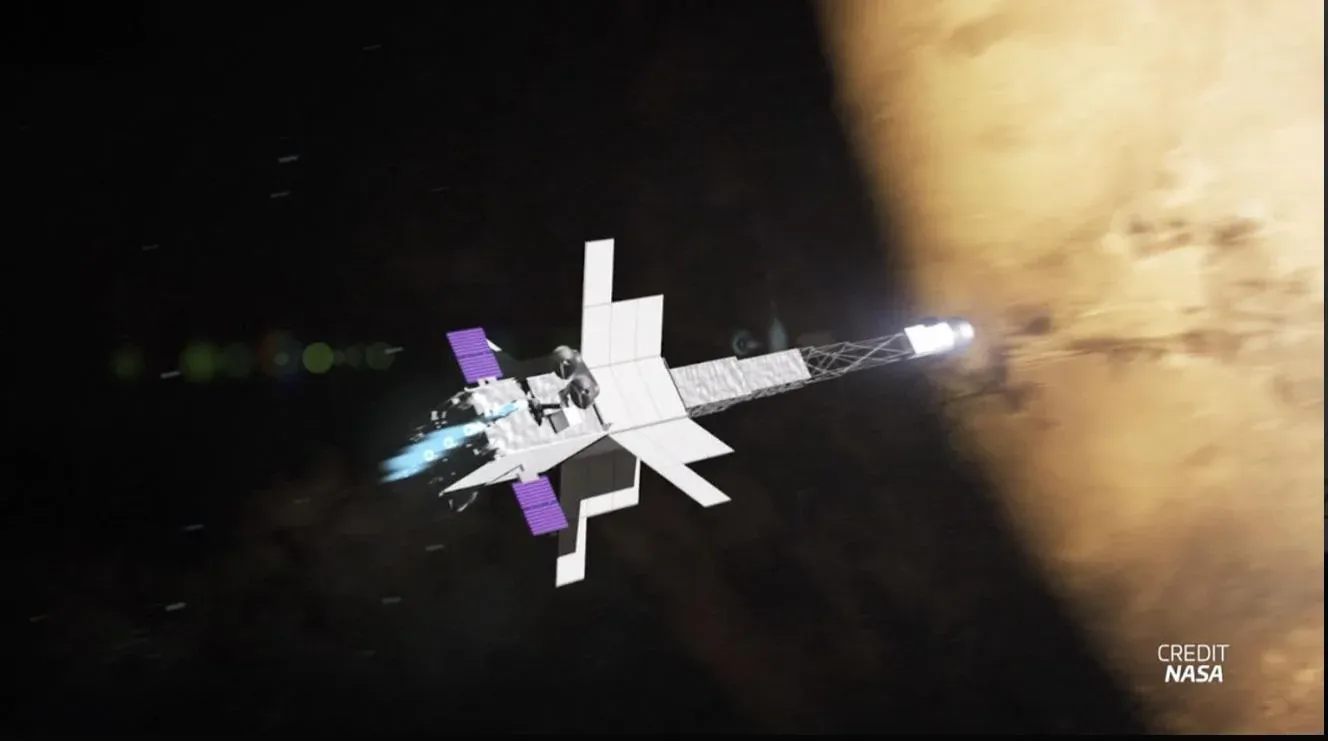
- NASA reported on October 20, 2026 that it agreed with its partners on key contract actions to speed up the nuclear power module of SR-1 Freedom, which, according to the release, reduces technical risk.
- Sierra Lobo will provide the closed Brayton-cycle power conversion system. The Department of Energy’s Idaho National Laboratory designs and develops the fission reactor.
- Glenn Research Center in Cleveland oversees the work under the SFSDO III contract, awarded in 2024.
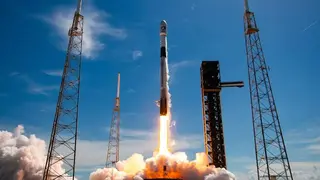
- The spacecraft will carry SkyFall, a payload of three Mars helicopters based on Ingenuity. Launch is still planned for late 2028 and the reactor stays inactive until the craft leaves Earth orbit.
- The release gives no power figures.
Why it matters
- What closed were contracts, not hardware. The news is that the nuclear module moves from plan to supplier chain, with a stated launch date.
- For the Latin American space sector, the interest is in the design: a reactor that does not switch on until it leaves Earth orbit is NASA’s answer to the most repeated safety objection to nuclear power in space.
- The consequence NASA does not stress: without declared power, it cannot be compared with solar panels or other proposals. The technical comparison remains pending.
The number
Late 2028. Planned launch date. It holds despite the new contracts.
Context
Space nuclear power is studied because panels lose effectiveness far from the Sun and during long nights. Other notes in this thread: Google took a TPU to orbit and Monarch Quantum delivers photonics for a NASA gravity sensor.
What’s next
- Launch: late 2028.
- Reactor activation: only after leaving Earth orbit.
- No published power or cost figures.
Bottom line
The mission combines two bets with an uneven record: the reactor and the helicopters. The latter descend from Ingenuity, which showed that flying on Mars is possible.
Sources
Edited by Rodrigo Cornejo. How we select and verify: who writes these notes.