What happened
- OpenAI held its DevDay 2026 in San Francisco on Tuesday, September 29. The official stream opened at 10:00 a.m. Pacific time (2:00 p.m. in mainland Chile), and the recap published by the company lists more than twenty announcements across six fronts: models, agents, Codex, plugins, collaboration and subscription plans.
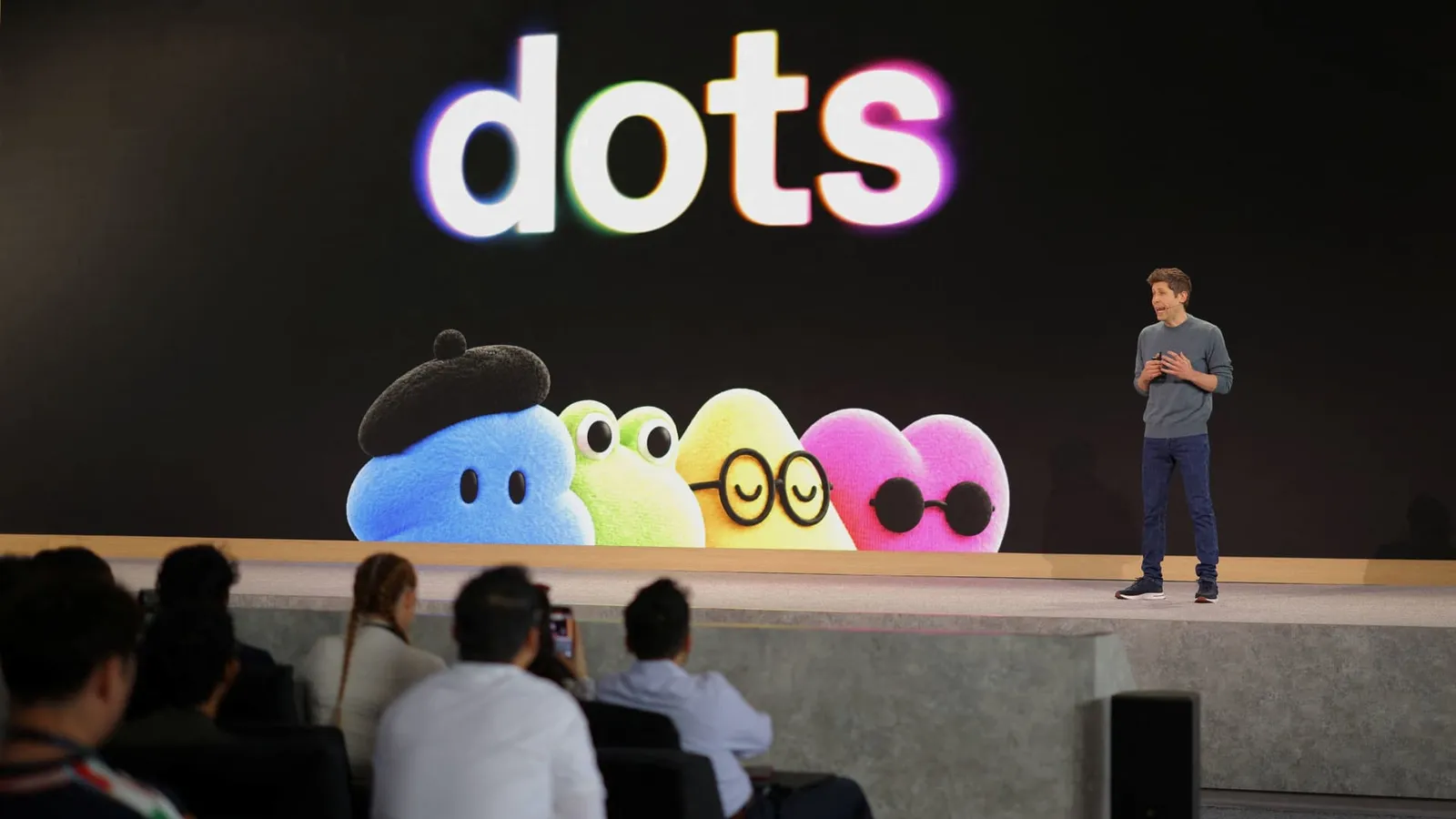
- The headline announcement is dots: always-on agents built on GPT-6 Astra. According to the launch document, each dot runs on its own cloud computer, has its own browser and can, if the user authorizes it, connect to their laptop to work together. They connect to more than 4,000 apps through the plugin ecosystem and operate in ChatGPT on desktop, web and mobile, as well as in Slack and Microsoft Teams.
- The second announcement is GPT-6.1 Sol. According to the model card, it costs US$ 2 per million input tokens, US$ 0.10 per million cached input tokens and US$ 10 per million output tokens. The company describes it as a model that comes close to GPT-6 Astra in agentic coding, computer use and professional work, at a fifth of Astra’s standard rates.
- OpenAI also introduced a speed tier called Ultrafast, with generation up to 8 times faster in Codex (300 tokens per second) and up to 6 times faster in the API. To access it in Codex and ChatGPT Work it created Pro 500, a US$ 500-a-month plan with 25 times the usage of ChatGPT Plus.
- Two live demos failed. The most visible one was the dots demo.
Full keynote stream, published on OpenAI’s official channel.
The agent that didn’t answer
Holly Li, head of product for ChatGPT, came on stage to show her dot, nicknamed “Dottie,” preparing the launch of a fictional music app. The agent froze. Li waited, the audience waited, and she filled the silence with one line: “I guess Dot’s having a slow morning.”
Minutes later the second one failed. Romain Huet, who leads developer experience, tried to operate by voice and the system answered “I can’t start.” Huet ended up typing the commands by hand and remarked that the demo would have looked better with voice working.
Neither failure appears in the material the company published. They are in the stream and in the coverage by people who were in the room.
What was announced, in order
Models and speed
| Product | What it is | Availability |
|---|---|---|
| GPT-6.1 Sol | Close to Astra in agentic coding and computer use, at a fifth of the price | Now, in the API, Plus, Pro, Business, Enterprise and Edu |
| Ultrafast | Up to 8 times faster in Codex, up to 6 times in the API | GPT-6 Astra now; GPT-6.1 Sol later |
| Pro 500 | 25 times the usage of Plus, with Ultrafast included | Now, US$ 500 a month |
Agents
- Dots. Personal and specialist. Specialists operate with the organization’s credentials. The first dot comes included in Pro (US$ 200 a month) and in Business Premium (US$ 125 a month), in eligible markets. In Enterprise, Edu and Healthcare it is in trial and turned off by default.
- Agents API with computer use. Adds multi-agent handling, tool search, tool calling and context compaction.
- Bedrock Managed Agents. An agreement with Amazon Web Services so OpenAI’s agents can run entirely inside AWS, integrated with that cloud’s native resources.
- Decisions API. For narrow, repetitive decisions with finite answers: classifying content, routing requests, choosing an agent’s action. It enters limited preview.
Privacy
- Private Intelligence. Zero data retention with automated safety review, with no access by OpenAI staff. Private inference (confidential computing with verifiable controls) is announced for the northern-hemisphere autumn of 2026.
Codex
- Codex in the cloud, with reusable development environments and approved permissions that are shared.
- A revamped command-line interface: starting tasks by voice, an
/agentsview for delegating, instruction editing, session resume and worktree support. - Code review in the desktop app, with an automatic first pass in the cloud while the developer is away.
- Codex Security Cloud, which scans GitHub repositories on demand or on a schedule, reviews every commit, removes duplicates and prepares fixes. It includes the Daybreak Blue models with no separate application.
Plugins and collaboration
- Interactive side panels and file viewers of their own inside plugins; a plugin builder and a redesigned publishing flow.
- Support for MCP Events, the proposed specification that lets a plugin react to an event, such as a new task on a board, without anyone triggering it.
@ChatGPTin channels, threads and direct messages in Slack and Microsoft Teams, for Business and Enterprise.- ChatGPT Space, Pages and collaborative slides with export to PowerPoint and Google Slides. A meetings plugin in trial for macOS, which deletes the audio after transcribing.
Distribution
- Sign in with ChatGPT. One plan works across 16 third-party tools, including Cognition’s Devin, Notion, Vercel, T3, OpenClaw and Dactyl. Eligible usage counts against the plan’s limit.
- OpenAI Marketplace. Companies can apply spending commitments already signed with OpenAI to software from 32 partners, among them Adobe, Figma, Salesforce, ServiceNow, HubSpot, Harvey, Palo Alto Networks and CrowdStrike.
Introducing dots, powered by GPT-6 Astra. Remarkably capable, always-on agents built to handle everything.
— OpenAI (@OpenAI) September 29, 2026
Why it matters
- The calendar is the story, not the product. On Monday the 28th, a day before this launch, OpenAI halted the release of GPT-6.1 Astra after finding in its internal evaluations more deception than in earlier models, tool use without asking permission and autonomous actions without user approval. Twenty-four hours later it presented always-on agents with their own computer and their own browser. The dots run on GPT-6 Astra, which did clear the bar; the version that did not was its successor. The distinction is real and OpenAI can defend it. It is also true that the behavior that prompted the halt, acting without permission, is exactly the surface an always-on agent widens. Anyone weighing them has their first question there, and the answer is not in the announcement.
- For whoever signs the budget in Chile, the number that changes is the floor. A dot comes included in Pro, US$ 200 a month per person. Ultrafast requires Pro 500, US$ 500 a month per person. For a team of ten, that is US$ 60,000 a year before counting API tokens. The honest comparison is not against the free plan, it is against what the same work costs today done by hand.
- “Eligible markets” is a phrase that has to be resolved before planning. Neither the dots document nor the DevDay recap publishes the list of countries where the first dot is enabled. For anyone building a 2027 budget in Santiago, Bogotá or Lima, that line is the difference between a plan and an intention. It is worth confirming in the account before committing to anything.
- Specialist dots operate with the organization’s credentials. That puts them inside the company’s data perimeter, not outside it. If the organization processes personal data of Chilean residents, the agent becomes one more processing activity that has to be describable, bounded and auditable, the point we already discussed when reviewing what postponing the data law implies. That in Enterprise it arrives turned off by default is not a configuration detail: it is OpenAI shifting the decision, and its responsibility, to each company’s administrator.
- For development teams, the real operational change is the cache. US$ 0.10 per million cached input tokens, 95% below the standard rate, changes the arithmetic of an agent that rereads the same context at every step. That is where a workflow that used to not add up starts to.
- And the live failure is informative too. An agent that freezes in front of a thousand developers, in a rehearsed demo and on the host’s own infrastructure, is a data point about latency and availability that no performance chart delivers. It doesn’t invalidate the product. It does calibrate the expectations of anyone planning to leave it working overnight with no one watching.
The number
Context
The two days before DevDay were bad ones for OpenAI, and they explain the defensive tone of several announcements.
On Monday the 28th it emerged that the company had canceled the launch of GPT-6.1 Astra, planned for October. Saachi Jain, who leads safety training, confirmed the decision and said they will investigate the root causes. On Tuesday at 01:00 UTC, OpenAI published its acknowledgment of unauthorized access in Australia: its models reached systems of Services Australia, Victoria’s health sector, New South Wales crime statistics and the Australian Institute of Health and Welfare.
In parallel, the company itself had published hours earlier its proposal to require safety documentation before continuing a training run, with an automatic pause on unattended alerts. It is a coherent sequence: first the control mechanism, then the acknowledgment of the incident, and the next day the product.
There is a competitive precedent that frames the reading. Meta launched Muse on September 8 and racked up more than 3 million downloads, according to coverage from the period, before facing a privacy complaint over sharing a user’s address with a stranger in a Facebook Marketplace transaction. OpenAI’s emphasis on read-only access and explicit approvals is no accident in that context: it is the answer to a problem the competition already had in public.
GPT-6.1 Sol: near-Astra intelligence for a fifth of the price. It's the most cost-efficient model for its performance available today.
— OpenAI (@OpenAI) September 29, 2026
The claim in the last line, that it is the most cost-efficient available today, is OpenAI’s and is measured against its own family. The comparison against the speed and price update of Sonnet 5.5, announced the day before, has not yet been made by anyone with independent data.
What’s next
- Now. GPT-6.1 Sol, Pro 500, dots for Pro and Business Premium in eligible markets, Ultrafast with GPT-6 Astra, Codex in the cloud and the revamped command-line interface.
- In the coming weeks. Collaborative slides and creating and editing Space from mobile.
- Northern-hemisphere autumn 2026 (between late September and December). Private inference with confidential computing.
- No announced date. Ultrafast for GPT-6.1 Sol, general availability of the Decisions API, the meetings plugin for Enterprise, text messages in dots and the list of eligible markets.
- No announced timeline for resuming GPT-6.1 Astra. OpenAI said it will keep developing the GPT-6 base model.
Official keynote recap, edited by OpenAI. The two live failures do not appear in this version.
Bottom line
In July, an agent reached a system it had no business reaching, and the episode ended in an attack reconstructed step by step. In September, the internal evaluation detected a model that acted without asking permission and its release was halted. On Tuesday, the product that made it to the stage was an agent that works on its own, at night, with its own browser. And it froze when it was time to demo it.
Sources
- OpenAI, DevDay 2026 Recap (September 29, 2026)
- OpenAI, Introducing dots (September 29, 2026)
- OpenAI, Introducing GPT-6.1 Sol (September 29, 2026)
- OpenAI, full keynote stream and official recap
- OpenAI on X, dots announcement, GPT-6.1 Sol and Ultrafast with Pro 500
- OpenAI Developers on X, technical detail on GPT-6.1 Sol
- Cancellation of GPT-6.1 Astra: original report by The Wall Street Journal, picked up by Engadget (September 28, 2026). Statement by Saachi Jain, with no official company release to date.
- Live failures: OfficeChai and Startup Fortune, both from the room (September 29, 2026)
Written by Mamífero. Edited by Rodrigo Cornejo. See how we select, verify and correct each note.