What happened
A team presented Pico-X, an eight-bit programmable processor intended for flexible sensors that spend long periods waiting for an event. The article appeared in Nature Communications on November 10, 2026. Its consumption in deep sleep with state retention is 24.9 nanowatts, without additional biasing of the transistor body.
The architecture reduces the state it needs to preserve and uses shared retentive memory. The work does not present a general-purpose processor to replace high-performance equipment: it addresses local sensing loads, activation, event classification, and communication.
Why it matters
In a network where measurements appear sporadically, consumption during standby can matter as much as the energy of an operation. Keeping instructions and state available comes at a cost, but removing all programming also limits what the sensor can do.
Pico-X explores an intermediate position: it preserves a programmable architecture with fewer retained elements and an instruction set limited to the intended work. The result is interesting because of that combination of consumption and flexibility. The standby figure must be read together with the manufacturing and testing conditions; It does not allow you to calculate a universal battery life without knowing the rest of the device and its activity.
The number
728.2 nanowatts during activity at 25 kilohertz. The value of 24.9 nanowatts corresponds to deep sleep. They are two different states and the average consumption will depend on the time the system spends in each of them.
Context
The circuit was fabricated using a 28-nanometer fully depleted silicon-on-insulator process. The authors integrated it into a flexible four-by-four-zone demonstrator that recorded 12,842 events.
The test evaluated occupancy, load imbalance and deformation. The detection percentages correspond to those classes and the assembly described; They are not a general measure of accuracy for any object or environment.
On related topics, Mamífero has also published conductive carbon nanoribbons, electrical noise and electron pairs, single photon emission in silicon and formation and behavior of metallic glasses.
What’s next
The authors report an average latency of 38 milliseconds between event and report, packet delivery of 99.12%, and stable operation for more than 72 hours. These measurements describe a useful demonstrator for testing the architecture, but are not a substitute for extensive testing under other conditions.
The next step will be to examine how state consumption and recovery change with different event frequencies and network configurations. It is also important to separate the expense of the processor from that of sensors and communications. A circuit that sleeps on low power may be part of a system whose consumption is dominated by other components; The article allows us to raise this comparison, not resolve all cases.
Bottom line
Pico-X shows that the cost of waiting can be reduced without completely giving up scheduling. Their figures are specific and verifiable. The final usefulness will depend on how the processor is integrated and how much activity the network that uses it requires.
Sources
- Nature Communications, DOI 10.1038/s41467-026-79332-9; verified publication date in the journal, November 10, 2026. Summary and text of the article consulted. The magazine does not indicate publication time.
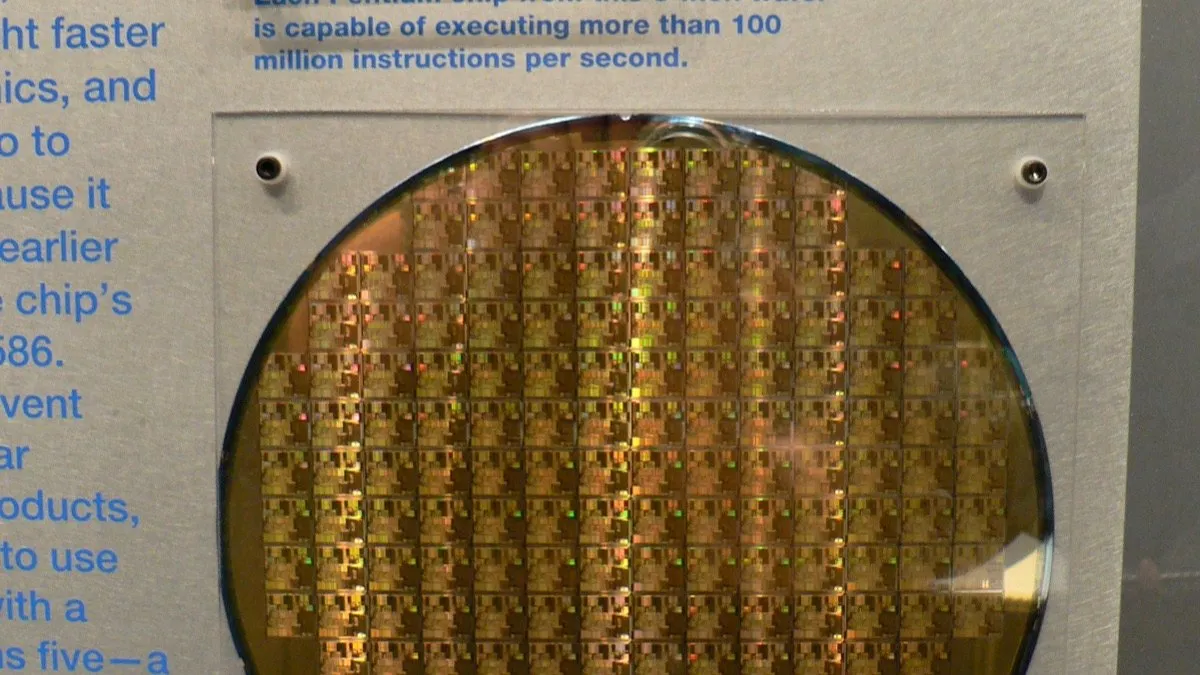
- Cover image: Naotake Murayama from Los Altos, CA, USA, CC BY 2.0, via Wikimedia Commons. Cropped and resized to 1200 × 675 pixels. Reference photograph; it does not document the announced event.
Edited by Rodrigo Cornejo. How we select and verify: who writes these notes.