What happened
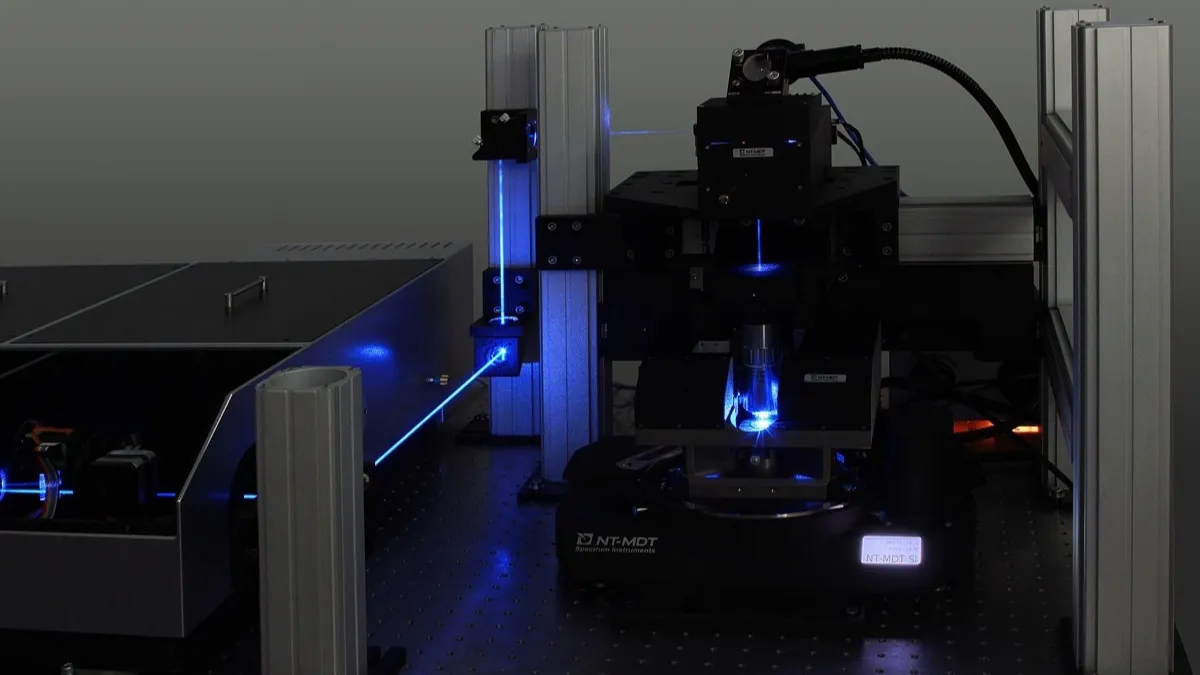
- On October 23, 2026, Nature Communications published an experiment in which the tip of an atomic force microscope flips individual bowl-shaped sumanene molecules on a gold surface.
- The team, from the University of Tokyo, the University of Osaka and Chulalongkorn University in Thailand, measured the mechanical energy spent on each inversion.
- The net cost turned out to be significantly lower than the theoretical activation energy of the reaction.
Why it matters
- In single-molecule reactions driven by light or electric current, energy goes in at once and each event must clear the activation barrier.
- The mechanical reaction did not follow that rule. According to the authors, van der Waals forces from the body of the tip stabilise the transition state more than the final state, and that lowers the cost.
- Mechanochemistry uses mechanical forces to drive reactions and is studied as a lower-energy alternative to heat, light or electricity.
The number
Below the barrier. The net energy measured to flip each molecule was lower than the activation energy calculated for that reaction.
Context
Sumanene is a curved hydrocarbon that can switch from bowl-up to bowl-down. Controlling those changes with mechanical stimuli underpins nanoscale devices and the understanding of chemical reactivity. The authors present the result as a distinct energetic mechanism within mechanochemistry. Handling particles one at a time had another recent result when Northwestern suspended a single positron.
What’s next
- The authors propose the mechanism as a strategy for manipulating molecules with less energy.
- The next step is to test whether tip stabilisation works for other reactions and surfaces.
Bottom line
The tip did not push harder: it pulled on the molecule at the right moment of the reaction. Other recent work controls matter at the smallest scale, such as electron waves trapped by interference at Columbia, protein design from a sentence and the quantum speed limit for reaching equilibrium.
Sources
- Nature Communications — Force-driven single-molecule transformations through tip-mediated stabilization of transition states (October 23, 2026)
- Cover image: AAMonitor96, CC BY-SA 3.0, via Wikimedia Commons
Edited by Rodrigo Cornejo. How we select and verify: who writes these notes.