What happened
- A team of 13 researchers from the University of Science and Technology of China published on 3 November 2026 in PNAS a study on the age-related decline in male fertility.
- They identified Synage, a long non-coding RNA expressed in the medial preoptic area of the hypothalamus, a region of the brain.
- In neurons that release gonadotropin-releasing hormone (GnRH), Synage expression falls with age, in parallel with sperm quality and fertility.
- When the brain-specific variant of Synage was restored in that region in 12-month-old mice, blood testosterone rose and sperm count and progressive motility improved.
Why it matters
- The age-related decline in male fertility, including sperm quality, carries risks for offspring health, and the trend towards later parenthood makes it worse, according to the authors.
- The work points to the brain, not just the testes, as part of the control of male reproductive ageing.
- The effect was tested in both directions: restoring Synage improved sperm in older mice and removing it worsened sperm in young mice.
The number
12 months. That is the age of the mice in which restoring Synage raised testosterone and improved sperm count and motility.
Context
The hypothalamus, pituitary and testis axis provides hormonal control of male reproduction. Hypothalamic GnRH neurons sit at the start of that chain. When the authors deleted Synage only in those neurons in young mice, the neurons fired less, luteinising hormone and testosterone fell, sperm quality worsened and fertility dropped.
The proposed mechanism runs through potassium channels. Synage interacts with the heat shock protein HSPA8 and stabilises its binding to KCHIP4. Without Synage, KCHIP4 increases along with its association with the Kv4.2 channel, which reaches the membrane more and strengthens A-type potassium currents. That reduces the excitability of GnRH neurons. In line with the model, GnRH neurons from 12-month-old mice also showed lower excitability.
At Mamífero we follow genetics and brain biology. We reported that an ancient retrovirus switched off in chimpanzees a gene humans use in the brain and that more cells with two X chromosomes soften Turner syndrome in the brain. On reproduction, without the DDP protein the Toxoplasma parasite cannot reproduce, and on drugs, using omeprazole for more than six months was linked to more Parkinson’s in a Korean cohort.
What’s next
- The authors say its potential for translation to people needs to be investigated.
- Whether the same mechanism operates in the human hypothalamus remains to be confirmed.
- The HSPA8, KCHIP4 and Kv4.2 pathway emerges as a possible target for studying reproductive ageing.
Bottom line
The age-related decline in male fertility does not start only in the testes. In mice, a hypothalamic RNA lost over the years sets the pace, and putting it back recovered part of sperm quality.
Sources
- Wang, F., Zhang, M., Wang, M. et al., “Hypothalamic lncRNA Synage prevents age-related sperm quality decline by suppressing A-type potassium currents in GnRH neurons”, PNAS, 3 November 2026, DOI 10.1073/pnas.2612408123. This note is based on the paper’s abstract.
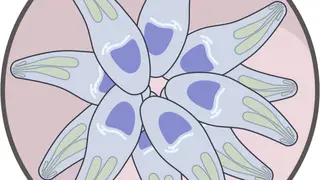
- Cover image: Prof. Ideal, CC0, via Wikimedia Commons
Edited by Rodrigo Cornejo. How we select and verify: who writes these notes.