What happened
- On October 21, 2026, Nature published a study on the Xujiayao fossils, a site in China with remains between 199,000 and 138,000 years old.
- Palaeoproteomic analysis of two specimens identified 18 endogenous proteins, meaning proteins from the individual rather than from contamination.
- A Denisovan-specific mutation, COL1A2-996 R>K, strongly supports that both belong to that lineage, according to the authors.
- With that anchor, the team compared the morphology of Xujiayao and the Harbin cranium with other East Asian fossils (Jinniushan, Dali and Hualongdong) and concluded that all belong to the Denisovan lineage.
Why it matters
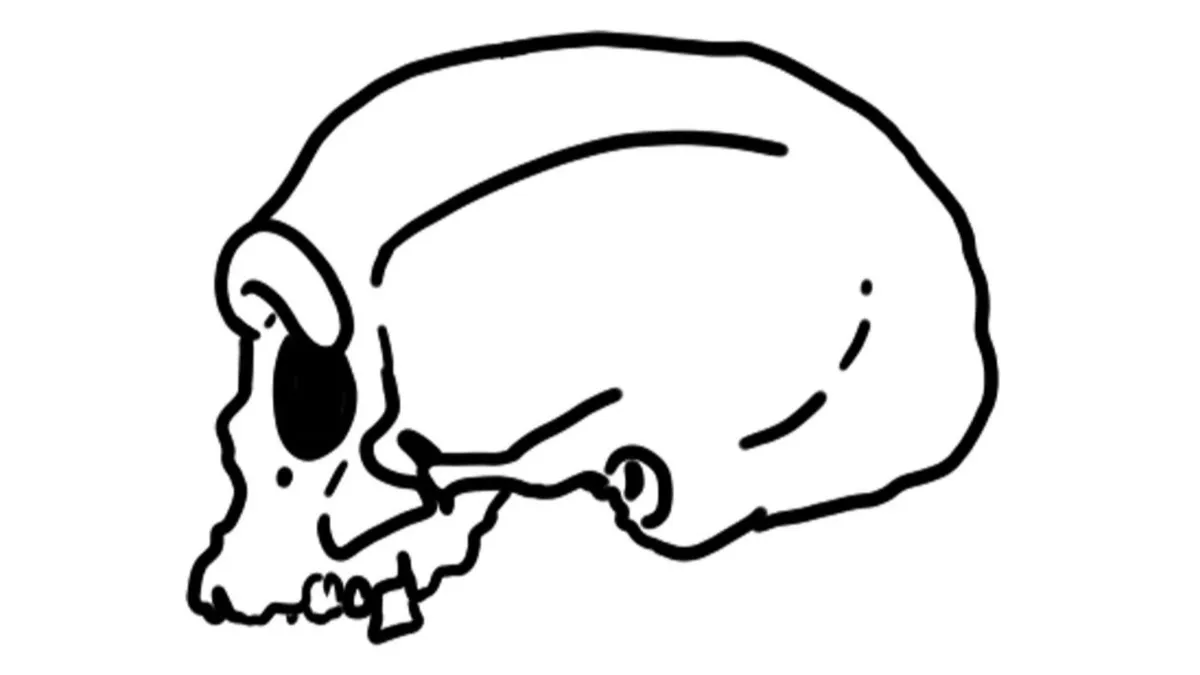
- Until now Denisovans were known mostly from DNA and a few bones. Attributing whole skulls to them gives them shape: a low vault, nearly parallel side walls, a massive brow ridge and little facial projection.
- The core point is about method: proteins survive in bones where DNA does not, which widens the map of fossils that can be assigned to a lineage.
- For museums and universities in Latin America with old collections, the message is practical: a small, poorly preserved sample can now be identified without waiting for DNA to survive.
The number
18 proteins endogenous, recovered from two Xujiayao specimens dated between 199,000 and 138,000 years old.
Context
The taxonomy of late Middle Pleistocene hominins in East Asia is disputed. The fossils have been classified as archaic Homo sapiens, archaic humans from China or other species, and recent studies revealed more diversity than expected. The authors place all of them under a single Denisovan lineage, with features reminiscent of Homo erectus, modern humans and late Neanderthals.
What’s next
- Other groups will need to put fossils assigned to other lineages through the same protein test.
- No timelines announced by the authors.
Bottom line
Molecular biology keeps rewriting old catalogs: AlphaFold added 2,800 viruses to its open catalog. And the Sun may have stripped meters of surface from comet 3I/ATLAS.
Sources
- Nature — The proteome of Middle Pleistocene Xujiayao and common Denisovan morphology (published October 21, 2026)
- Cover image: Clumsystiggy, CC BY-SA 4.0, via Wikimedia Commons
Edited by Rodrigo Cornejo. How we select and verify: who writes these notes.