What happened
- On October 23, 2026, Nature Communications published a study on how sediments on the Eurasian Arctic shelves capture hydrophobic organic contaminants such as PCBs.
- The team, from Stockholm University, the Bolin Centre for Climate Research, the Alfred Wegener Institute and Météo-France, analysed surface sediments along a gradient from land-derived to marine organic matter.
- It found that PCB concentrations per unit of marine organic carbon are up to ten times higher than per unit of terrestrial carbon.
- Combining that relationship with an ocean biogeochemistry model, it estimated that climate-driven increases in marine primary production will remove 1.3 times more of these contaminants from the water column.
Why it matters
- Oceans store large amounts of persistent human-made contaminants, and their fate depends on the organic carbon cycle.
- Models usually treat organic matter as a uniform sorbent. The study shows both its quantity and its quality matter.
- Arctic warming changes which organic matter reaches the seafloor and, with it, where the contaminants end up.
The number
1.3 times more. Removal of hydrophobic organic contaminants from the water column projected by the model with more marine primary production.
Context
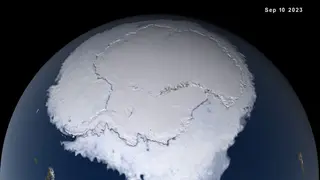
PCBs are persistent industrial compounds that break down very slowly in the environment. More contaminant settling into sediment takes it out of the water but leaves it stored on the seafloor. The authors conclude that climate-driven changes in the carbon cycle may restructure the fate of these compounds in the Arctic Ocean. Changes in polar regions are also measured in the south, where Antarctic sea ice posted its third lowest winter figure.
What’s next
- The study suggests including organic matter quality in models that track the fate of contaminants.
- The effect on other Arctic shelves and on the seafloor food web is still to be measured.
Bottom line
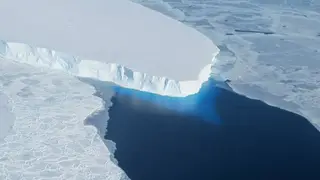
The same warming that changes the ice changes where the Arctic stores its pollutants. The climate of cold regions had other recent readings, such as the Baffin ice cap that warmth held back and the adjustment to NASA’s Thwaites model. And museum collections rebuild natural history, as with the Caribbean origin of barn owls.
Sources
- Nature Communications — Marine primary production enhances removal of hydrophobic organic contaminants from Eurasian Arctic shelf waters (October 23, 2026)
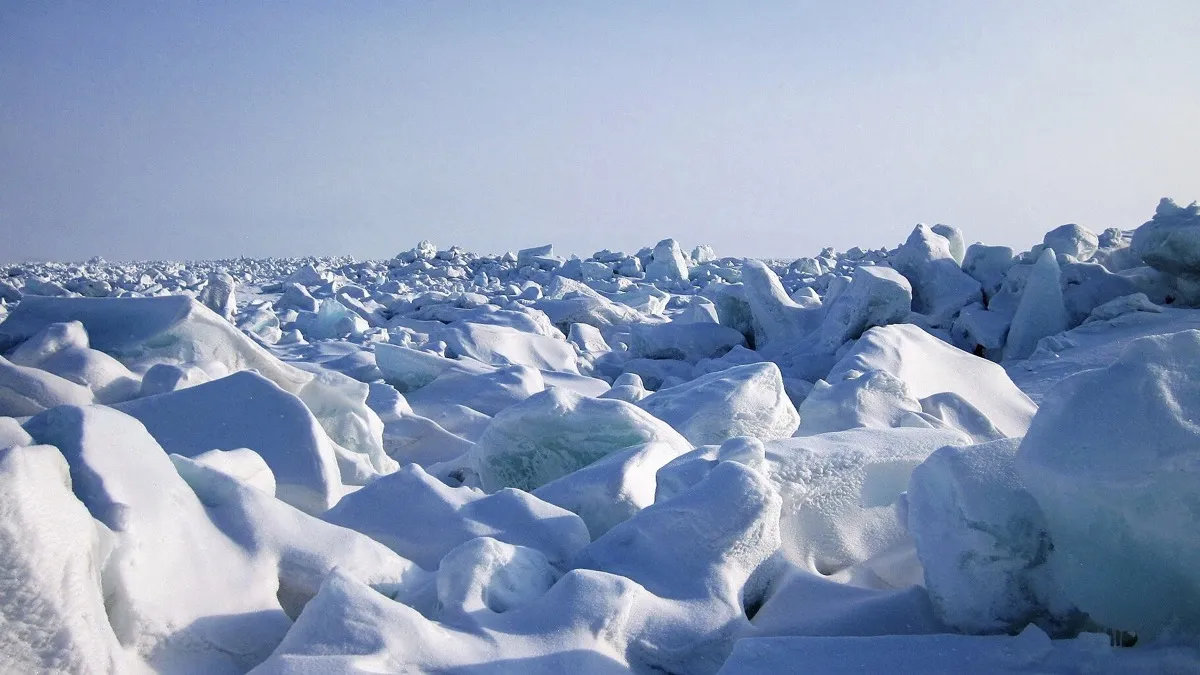
- Cover image: Aerohod, CC BY-SA 4.0, via Wikimedia Commons
Edited by Rodrigo Cornejo. How we select and verify: who writes these notes.