What happened
- A team of 20 researchers published on 3 November 2026 in Nature Communications an analysis of the gut microbiome of children with autism spectrum disorder (ASD).
- They used shotgun metagenomic sequencing on stool samples from 720 children with ASD, with a median age of 8 and 87% boys, and from 151 matched controls.
- The children with ASD were split into three severity groups using 14 symptom subscales covering core features and the psychological conditions that often accompany them.
- Microbiome composition was significantly associated with clinical severity and with individual symptoms.
Why it matters
- The gut microbiome has been linked to autism before, but earlier studies paid little attention to the wide clinical diversity of the spectrum.
- This work separates children by severity and by symptom domain, which shows which aspects of the condition relate most to the microbiome.
- The authors caution that the share of microbiome variation explained by these clinical factors is modest, with R² values between 0.0017 and 0.0065.
The number
720. That is the number of autistic children whose samples were sequenced, alongside those of 151 control children.
Context
Children with higher severity showed lower abundance of Lachnospiraceae bacterium AM48_27BH, a producer of short-chain fatty acids. They also had lower predicted capacity in metabolic modules linked to GABA, an inhibitory neurotransmitter: GABA synthesis, putrescine degradation and GHB degradation. NAD+ salvage pathways showed trend-level associations with severity.
Sensory atypicalities were the domain with more associated microbial markers than any other, with trend-level links to lower predicted capacity to break down excitatory neurotransmitters. The authors conclude that the microbiome varies across the severity spectrum and that different symptom domains differ in their relation to those changes. Whether changes in GABA metabolism contribute to clinical severity remains to be shown: the study shows associations, not causes.
At Mamífero we follow the biology of the brain and development. We reported that a study in Sydney found a circadian subtype of depression and that more cells with two X chromosomes soften Turner syndrome in the brain. Also that an ancient retrovirus switched off in chimpanzees a gene humans use in the brain and that Qom communities in Argentina lost 35 minutes of sleep in a decade.
What’s next
- It remains to be established whether microbiome differences influence symptoms or result from them, for example through differences in diet.
- The link to GABA metabolism is a hypothesis for experimental studies.
- The results suggest analysing autism by symptom domain rather than as a single category.
Bottom line
The gut of autistic children is not the same across the spectrum. It changes with severity, if only slightly, and the changes concentrate in bacteria and pathways linked to GABA and to sensory symptoms.
Sources
- Wong, O., Liang, S., Chen, Y. et al., “Gut microbiome of children with Autism Spectrum Disorder associates with clinical severity”, Nature Communications, 3 November 2026, DOI 10.1038/s41467-026-79124-1. This note is based on the paper’s abstract.
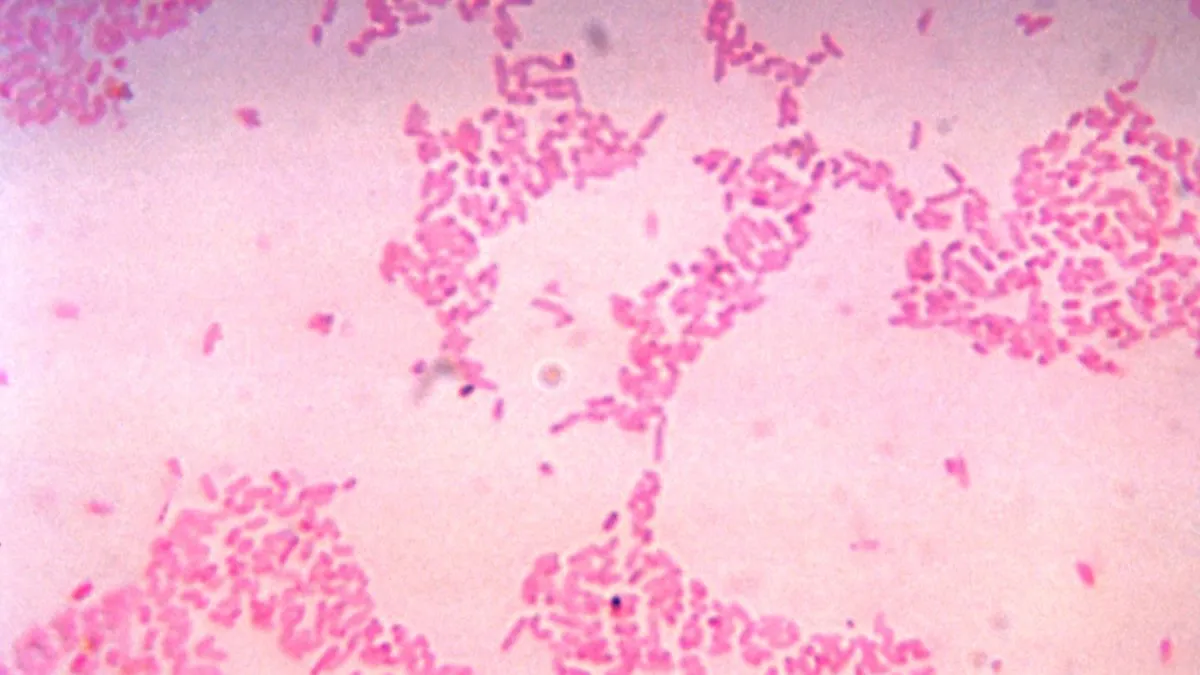
- Cover image: CDC, Dr. V. R. Dowell Jr., public domain, via Wikimedia Commons
Edited by Rodrigo Cornejo. How we select and verify: who writes these notes.