What happened
- On October 24, 2026, Phys.org distributed a Hong Kong Polytechnic University (PolyU) release about two studies by Zibin Chen’s team, published in Nature Communications.
- The team developed a multi-principal element alloy of nickel, cobalt, chromium, aluminum and tantalum that combines strength, ductility and toughness at 77 K, about −196 °C.
- The strategy is to give a negative curvature to the interface of nanoparticles inside the metal, so it carries high loads and still deforms before it breaks.
- According to the release, it can be made with smelting, rolling and short aging, with no complex new processes.
Why it matters
- Metals usually get stronger in the cold, but also more brittle. That brittleness is a bottleneck for undersea and space exploration equipment.
- The team says the concept applies to precipitation-hardened alloys, such as superalloys, steels and aluminums.
- There are no industrial-scale parts yet. The group plans to validate industrial samples, aiming for commercialization within the next 10 years.
The number
77 K. Temperature, about −196 °C, at which the combination of strength, ductility and toughness was measured.
Context
The release recalls that the sinking of the Titanic is associated with brittle failure at low temperature. The second study integrates additive manufacturing with tailored post-processing to create a nano-architecture. Of the two papers, Crossref confirms one dated July 13, 2026 (DOI 10.1038/s41467-026-75563-y, on hierarchical orderings in a medium-entropy alloy). The DOI of the negative-curvature study cited by Phys.org was not yet in Crossref and its date could not be confirmed. The note relies on the university release.
What’s next
- Validation of industrial-scale samples.
- Commercial use within 10 years, according to the team.
Bottom line
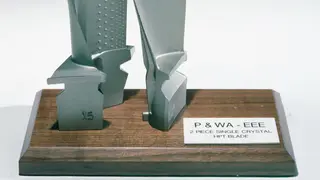
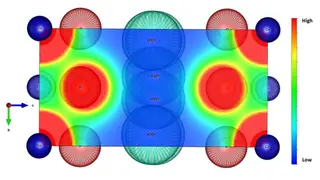
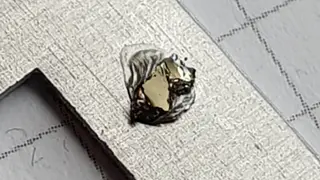
Other materials news this week: a one-meter titanium single crystal printed in 3D with 10 times the strength and Fudan speeds up charge-density prediction for materials more than 10 times. In materials physics, Columbia traps electron waves in a metal by interference, and supertwisted WS₂ layers respond to polarized light.
Sources
- Phys.org — A nanoscale alloy redesign tackles cold brittleness (October 24, 2026; reproduces the PolyU release)
- Studies: Nature Communications, DOI 10.1038/s41467-026-74629-1 (cited by the release; date not confirmed) and DOI 10.1038/s41467-026-75563-y (July 13, 2026 per Crossref)
- Cover image: Bibric02, CC0, via Wikimedia Commons
Edited by Rodrigo Cornejo. How we select and verify: who writes these notes.