What happened
- On October 23, 2026, Nature Ecology & Evolution published an assessment of whether the network of protected areas in the Clarion-Clipperton Zone, in the Pacific, works as a connected system.
- It is the region where future nodule mining is concentrated, with more than 1.1 million square kilometres under exploration licences.
- The team, from the University of Plymouth, the UK National Oceanography Centre, Aarhus University and other centres, used Lagrangian dispersal models and network analysis.
- With near-bed dispersal and larval periods of 19 to 69 days, fewer than 0.02% of simulated particles reached another protected area.
Why it matters
- The International Seabed Authority designated these areas to protect regional biodiversity, but whether they are connected had never been formally assessed.
- Distances between areas exceed the modelled dispersal capacity. The region splits into four semi-isolated communities.
- When the model removes self-supply from the areas of mining interest, unprotected areas without mining become the main source of replenishment, not the reserves.
The number
406 times. Increase in larval exchange between protected areas when strategic corridors are added, which also nearly double replenishment from the reserves.
Context
The network of areas of particular environmental interest started with nine sites in 2012 and added four in 2021, according to the summary that accompanies the paper. The authors present their work as a reproducible basis for designing conservation before commercial mining begins. Biodiversity is also studied from museum collections, as with the Caribbean origin of barn owls.
What’s next
- The results feed into the debate over the zone’s environmental plan ahead of any commercial extraction.
- The proposed corridors require the seabed authority to add them to its network of protected areas.
Bottom line
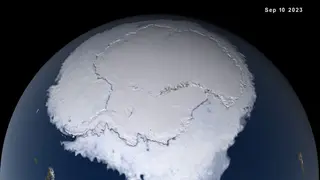
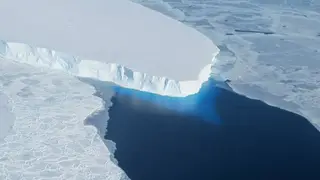
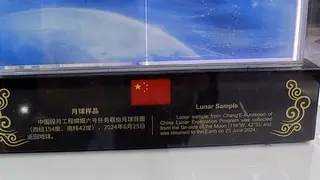
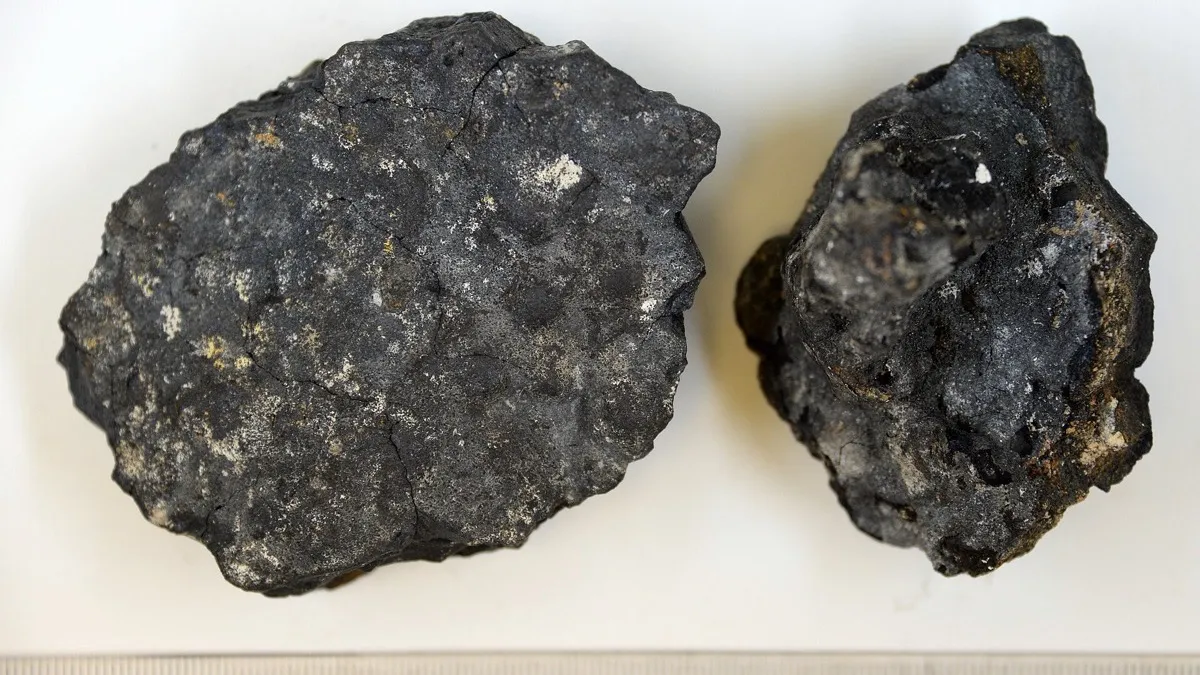
Protecting patches of seafloor is not enough if larvae cannot travel between them. Ocean and ice are changing on other fronts, such as Antarctic sea ice in 2026 and Thwaites Glacier. And resource exploration beyond Earth has its own science, such as Chang’e-6 samples from the far side of the Moon.
Sources
- Nature Ecology & Evolution — Dispersal corridors enhance modelled near-bed larval connectivity across deep-sea protected area networks (October 23, 2026)
- Nature Ecology & Evolution — Protecting the deep ocean under mining threat by connecting existing reserves (study summary, October 23, 2026)
- Cover image: Hannes Grobe, CC BY-SA 4.0, via Wikimedia Commons
Edited by Rodrigo Cornejo. How we select and verify: who writes these notes.