What happened
- A team led by Wenlei Guo, Sha Tang and Yi Sui published on November 7, 2026 in Nature Communications a study on how transposable elements influenced the domestication of foxtail millet (Setaria italica).
- They analyzed DNA methylomes from 60 wild and domesticated accessions and found 76,815 differentially methylated regions associated with many polymorphic transposon insertions.
- That epigenetic variation allows identification of an inventory of mobile elements tied to seed shattering, branching and growth habit.
- This note is based on the paper’s abstract.
Why it matters
Transposons are pieces of DNA that can change place and generate genetic variation. It was unclear how their polymorphisms reshape the epigenetic landscape and contribute to the diversification of traits during domestication.
The authors show that genetic variants associated with these elements drive heritable epigenetic changes behind key domestication traits. Foxtail millet is one of the oldest cereal crops, domesticated in China.
The number
76,815 regions. That is the number of differentially methylated regions the team identified between the 60 wild and domesticated accessions. Methylation is a chemical mark on DNA that can alter a gene’s activity without changing its sequence.
Context
One specific case involves the pleiotropic gene SiGW3. Two insertions of DNA/PIF-Harbinger elements in its 5′ UTR modulate its expression and affect plant architecture, panicle morphology and grain size.
That two insertions in a non-coding region change several traits at once illustrates how a small change in regulation can have broad effects. The authors note that transposon polymorphisms generate heritable epigenetic variation and contribute to phenotypic evolution during domestication, with implications for crop improvement.
The abstract does not say how many insertions were functionally tested beyond SiGW3, nor field results. Those details are in the full text, which was not reviewed.
At Mamífero we have followed genetics and evolution research. Depending on the substrate, gastruloids elongate the body axis with different strategies, the Bantu expansion reshaped Africa and is reconstructed with languages, genes and kilns, capsids assembled in a test tube carry gene editors to dystrophic muscle and bacterial chitinases evolve according to their job.
What’s next
- Other teams will be able to look for similar transposon inventories in other cereals.
- The effect of SiGW3 insertions on crop yield remains to be checked.
- Breeding could exploit transposon-linked epigenetic variation, though the study does not demonstrate it.
Bottom line
The work explains part of how a wild plant became a crop: not only through changes in genes, but through heritable marks that depend on mobile elements of the genome. The next step is to test whether that information helps improve varieties.
Sources
- Guo, W., Tang, S., Sui, Y. et al., “Transposable element polymorphisms underlie epigenetic variation and phenotypic diversification during foxtail millet domestication”, Nature Communications, November 7, 2026, DOI 10.1038/s41467-026-79325-8, link. The note is based on the paper’s abstract.
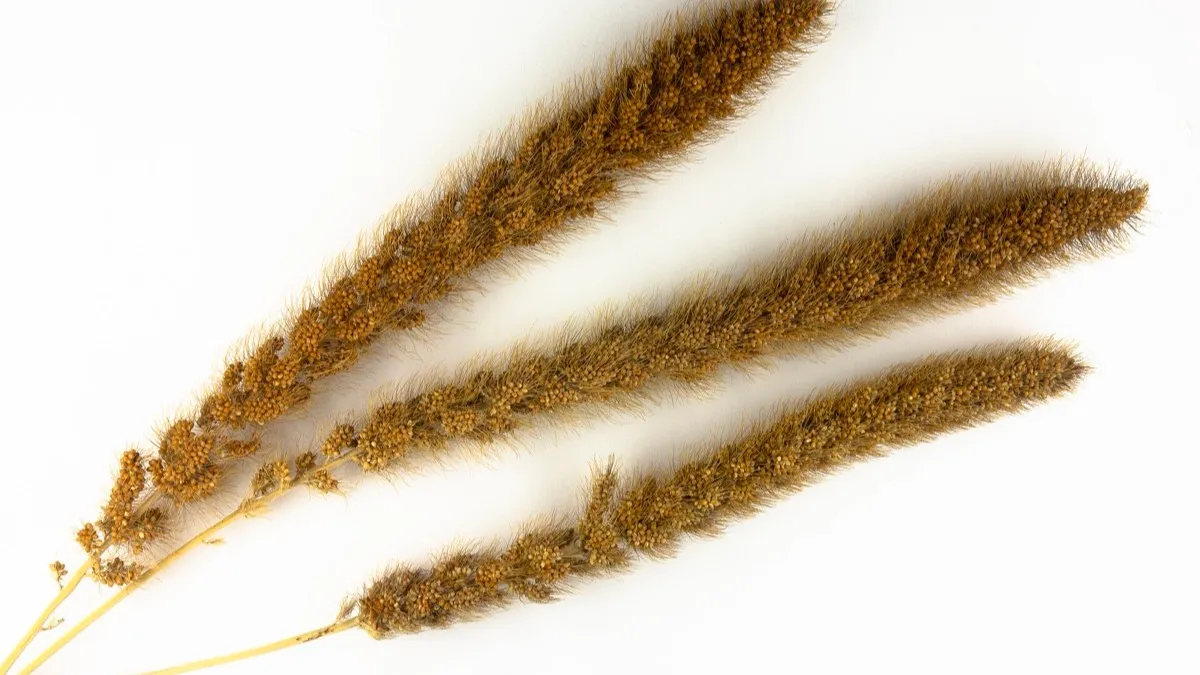
- Cover image: Roger Culos, CC BY-SA 4.0, via Wikimedia Commons
Edited by Rodrigo Cornejo. How we select and verify: who writes these notes.