What happened
- Ars Technica published on 7 November 2026 a feature on the Bantu expansion, one of the largest and longest human migrations.
- The migration brought a settled way of life, with farming, herding, pottery and metalworking, to regions previously dominated by hunter-gatherer communities.
- Today around 350 million Africans speak one of roughly 500 Bantu tongues, from southern Zulu to eastern Swahili.
- At least as many Africans, as well as many African Americans and Afro-Latinos, carry Bantu ancestry in their DNA.
- Reconstructing it is hard given sparse written records and limited funding, but linguists, archaeologists and geneticists are teaming up to trace its origins, route and relations with other cultures.
Why it matters
The expansion reshaped the demography of sub-Saharan Africa, said population geneticist Sandra Beleza of the University of Leicester. Understanding when, where and how fast it moved helps explain how languages and genes are distributed today and what exchanges happened with peoples already there. It also illustrates a way of working: no single discipline solves a past without texts, but together their clues cross-check.
The number
350 million speakers, about 500 languages. The current reach of the Bantu language family, per the feature.
Context
The first clue was similarity among Bantu languages. They are so alike that when Vasco da Gama rounded southern Africa in 1497, a Portuguese crew member who had lived in west-central Africa could reportedly communicate with locals in the southeast. The feature includes examples of local technology such as the iron furnaces of Great Zimbabwe, between 1000 and 1700 AD, natural-draft designs that drew air without bellows. It is a long piece with open debate: the feature itself acknowledges much uncertainty. Related coverage: Ancient genomes point to central Europe as the origin of the Celtic spread, Mesoamerican maize holds little structure tied to the languages that grow it, Schooling evolved more than 300 times in fishes and is linked to greater diversification, The parietal cortex readjusts how it encodes numbers according to the range being estimated.
What’s next
- New ancient genomes from central and eastern Africa could refine routes and dates.
- More funding would allow wider excavation in understudied regions.
- Linguistic and genetic models must be reconciled to explain the pace of the expansion.
Bottom line
A language family spoken today by hundreds of millions has an origin still in dispute. Rebuilding it takes linguists, archaeologists and geneticists at the same table.
Sources
- Ars Technica, “The Bantu expansion changed Africa. Scientists are still tracing how.”, 7 November 2026. A feature synthesizing research; cited as reported by the outlet.
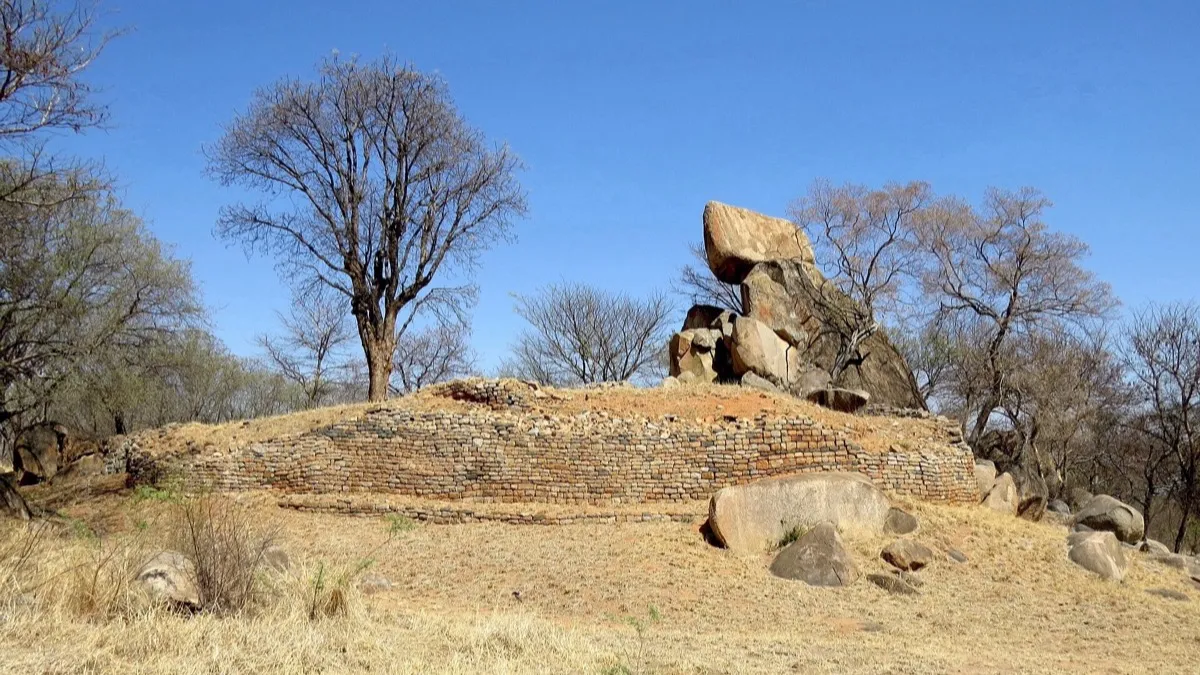
- Cover image: Robert Stewart Burrett, CC BY-SA 4.0, via Wikimedia Commons
Edited by Rodrigo Cornejo. How we select and verify: who writes these notes.