What happened
- Eight researchers, with Pulsford, Dalton, Smith and Horton among the authors, published on 5 November 2026 in Nature Communications an evolutionary framework for GH18 chitinases, enzymes that cut chitin.
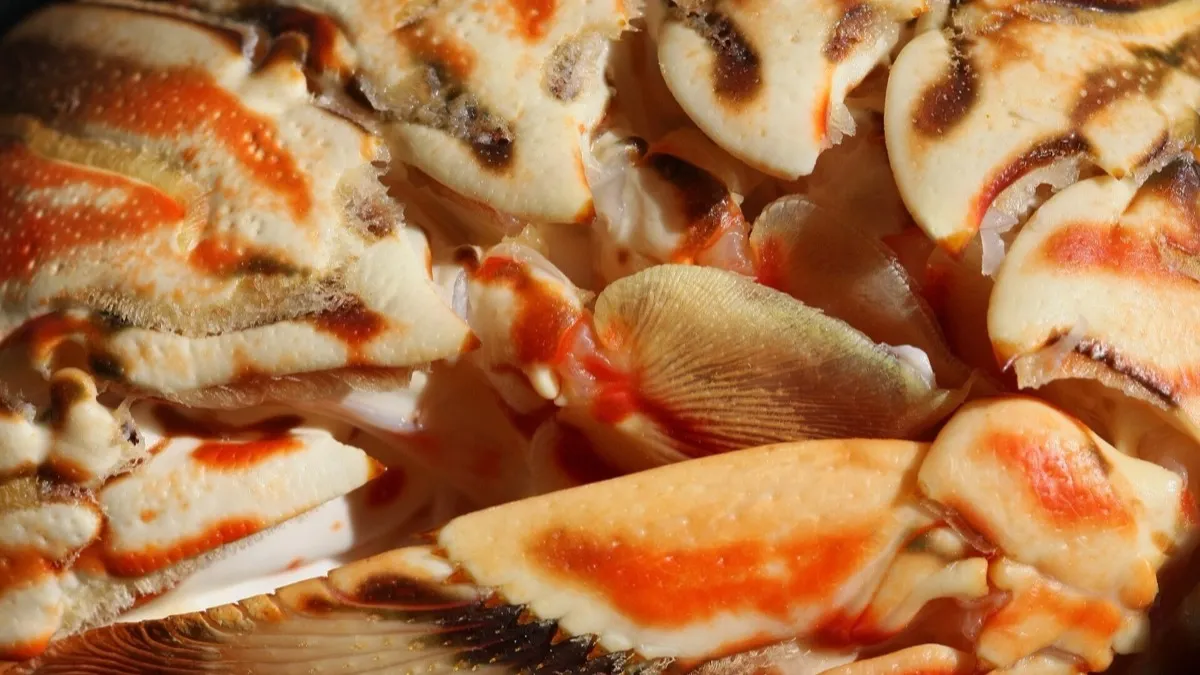
- Chitin is the polymer of crustacean shells, insect exoskeletons and fungal walls. GH18 chitinases are considered key pieces of global nutrient cycling.
- These enzymes have a wide variety of auxiliary domains besides the catalytic one. Until now there was no evolutionary account of why there are so many combinations.
- The team mapped the sequence space of prokaryotic chitinases and combined phylogenetics with a quantitative analysis of domain promiscuity, to reconstruct their history.
Why it matters
- Many enzymes have several domains, and that modular architecture is a major source of functional diversity. Understanding how it changes helps read genomes and design enzymes.
- The work shows that evolution follows different routes depending on what the enzyme is for.
- It offers a framework for understanding how multi-domain enzymes adapt to complex environments.
The number
Two trajectories. Enzymes needed for scavenging chitin in the environment evolve with high modular plasticity and structural elaboration of the catalytic core. By contrast, those that fulfil specialized, essential developmental roles fix their domain architecture.
Context
The central idea is that the auxiliary and catalytic domains coevolve: how domains are added depends on how the chitin-cutting core changes, and it does not happen independently.
For a bacterium that lives off what it finds, having a flexible enzyme that tries out different modules is an advantage. For one that depends on the enzyme at a precise stage of its life, the architecture is fixed because changing it would be costly.
The analysis centres on prokaryotic chitinases, and the abstract does not report how many sequences were included or which specific groups were analysed. What it presents is a general structure of trajectories, not a description of each enzyme.
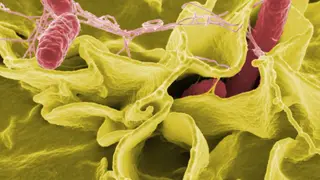
At Mamífero we follow protein biology and design. We reported that the archaea closest to our cells were cultured and that more than 400 enzymes designed from their evolution degrade plastic. Also that Pinal designs proteins from a sentence and that an excess of poorly digestible sugars eases Salmonella infection.
What’s next
- The framework can be used to anticipate the function of new chitinases from their architecture.
- Experimental studies could check whether swapping domains alters function as the model predicts.
- The same approach can be applied to other families of multi-domain enzymes.
Bottom line
An enzyme that cuts chitin can be a flexible module or a fixed piece, depending on what whoever uses it relies on. Evolution decides in each lineage.
Sources
- Pulsford, Dalton, Smith, Horton et al., “The modular evolution of chitinases is governed by coevolution of auxiliary and catalytic domains”, Nature Communications, 5 November 2026, DOI 10.1038/s41467-026-79280-4. This note is based on the paper’s abstract.
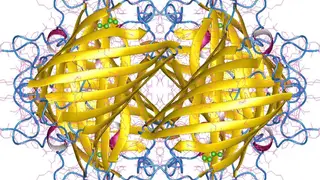
- Cover image: Paul Harrison, CC BY-SA 4.0, via Wikimedia Commons
Edited by Rodrigo Cornejo. How we select and verify: who writes these notes.