What happened
- A team of 12 researchers from the University of Electronic Science and Technology of China published on 3 November 2026 in PNAS a study of how a gas film can spontaneously separate oil from water.
- Under normal conditions this does not happen: inserting gas between the two liquids replaces the oil-water interface with two interfaces, oil-gas and water-gas, which together carry more energy. Thermodynamically it is unfavourable.
- The authors show that confinement in a microstructure changes the balance. After a bubble is introduced into a micropillar array submerged in water, the gas film advances on its own.
- The transition arises from the coupling of wetting, capillarity and gas transport.
Why it matters
- Separating oil and water is a practical problem in cleaning, industrial processes and water treatment, and usually takes energy.
- The work shows that a surface’s geometry can make spontaneous a process that is not spontaneous in an open container.
- It also provides a theoretical framework that predicts the characteristic time over which the gas film evolves.
The number
12. That is the number of authors of the study, which combines experiments with a coupled transport and capillarity model.
Context
The mechanism has several steps. Oil spontaneously seeps into the micropillar array submerged in water. At the same time, the contact line stays pinned at some points and deforms the oil-water interface into a metastable meniscus, creating a local pressure drop in the confined oil.
That pressure drop, together with how the bubble sits at the interface, lowers the bubble’s air partial pressure and encourages it to take up air dissolved in the surrounding water. Confinement, lower oil pressure and low oil-gas tension make the bubble invade neighbouring oil-filled cells sideways rather than escape upwards. As the gas front advances, the meniscus relaxes, oil redistributes and the capillary conditions that sustain propagation are renewed. Varying the microstructure across space controls the film’s path and shape.
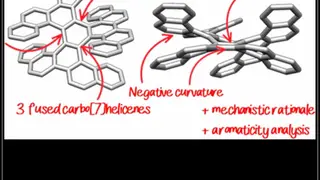
At Mamífero we follow physics at small scales. We reported that a helicene turns like an Archimedes screw under current and that a microscope tip flips molecules with less energy than the barrier. Also that Columbia trapped electron waves in a metal by interference and that a 2-nanometre carbon membrane separates CO₂.
What’s next
- Controlling the film’s path through microstructure design opens the way to surfaces that guide gas or liquids.
- The phenomenon remains to be tested with other oils and at larger scales.
- The theoretical model makes it possible to estimate separation times before a surface is made.
Bottom line
What thermodynamics forbids in a glass, geometry allows in an array of microscopic pillars. One bubble is enough for gas to force its way through and separate oil from water without outside help.
Sources
- Zhang, B., Yang, J., Lin, S. et al., “Spontaneous gas film expansion at an oil–water interface”, PNAS, 3 November 2026, DOI 10.1073/pnas.2606958123. This note is based on the paper’s abstract.
- Cover image: neekoh.fi, CC BY 2.0, via Wikimedia Commons
Edited by Rodrigo Cornejo. How we select and verify: who writes these notes.