What happened
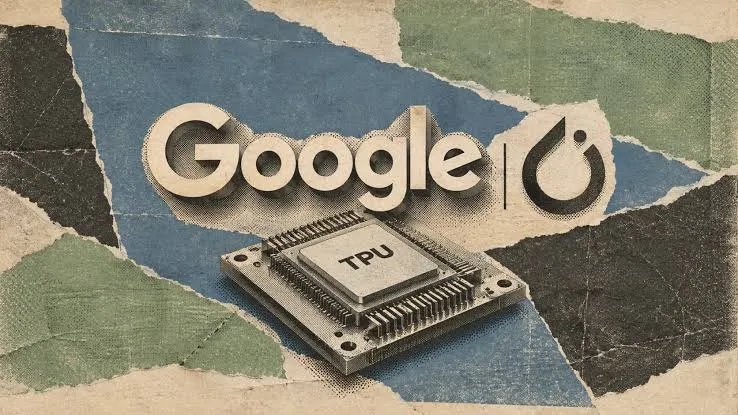
- On October 20, 2026, at the PyTorch Conference, Google presented TorchTPU, a native PyTorch stack for its TPU processors. It was co-developed with the PyTorch team at Meta and is available as open source on GitHub.
- It lets existing PyTorch workloads run on TPUs with minimal code changes. It supports eager-mode debugging and
torch.compilefor production. - Hugging Face, Inferact (vLLM) and RadixArk (SGLang) built native backends. Red Hat and IBM released llm-d 1.0, and an agent suite for migrating code to TPUs is in early preview.
- The Google Cloud blog post does not state the license or hardware requirements.
Why it matters
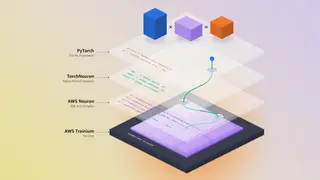
- The real cost of switching chip suppliers was rewriting code. Two clouds are attacking it in the same days: AWS released TorchNeuron for Trainium and Google answers with TorchTPU.
- For a data team in Chile or the region that rents compute, the practical consequence is being able to price the same workload at three providers. That pressures prices; it does not lower them by decree.
- What the announcement leaves out: the figures come from Google’s own partners, and there is no public comparison against Nvidia GPUs on the same workload.
The number
4x. Zenteiq, a user cited by Google, reports more than four times the inference capacity: from 1.47 billion to 5.97 billion tokens a day per 1,000 TPU v6e.
Context
PyTorch is the programming framework most open models are written in, which made it the entry point to the market Nvidia dominates. Google also reports up to 52% model FLOPs utilization (MFU) training Qwen 3 8B with TorchTitan, in tests of up to 8,192 Ironwood (TPU v7x) chips.
What’s next
- The TPU agent suite stays in early preview, with no general-availability date.
- VeRL’s TPU backend is listed as preview.
- No announced dates for support of more operators or for TPU-specific pricing.
Bottom line
Earlier, AWS opened TorchNeuron for its Trainium chips, and Google had already shown it carries a TPU into orbit. The fight against Nvidia is happening in software first.
Sources
- Google Cloud — TorchTPU is now open source: run native PyTorch on TPUs (October 20, 2026)
- TechCrunch — Google has joined Amazon in attacking Nvidia’s stronghold with AI app developers (October 20, 2026, 11:38 PDT)
Edited by Rodrigo Cornejo. How we select and verify: who writes these notes.