What happened
- On October 23, 2026, Science Advances published a study led by the University of Vienna, with Pere Gelabert as first author and Ron Pinhasi as senior author.
- It combines genomic data from rare human remains with human DNA preserved in cave sediments. The remains belong to the Gravettian culture, widespread in Europe about 34,000 to 25,000 years ago.
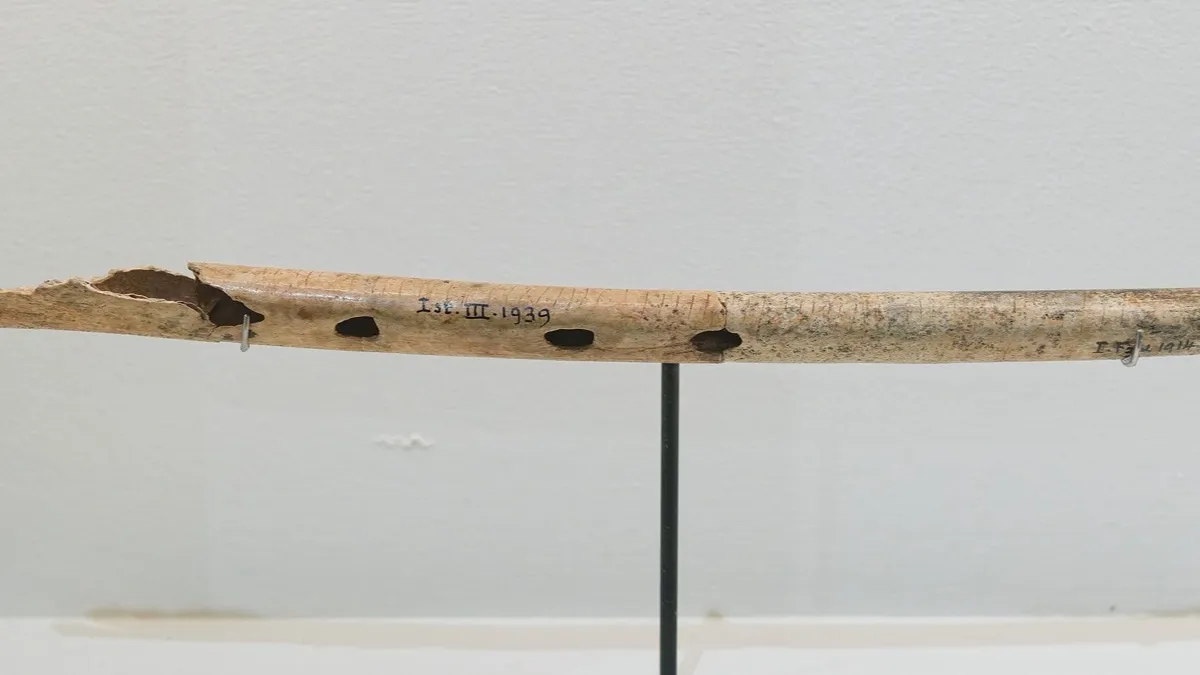
- A woman from Isturitz Cave in southwestern France lived about 30,000 years ago and yielded genome-wide data that, according to the study, predate all earlier data from a modern human in southwestern Europe.
- Her ancestry was mostly from the western European lineage, but she also carried traces of populations from central and eastern Europe. The model dates that gene flow to 32,500 to 31,500 years ago.
Why it matters
- Earlier genetic data suggested stable eastern and western ancestry groups. The new finding shows they were not so isolated.
- At El Mirón Cave in Cantabria, they recovered human nuclear DNA from a 22,000-year-old layer with no bones or teeth, which supports the Iberian Peninsula as an Ice Age refuge.
- In southern Italy, the fetus Ostuni1b, probably the son of the woman Ostuni1, had parents who were not closely related, suggesting practices that avoided inbreeding.
The number
30,000 years. Approximate age of the Isturitz woman’s genome, greater than any recorded so far for a modern human in southwestern Europe.
Context
The researchers analyzed new and published data together with sediment DNA. They also found long-term continuity in southwestern Europe: data from Chufín Cave in northern Spain indicate that western ancestry persisted for thousands of years. A similar signal of eastern flow appeared in a previously studied individual from Ormesson, France. This note relies on Phys.org’s account of the University of Vienna release; the full paper was not read.
What’s next
- The team will combine sediment DNA with protein analysis to study the first expansions of modern humans across Europe.
- They will also investigate interactions with carnivores where few organic remains survive.
Bottom line
The human past is reconstructed from minimal remains: proteins place two Xujiayao fossils as Denisovans and give the lineage a face and museum DNA places the origin of barn owls in the Caribbean. In current genetics, having more cells with two X chromosomes softens Turner syndrome in girls’ brains, and modified transfer RNAs repair the p53 gene in mice.
Sources
- Phys.org — Paleolithic human DNA reveals east-west exchange across Europe (October 23, 2026; University of Vienna release)
- Study: Gelabert et al., «Early Gravettian genomic data from Western Europe reveal population movements before the LGM», Science Advances, DOI 10.1126/sciadv.aeh6128 (October 23, 2026 per Crossref; the paper text was not read)
- Cover image: Marie-Lan Taÿ Pamart, Public domain, via Wikimedia Commons
Edited by Rodrigo Cornejo. How we select and verify: who writes these notes.